
Skipsea: History of Yorkshire Coast village with a fascinating archaeological backstory and castle where Professor Alice Roberts filmed

Skipsea is a village on the coast of East Yorkshire with an ancient history spanning nearly 1,000 years - we have taken a look at its past including archaeological discoveries.
Skipsea only has a population of over 600 people and yet its history has witnessed the Stone and Bronze Ages.
From the medieval period to the 19th century, the village was part of Dickering Wapentake - the latter word is derived from Old Norse, and an equivalent of the Anglo-Saxon hundred in northern Danelaw.
This year, the Alice Roberts History Series was filmed at the village where historian and broadcaster Professor Alice Roberts explored the local history ranging from medieval castles to ancient beaver habitats in Holderness.

History of Skipsea
The name Skipsea is of Scandinavian origin which was originally recorded in the 12th century.
This part of the English coast was often frequented by Viking invaders even before the Norman Conquest.
There is evidence that the name Skipsea refers to its original Viking meaning of ‘Ship Lake’, but the closest literal translation is ‘a lake navigable by ships’. This name refers to the village’s original location on the edge of a lake, which was suitable for navigation and eel-fishing.
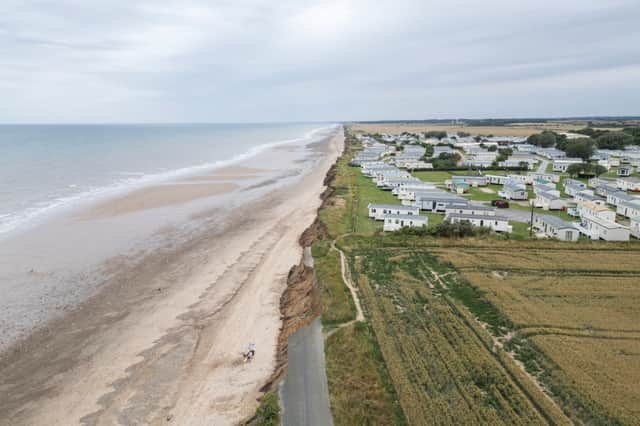
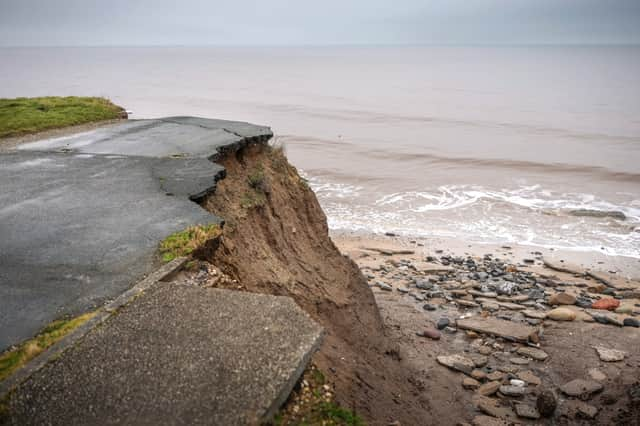
Due to erosion, the land has since been deserted and lost, transforming Skipsea into a seaside village.
Excavation has uncovered evidence of habitation dating back to the Stone and Bronze Ages because of the 19th century archaeological discovery of platforms, presumably for huts.
The borough of Skipsea Castle was first recorded between 1160 and 1175 and is likely to have been founded by William le Gros, Count of Aumale, who died in 1179.
By the end of the 11th century, both Skipsea Castle and a church had been built, which encouraged the growth of a small town.
During the 13th and 14th centuries, local markets and fairs were granted ‘variously for Skipsea town, Skipsea manor, and Skipsea Brough manor, presumably by then Skipsea village’.
The parish Church of All Saints was designated a Grade I-listed building in 1966 and is now recorded in the National Heritage List for England, maintained by Historic England.
The village is also well known for being a possible site for nuclear testing in the 1950s, but the scientists at Aldermaston relented after strong opposition by the local community.
The Royal Observer Corps used Skipsea as a site for a Cold War observation post and the site was active from October 1959 until its decommissioning in September 1991.
The site was derelict until it was restored by an enthusiast in October 2008. In the present day, the economy of Skipsea is based on agriculture and tourism.