
Yorkshire Cancer Research centenary: 'Medication has given me time to see my boys grow up'
When in 2017, Jo Beagley was told her ovarian cancer had returned, she was grateful that a treatment option still remained on the table.
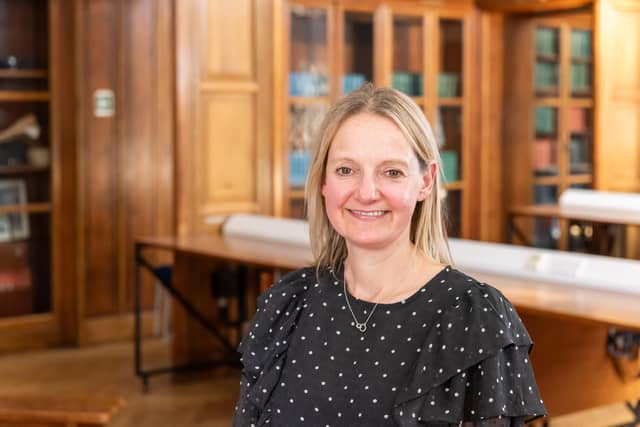


Three years earlier she had been diagnosed with what turned out to be advanced ovarian cancer and was told although it was treatable, it sadly was not curable.
“There were worries about what lies ahead, what does it mean?,” she recalls. “I had a young family at the time so immediately started to think about their future and how I would be physically. Am I going to be around to see them go through key milestones?”
Jo had surgery to remove the cancer, followed by six rounds of chemotherapy. It took its toll mentally and physically, though the now 50-year-old, from Harrogate, was relieved to find out that she had responded well. “But there was a high chance that because it was incurable the cancer would come back,” she explains, “and it did come back in 2017.
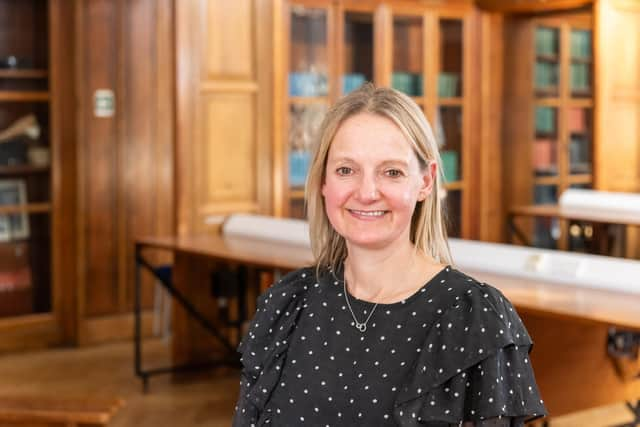
“I underwent some more chemotherapy which I had a good response to. Then at that point, the opportunity came about to go onto the drug Lynparza.
“I was very grateful that there was another option on the table. It was a relatively new drug that had become available and for me, because my cancer was known to be down to a gene mutation, the drug was suited to that.”
She didn’t know it at the time, but Lynparza had been discovered with the help of funding from Yorkshire Cancer Research. Jo has now been taking the medication for more than seven years. “There’s no noticeable side effects so I’m able to have a good quality of life,” she says.
“The big thing for me is the time it’s given me in terms of being able to see my boys grow up (to be teenagers)… When you’re first diagnosed and you hear the prognosis, you daren’t think too far ahead. Progressively, I’ve been able to do that, plan ahead and think about the future.”
Since last year, Jo has been a trustee with Yorkshire Cancer Research, having begun supporting the charity in 2016, by providing a patient viewpoint on various initiatives. Through that and by sharing her own experiences, she discovered the charity’s connection with Lynparza.
“It’s incredible to think that a charity located where I live in Yorkshire has been behind a drug that I know is now used nationally and worldwide,” she says. “It’s been pivotal to the research that led to this drug which I’m now on.”
Lynparza is just one example of how Yorkshire Cancer Research is at the forefront of vital research and services that are making a difference to the lives of cancer patients. The FOxTROT 3 bowel cancer clinical trial is another – funded by the charity and led by researchers at the University of Leeds and the University of Birmingham.
The standard treatment for bowel cancer is to have surgery to remove the tumour, followed by chemotherapy to help stop the cancer coming back. Those taking part in FOxTROT 3 are offered a short course of chemotherapy before surgery.
Bill Hall, from York, joined the trial after being diagnosed with bowel cancer in January 2024. The 72-year-old GP says: “I was given two options – standard or research-based cancer treatment. I was always going to choose the research. By participating in clinical trials, you are helping people with cancer who come after you.
“The chemotherapy before my surgery made the tumour much smaller and the surrounding tissue easier to remove. As a result, the procedure was done through keyhole surgery, assisted by a robot, leaving minimal damage and no complications. The developments in surgical technique and chemotherapy since I started my career have been quite extraordinary.”
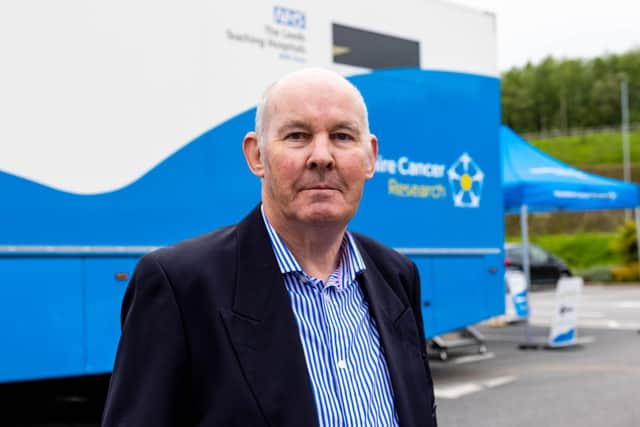
Retired milkman David Sutcliffe, meanwhile, is among those who have benefited from the Leeds Lung Health Check, a lung screening trial funded by Yorkshire Cancer Research. Despite leading a physically active life, David had smoked from his teenage years up until his early forties and was invited to have a series of scans of his chest and abdomen as part of the trial.
A small nodule was found in his left lung and David was fast-tracked to the Leeds Chest Clinic for a consultation. There was some doubt as to whether the growth was cancerous as it was too small for a biopsy, so David was given two options.
“I could either wait a year to see how the nodule developed, or have it removed along with a small section of my lung via keyhole surgery,” he says. “The latter option seemed like the safest bet, and my surgeon agreed. That decision could have saved my life.”
In December 2022, David’s respiratory surgeon confirmed the nodule had in fact been stage one lung cancer. However, the surgery had been a success and there was also no spread of cancer in the lymph nodes. He is now happily retired and back to hiking, cycling, golfing and fishing, but his favourite hobby of all is spending time with his young grandchildren.
“I was completely recovered in a matter of weeks,” he says. “I am so grateful for the opportunity to see my grandchildren grow up and experience precious, priceless moments.” The trial came to end last November but provided data and evidence to help inform the national lung screening programme, set to be rolled out across the country by 2030.
“A lot of the research and the discoveries the charity has made are benefitting people not just in Yorkshire but outside of the region and even outside of the UK”, explains trustee Jo. The centenary, she says, is a “fantastic time to be involved in the charity”. “It’s a great celebration of all that has been achieved so far and an exciting time for the charity in terms of where it’s going to go next.”