
Yorkshire Cancer Research centenary: 'Some people are alive because of treatments through clinical trials'
More moments together. Three words that sum up what Yorkshire Cancer Research is all about. Finding more treatments and more cures – and in turn, giving people in the region a greater opportunity for a long and fulfilling life.
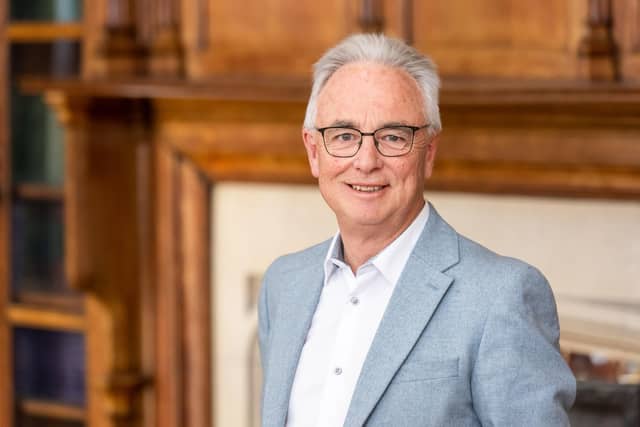


“I don’t want to be over-dramatic but some people are alive because they had a treatment that was available on a clinical trial,” says Rob Coleman, an Emeritus Professor of Medical Oncology in Sheffield. “And without that they probably wouldn’t have survived – or certainly had as long and such a good quality life.”
Prof Coleman moved to Yorkshire in the early 1990s to head up a new cancer clinical research facility in Sheffield, which was later supported by funding from Yorkshire Cancer Research. By 2000, more than 2,000 patients had been entered into trials in a wide range of cancers – and that number has continued to grow, with the centre team achieving recognition on both a national and international level.
“It has enabled us over the years to put many thousands of patients into clinical trials, to let them have access to treatments that wouldn’t at the time have been available on the NHS,” Prof Coleman explains. “It (has given) them extra opportunities and options to have cutting-edge therapy.”
As well as supporting clinical research in hospitals, Yorkshire Cancer Research also funds mobile screening units in communities and research-backed exercise services designed to give people a better chance of surviving cancer. Around 175,000 people in the region can now take part in cancer research and services that it has supported. Earlier in its centenary year, the charity launched its More Moments Together campaign to highlight the experiences of people who have had their lives saved or extended by participating in such trials and programmes. They have all been possible thanks to the charity’s work with just over 700 researchers and cancer experts.
Prof Coleman has been one of them, “a small cog in a global machine of trying to improve outcomes for people with cancer,” to use his own words. Breast cancer was his specialist area before retiring, of sorts, in 2017 but he has also led on work to develop treatments that stop cancer spreading to bones – or to make it less troublesome when it does.
More than three decades after his move to the city, partnership work between the University of Sheffield and Yorkshire Cancer Research is still ongoing, with new projects in the pipeline.
Earlier this year, they announced they would be pioneering ten world-leading research studies that aim to accelerate the global understanding of cancer. Some of the new research will focus on the use of cutting-edge technologies to improve diagnosis and to help plan, deliver and monitor treatment, as well as exploring how care can be personalised to individual patients.
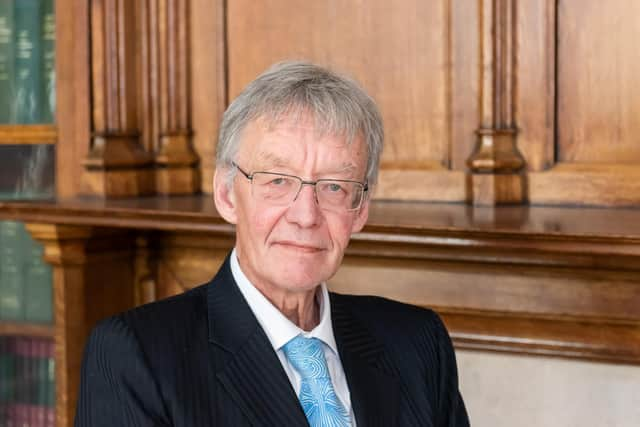
Dr Bilal Tahir is a lecturer in oncological imaging at the university and co-principal investigator of the Sheffield Platform for Imaging Research in Oncology (SPIRO). He says the Yorkshire Cancer Research funding will “transform cancer treatment”. “Our advanced imaging will not only detect subtle tumour changes earlier but also assess healthy tissue to minimise treatment side effects,” he explains.
Dr Tahir, an expert in medical imaging, radiotherapy and image processing, started a Yorkshire Cancer Research fellowship in 2018. He says he’s “proud and honoured” to work with the charity.
For decades, the charity has helped to put Yorkshire on the map for its world-leading talent and efforts in cancer research. It’s the reason why, forty years after Yorkshire Cancer Research first funded his work, Professor Philip Quirke remains in the region.
Today, he is a Professor of Pathology at the University of Leeds, as well as an Honorary Consultant Pathologist at the Leeds Teaching Hospitals NHS Trust.
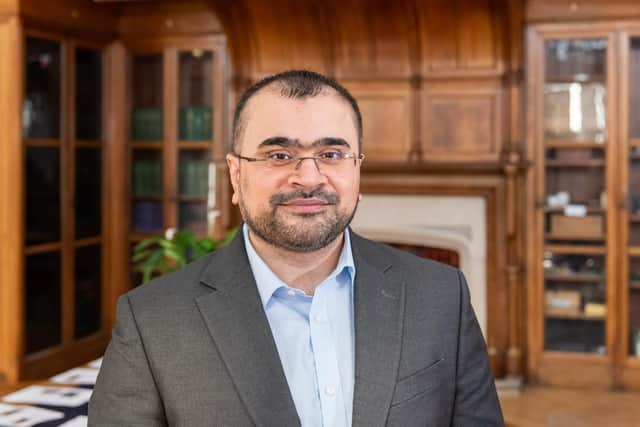
“If you have an active research environment, what it means is that the best people want to be there,” he explains. “If there is money locally to fund research, people will be much more likely to stay local.”
“When we’re doing studies, you tend to use the local populations so that means when you create advances, you can actually provide those advances locally first,” he adds. Prof Quirke is one of the longest-standing researchers funded by the charity.
He has been influential in reducing local recurrence rates in people with rectal cancer and he and his team helped to revolutionise testing for Lynch syndrome, a hereditary condition that increases the risk of bowel and other cancers.
Back in 2005, he and his pathology team were also amongst the first to move into a new state-of-the-art research facility – the Leeds Institute of Molecular Medicine – at St James’s Hospital. Opened with the help of a £1.7 million contribution from the charity, the building brought together experts in a number of fields under one roof.
Prof Quirke and his team showed how combining expertise from different research disciplines could lead to developments in cancer research, such as guiding how to select the best type of drugs and dosages for people with cancer.
“Being active in the field, being supported by Yorkshire Cancer Research, it enables us to be at the forefront of (new developments),” he says.