
'He had enormous enthusiasm to help others' - Fond memories of one of founders of Yorkshire Cancer Research
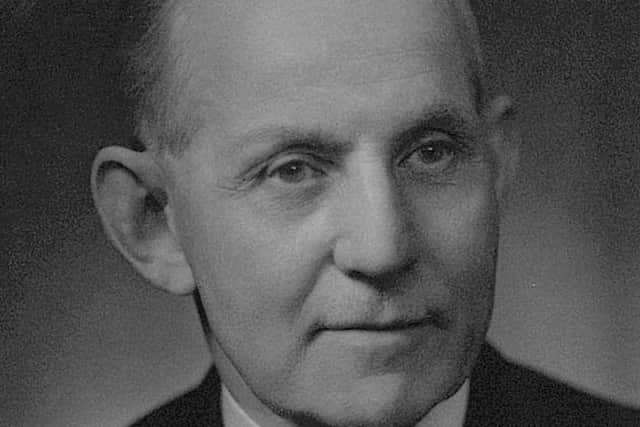
For the last two years of his life, Barker Thomas Clegg was confined to his bed by illness. But even then, he continued to fight for improvements to healthcare, writing campaigning letters right up until his death in June 1961.

Clegg had a great empathy for other people’s poor health, having experienced his own difficulties throughout his life.
In May 1925, he was one of six figures who gathered at the Old Medical School in Leeds, to found what would become Yorkshire Cancer Research.
As the charity turns 100, his granddaughter Ruth Garwood has shared her memories of Clegg, who became a passionate fundraiser and campaigner for better cancer care in the region.

She recalls helping her grandfather at his greengrocer business in Hebden Bridge. “I liked to go with him to the banana ripening rooms where long stalks of green bananas were hanging in the dark, warmed by a gas flame. The temperature had to be just right. He was always interested in food and nutrition and its relationship with health, partly because of the nature of his business.”
Clegg’s voluntary work including campaigning on many issues around cancer and promoting cancer research. Over his lifetime, it is estimated he was responsible for raising more than a million pounds for regional cancer charities. “He was motivated by a powerful sense of duty and had great dreams of a better world,” Garwood says.
He was ahead of his time in much of his thinking, she reflects, interested in a medical book which had suggested a link between smoking and cancer.
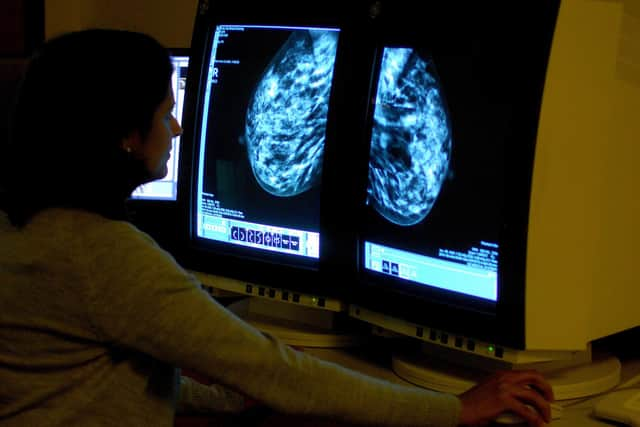
At a time when doctors tended to be male, Clegg was also concerned that men enjoyed a privilege which was rarely gifted to women – the opportunity to see a doctor of the same sex to discuss matters relating to their intimate health.
He worried that the lack of female doctors at the time was stopping many women with cancer symptoms from going to the doctor as early as they should.
His granddaughter recalls: “I remember typing a letter to Enoch Powell, the then Health Minister, about the need to have more female doctors. Grandad also encouraged his younger daughter Nancy to become a doctor.”
Clegg also campaigned for more care to be provided for people with cancer at the end of their life and in a letter, urged Powell to provide home care support for the “vast number of people in terrible pain”.
He was one of the instigators of a conference organised by Yorkshire Cancer Research in 1959, which aimed to help doctors improve care for patients with incurable cancers. Held at Leeds General Infirmary, it attracted around 50 medics and received widespread commendation, leading to similar conferences being staged in Hull and again in Leeds in the following years.
"Grandad had a splendid roll top desk, absolutely packed with papers in a seemingly chaotic confusion,” Garwood recalls. “But he always knew where everything was. His wife, Alice, was the practical one who ran the household and made the dreams possible.”
“He was a person with an enormous and lasting enthusiasm to help others,” she adds. “And as he was a non-specialist, he could approach problems around cancer care from a holistic perspective.
"I think he would be very excited about the developments in cancer research and treatments, particularly around pain relief.”
Clegg was awarded the CBE for services to charity in 1952 and received a Doctorate from Leeds University in 1959. When given the latter, he was recognised as giving “a lifetime of service to good causes irrespective of colour, creed or locality”.
Today, Clegg’s legacy continues through the work of Yorkshire Cancer Research, which is dedicated to finding new cancer cures and bringing them to people in the region. For a century now, the charity has been working to find new ways to prevent, diagnose and treat cancer, saving lives in Yorkshire and further afield.
“I was always aware of (grandad’s) motivation and concern to help people with their health,” Garwood reflects. “And his legacy to improve cancer research and care continues today.”
- Yorkshire Cancer Research is marking its 100th year by paying tribute to those who have contributed to pioneering cancer research in the region over the past century.