
Yorkshire mother given two years to live is defying the odds seven years on
A Yorkshire mother who was told she had just two years to live after being given an incurable cancer diagnosis is defying the odds - seven years later.
Julie Blackburn, 53, was first diagnosed with breast cancer in February 2015 - after she found a lump while in the shower.
She had a mastectomy - where surgeons removed her breast tissue - and three weeks of radiotherapy, so "put the cancer behind her."
Three years later, Julie found a change in her other breast and was told she had stage four secondary breast cancer that was incurable and had already spread to her lymph nodes and my bones.
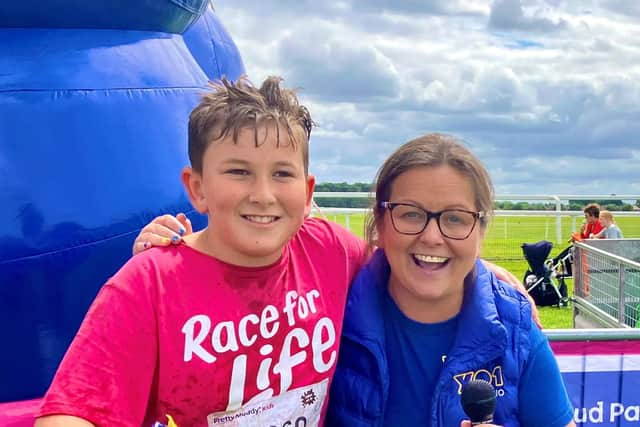

She was told her life expectancy was around two years, which left her "devastated", but seven years after her diagnosis, Julie has defied the odds and is still alive.
Julie, from York, said: "This was a new, unrelated cancer, but it had already spread and was in my lymph nodes and my bones. I had a mastectomy of my remaining breast, but it was already too late to stop the cancer, and I was told my life expectancy was about two years.
"I was absolutely devastated and had some very dark days. But I made a decision, that I wanted to live for the day and, despite my bleak prognosis, to live as best as I could for as long as I could."
Julie, a community and events manager at YO1 Radio Station, was 43-years-old when she found a lump in her breast.
Within two weeks of going to her GP, Julie - who is mum to Henry - was booked in for surgery and later started taking a drug called Tamoxifen - a selective estrogen receptor modulator which is used to treat and prevent breast cancer.
She said: "I was 43 and my son Henry was just three years old. Within two weeks of going to my GP, I was told the lump I'd found was cancerous and I was booked in for surgery.
"I had a mastectomy and reconstruction, as well as three weeks of radiotherapy. Despite the shock of getting a diagnosis, everything went well and I began taking the hormone therapy drug Tamoxifen and just needed checkups every six months. I thought that was the end of it and I was grateful to have put cancer behind me."
When Julie was diagnosed, she started writing Henry letters that he would get every year up until his 13th birthday - but she has been able to read the letters to him.
She was also prescribed Palbociclib, a chemotherapy drug developed by Cancer Research UK, which means her cancer lowers are the lowest they have ever been.
She takes the tablet every day for three weeks, followed by a week off, and only needs to go to the hospital every three months.
Julie said: "My cancer markers are low, but more importantly they are stable. It is unbelievable to see for me and my doctors. I will never be cured, but this magnificent drug developed by Cancer Research UK is keeping me alive and for much longer than anticipated.
"As a result, one by one I get to give Henry the letters that I wrote him, never thinking that I would be here to see him read them. The last being for his 13th birthday, when he became a teenager.
"I still suffer from side effects of treatment and have fatigue, aches and pains, but this has become part of my life now and I am able to live life despite my diagnosis."
Julie believes she owes her life to Cancer Research UK and is now encouraging people to leave a gift to the charity in their will.
Gifts in wills allows the charity to invest in pioneering trials and long-term research projects that could find new ways to save more lives across the UK.
Julie says there's an urgent need for more people to leave a gift to Cancer Research UK in their will and says without them, she wouldn't have been "able to experience important milestones that she thought she would never reach."
She said: "Research into improved treatments has had an invaluable impact on my life and has given me more time with my family. I've been able to experience so many important milestones that I thought I'd never reach.
"I've celebrated my 50th birthday, seen Henry start secondary school and become a teenager.
"But, none of this would have been possible without the dedication of researchers who are striving to make new discoveries and cancer breakthroughs. They need our support to help create the life-saving treatments of tomorrow."
Julie previously had radiotherapy and also used to take medication called Tamoxifen. Cancer Research UK scientists helped developed the treatments and Julie hopes that more people across the UK will leave a gift in their will.
She said: "Advances in research mean people are being diagnosed earlier, have access to kinder and more effective treatments and some cancers are prevented completely. So, I hope sharing my experience will help inspire more support for Cancer Research UK.
"By leaving a gift in their Will to the charity, people across the region could help give the gift of hope to many more people like me."
Cancer Research UK spokesperson for North Yorkshire, Lisa Millett, said: "We're so grateful to Julie for helping to raise awareness and are so happy to hear how she is benefitting from our research.
"Our scientists have played a role in around half of the world's essential cancer drugs, led the development of chemotherapy and radiotherapy and paved the way for targeted treatments. This all adds up to more precious moments for people affected by cancer and their loved ones. But we must go further and faster.
"Nearly one in two of us will get cancer in our lifetime. All of us can support the research that will beat it.
"We're working towards a world where everybody lives longer, better lives, free from the fear of cancer and gifts in wills are vital to making this a reality."