
Apartments on York site with 'significant potential' for historic remains blocked

Apartments have been blocked on a York site said to have significant potential for archaeological remains.
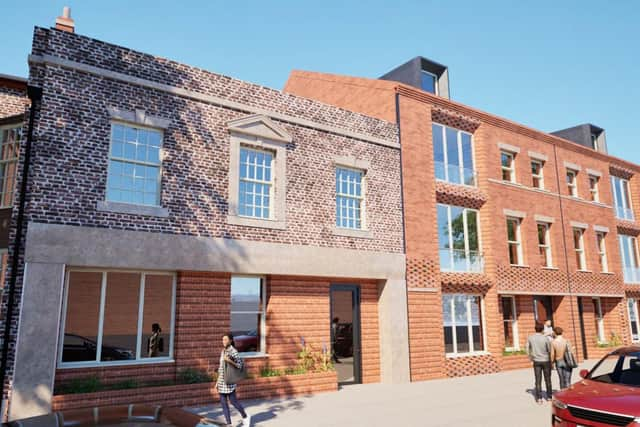
Plans to tear down part of the Kwik Fit garage in The Mount to make way for 12 apartments have been refused by York Council.
Developers Blenheim Estates stated it would create new homes and help to enhance the surrounding area which is home to several historic and listed buildings.
But 26 objections were lodged against the plans including some claiming the design of the homes was bland and visually jarring.

Council planning officers stated the developer had not done enough to prove that the site was no longer viable for commercial use.
A report on the plans also stated well-preserved Roman archaeological deposits were believed to be under the site including part of road from the period.
The decision comes after plans for the apartments were first lodged with the council in November 2024.
Plans initially proposed demolishing part of the building housing the Kwik Fit garage in The Mount, which dates from the early to mid-20th Century, to make way for 14 apartments.
A building dating from the 19th Century at the site would be retained.
The amount of apartments was cut from 14 to 12 in response to design and access concerns.
The development would offer a mix of one, two and three-bedroom flats.
Plans stated the development would be more appropriate in the area than the current garage.
They added the site was close to local amenities and public transport links, including York Station.
The application said: “The appearance of the scheme has been developed to respond appropriately to the historic location with a sympathetic contemporary approach, retaining the existing section of historic fabric that remains on the site from the original 19th Century dwelling that preceded the Kwik Fit on the site.”
But objectors including Labour’s Micklegate ward councillor Jane Burton and York’s Conservation and Civic trusts all raised concerns ahead of the council’s design.
They and other objectors claimed it would result in the loss of employment land and was poorly-designed.
There were also concerns that the apartments could end up becoming short-term holiday lets rather than residential homes and would put pressure on parking in the area.
The report stated an excavation in the 1950s suggested a section of Roman Road survived at a shallow depth below the site.
It stated: “The application site lies in close proximity to the junction of two Roman roads approaching the western side of the city with the associated settlement evidence.
“It has significant potential to include well preserved archaeological deposits of Roman date.
“The potential for survival of particularly Roman deposits which maybe even of regional or national significance is very high.”
Commenting on the plans more broadly, council planning officers stated: “The application does not demonstrate that the site is not viable in terms of market attractiveness, business operations, condition or compatibility with adjacent uses.
“Nor is there evidence the proposal would not lead to the loss of an employment site that is necessary to meet employment needs.”