
Arkengarthdale: History of Yorkshire Dales valley known for lead mining where Wuthering Heights was filmed

Arkengarthdale has a rich history spanning hundreds of years known especially for its contribution in the lead mining industry and more recently was used to film Wuthering Heights.
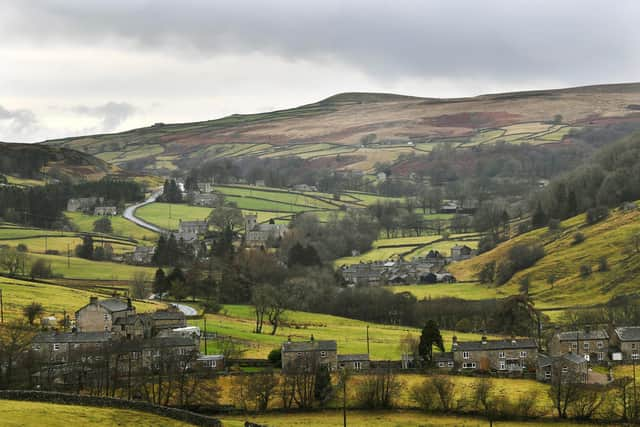
Arkengarthdale is a valley on the east side of the Pennines in the Yorkshire Dales and passes through several small settlements including Raw, Arkle Town, Langthwaite, Eskeleth and Whaw.
The varied textures and landscapes of the valley were used to film scenes for the 2026 adaptation of Wuthering Heights, starring Margot Robbie, Jacob Elordi and Adolescence star Owen Cooper.
The name ‘Arkengarthdale’ is derived from Old Norse which translates to ‘the valley of Arkle’s enclosure’.

‘Arkle’ is a personal name most likely referencing a Viking chieftain during the 10th or 11th century.
‘Garth’ is Old Norse for a yard, enclosure, or paddock.
History of Arkengarthdale
A block of lead with the name Hadrian ingrained on it was found in the 19th century at Hurst, east of the dale.
This discovery as well as records of the Romans at Richmond using Brigantian slaves digging for lead has led to the belief that the Romans were mining lead in Arkengarthdale in the 2nd century.
By the year of 1521, there was extensive mining in Arkengarthdale, at Moulds, Punchard Gill and Faggergill.
Bell pits were common in the 17th and 18th centuries and lead was sold to lead merchants based in York.
There is a large portion of Viking names including Faggergill, Kitley Hill, Langthwaite and Whaw, which implies that Viking settlement during the 10th century, possibly arriving from the west.
Arkil is a Viking name which leads to the assumption that he was a local leader but despite its history pre-dating the Domesday Book, none of the settlements in the area appear in the Domesday survey.
Following the Norman conquest in the 11th century a large part of North Yorkshire was given to Count Alan, a member of William’s family.
During the 14th century there were eight gamekeepers employed preventing game being hunted in the dale.
Towards the end of the 13th century there were 30 cottages in the Parish, but it followed a period of depression that lasted over a century and de-population, with plague and the war with France.
The Earls of Richmond had died out by the end of the 16th century and Arkengarthdale and New Forest reverted to the Crown.
In 1473, Edward IV had granted the lordship of the area to his brother, Richard, Duke of Gloucester, and when Richard eventually succeeded to the throne in 1483, the manor became a crown property.
In order to clear its debts, the Crown sold Arkengarthdale as well as other estates to the City of London in 1628 and the valley was bought by Charles Bathurst in 1656, who was Oliver Cromwell’s doctor.
The estate remained in the Bathurst family for four generations until 1740 when it was inherited by Charles’ three great-granddaughters.
The introduction of the turnpike road in 1770 greatly reduced the cost of transporting lead and coal from the mines since carts could be used instead of pack-horse trains.
Four out of 37 men from Arkengarthdale who served in the First World War were killed and 1921 was the first year when anyone in the valley owned a car, which was a Ford.
In more recent years, the valley was used to film various TV shows and films from All Creatures Great and Small to the 2026 adaptation of Wuthering Heights.