
Holocaust Memorial Day: 'My parents hid for months in a tiny crate in the attic of a foundry'
Jenny Kagan’s family was different from many others. “My parents spoke about their Holocaust experiences all the time,” she says. “To a fault, we would think as children. There was a sigh of ‘oh no not more Holocaust conversation’. In other families, they lived in silence and it was a mystery and a hidden horror.
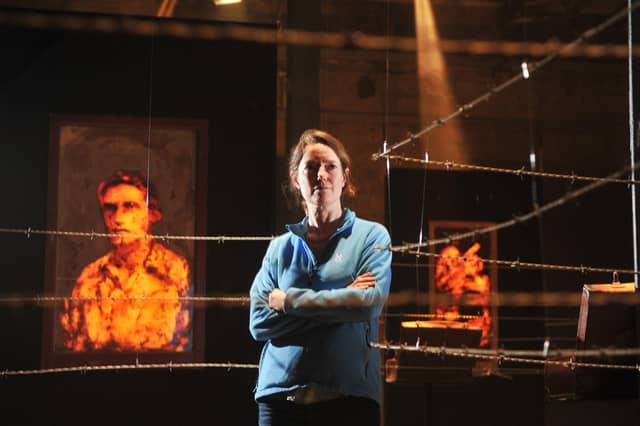


“I think the way that (my parents) were able to process it was that they were very conscious that they wanted to use their experiences to make better lives for themselves and those around them.”
‘For a Better Future’ is the theme of this year’s Holocaust Memorial Day and for Jenny, it encapsulates how her parents carried their experiences. She’ll focus on this when she begins an evening of talks and presentations for the Holocaust Centre North’s commemorative event on January 28.
Artist Jenny is chair of the centre, based at the University of Huddersfield, and is a second generation Holocaust survivor. The story of her mother, Margaret Kagan, is told in the centre’s permanent exhibition Through Our Eyes, which Jenny helped to curate back in 2018.
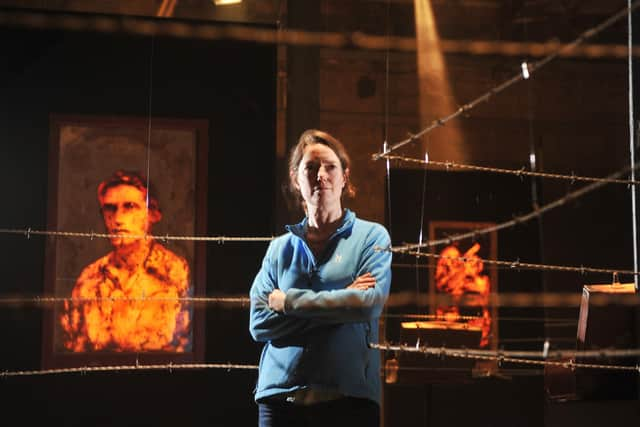
Margaret, and Jenny’s father Joseph Kagan, met whilst imprisoned in the Kaunas Ghetto in Lithuania in 1943 and later that year, went into hiding in a wooden crate in the attic of an iron foundry.
In August 1941, the Jewish population of Kaunas had been forced to relocate into the Kaunas ghetto in horrendously overcrowded and unsanitary conditions. Some 29,000 people were concentrated there, given little food and subjected to hard labour.
“My father always referred to the Kaunas ghetto as his concentration camp,” Jenny explains. “Concentration camp to him was an easy way to convey the levels of deprivation and depression and horror and murder…This was a killing field in Lithuania and he would very much focus on that.”
Jenny’s father risked his life to smuggle in luxuries such as food and gramophone records. He was convinced that Jewish people would be murdered and set about planning an escape and a place to hide.
A relative of Margaret introduced her to Joseph and he was rather taken. He convinced Margaret to marry him and to go into hiding with him and his mother.
After escaping the ghetto, from November 1943, they hid day and night in a crate less than six foot square in the roof of the iron factory, with the help of friends including a Lithuanian man Vytautas Rinkevicius who Jenny’s parents called their “saviour”.
The trio then left their hiding spot in July 1944 and joined another Lithuanian family who had been hiding Margaret’s brother, until they were liberated later that month.
“I think it’s really central the fact that they were saved by Lithuanians,” Jenny says. “That defined their experience of the Holocaust differently to those who went through the camp experience and did not have that moment of salvation.
“Their story was coloured with hope and light as well as with horror. They would always say they saw not only the worst of humanity but the best of humanity.”
After the war, Margaret learned that her father had been murdered by Lithuanian collaborators during the Lieutūkis Garage Massacre, alongside dozens of other Jewish men and women. Her mother had taken her own life in a concentration camp.
She and Joseph chose to create new lives in England, where Joseph’s father had started to relocate the family before the war. Joseph had been studying textiles at the University of Leeds, only going back to Lithuania in 1939 to help his mother wind up the last of the affairs. When war broke out, they were trapped and unable to travel.
In Calderdale, Margaret and Joseph started their own business - Kagan Textiles - and in 1951, Joseph patented a new fabric, Gannex, and manufactured coats which were famously worn by the then Prime Minister Harold Wilson and members of the royal family.
Margaret devoted her life to community work and spoke tirelessly about the dangers of prejudice and the immense bravery of those who had risked their lives to save others during the Holocaust.
“(My mother) had an extraordinarily positive outlook and came away with the drive to share that and to fight in the ways she felt were important against the possibility of future horrors and future genocides,” Jenny says.
What came out of her experience was a passion for community connection. “She believed that we had to connect with others and that racial divide and ethnic divide was at the heart of the horror.”
“Their story is an extraordinary tale,” Jenny reflects. “People connect with it very easily and when people connect with stories, they see differently. They start to see the humanity in these situations - and making humanity visible is why I tell their story.”
She will be sharing it on Tuesday when the Holocaust Centre North hosts its evening of creative reflections, following Holocaust Memorial Day on January 27.
Led by centre director Alessandro Bucci, the event will include speeches, alongside creative presentations, focused on collective remembrance and commemoration.
We are in a phase of transition, he says, where the Holocaust is passing from living memory into history. It is important to keep the story of what happened alive, particularly given its relevance today.
“Holocaust history is a history of forced displacement, migration, difficult choices, loss, discrimination and hatred,” he says, “But also one of resilience, making new lives and starting new families after persecution. These themes are obviously very relevant in the contemporary age…We don’t have a voice as a charity based in Huddersfield in the international theatre of war and conflict but we do have a voice in our communities and we do know they have been deeply affected by war and conflict happening somewhere else. We can help with bringing communities together and focusing on our shared humanity.”
Jenny agrees. “It seems ever more relevant and ever more urgent to bring to the fore the concepts of human connection and humanity…We are looking at inclusivity because that seems the only way to combat the division and intolerance that is leading to the horrors that we see around us.”
As part of Tuesday’s event, Caroline Study-Colls, a Professor of Holocaust Archaeology and Genocide Investigation at the University of Huddersfield, will talk about the importance of Holocaust education.
Other segments will include a short performance by refugees and artists from theatre company 6 million+, who will share their reflections on remembrance from a multinational perspective; and through pre-recorded videos, Holocaust survivors will also give deeply personal accounts of life under Nazi persecution and reflect on the new lives they built in the North of England.
Alessandro says: “It is so important to come together to remember, to commemorate and to reflect on our own connections to this devastating period of history and to remember the lives lost and honour those who survived.
“Holocaust Centre North was established by survivors of the Nazi Genocide who wanted to share their stories to educate as well as to promote compassion, empathy and friendship between diverse communities.
“We remain committed to this mission all year round. Days like Holocaust Memorial Day offer us an additional opportunity to shed a local and national spotlight on the vital work that we do and to recognise our exceptional survivors, allies and educators who help us in our aim to ensure that Holocaust history is never forgotten.”
Tickets for Holocaust Centre North’s commemoration evening on January 28 are free but must be pre-booked via holocaustcentrenorth.org.uk