
Hull’s post-war modernist architecture celebrated in new walking tour

Hull’s post-war modernist architecture is being celebrated as part of a new walking tour.
The port has become only the eighth UK city to feature as a walking tour on the Modernist.
The Modernist app is a free architectural guide produced by the Modernist Society, inviting people to explore Hull’s distinctive modernist and post-war landmarks.
Tracing a route from Telephone House to the iconic Three Ships mural, the digital guide uncovers the histories, architects, and artists behind buidlings people often walk past without a second glance.
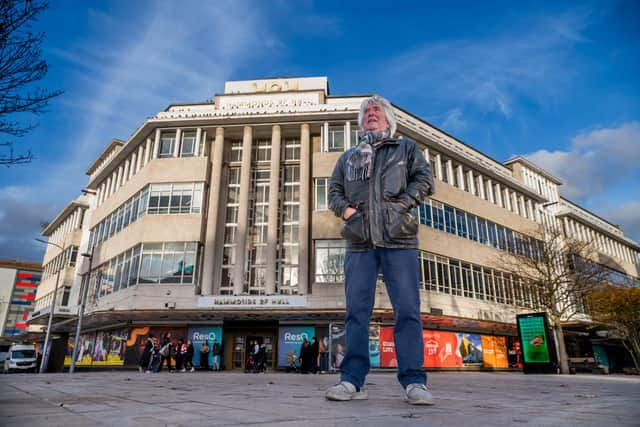

The newly launched self-guided walking tour was put together by Hull creative historian Charlotte Tomlinson.
She said: “I wanted these tours to help people stop, look more closely, and appreciate the craft and optimism in buildings that are too often taken for granted, and to show visitors a side of Hull they won’t find in the usual guidebooks.”
Few British cities experienced the dramatic physical transformation that Hull underwent during the twentieth century.
Following devastating bomb damage during the Second World War, the city embarked on an ambitious decades-long programme of reconstruction.
That post-war era left behind a rich, albeit frequently overlooked, legacy of bold civic buildings, modernist designs, and striking public artworks.
The new guide brings these scattered pieces of history together into a single narrative, accompanied by original photography and commentary.
Walkers will encounter some of Hull’s best-known mid-century landmarks, including the Cecil Cinema and the former Hammonds Department Store.
Beyond the headline attractions, it shines a spotlight on lesser-known architectural gems.
Even lifelong Hull families are likely to discover overlooked features and forgotten stories hidden in plain sight across the city centre.
Designed for ease of use, the Modernist app relies on interactive, location-based maps to navigate users seamlessly from one building to the next. Each stop features high-resolution photographs alongside historical background notes.
The tour takes roughly 90 minutes on foot.
Dr Robb Robinson, honorary research fellow at the University of Hull said anyone exploring Hull’s architecture for the first time was in for a pleasant surprise.
“The rebuilding of Hull after the destruction by bombing during the Second World War is significant because it has given us so much of the city centre we are familiar with today,” he explained.
“The buildings that went up between the late 1940s and 1970s are now part and parcel of the history of Hull.
"Not all, of course, have stood the test of time but my favourite building to emerge from the era is the Danish Church which seems almost timeless today.”