
Lost relics of Leeds’ first railway station unearthed after 190 years in city centre excavation
Historical relics from Leeds’s first railway station have helped rediscover the city’s fascinating past after being unearthed during an archaeological dig.
The remains of the former Marsh Lane station, which opened 190 years ago this week, were revealed during a recently completed excavation carried out in the city centre.
Experts from CFA Archaeology Limited, working with West Yorkshire Joint Service’s Archaeology Advisory Service, uncovered long-buried ironworks and foundations from the Georgian station, which was part of the Leeds to Selby Railway that once ran between Marsh Lane and a station on the River Ouse at Selby.
Curators at Leeds Industrial Museum raced to secure some of the finds for their collection.
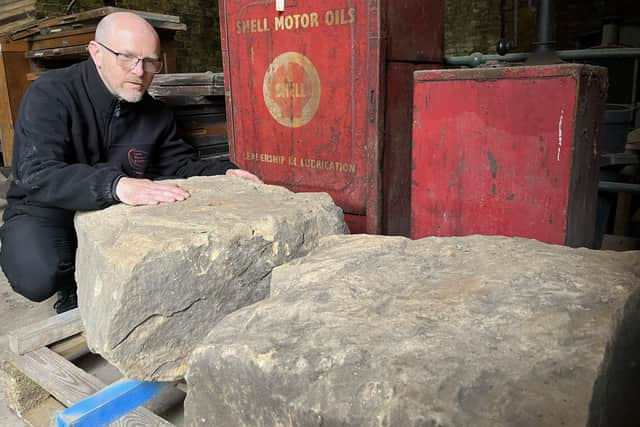

Now in storage at the museum are the remnants of one of the station’s huge cast iron pillars, which would once have held up the roof while passengers made their way around its platforms. The columns also doubled as rainwater down pipes.
Also now at the museum are a pair of huge stone sleepers, used to secure tracks in the years before wooden sleepers were employed and which still show the holes where railway spikes were driven into them. John McGoldrick, Leeds Museums and Galleries’ curator of industrial history, said: “Marsh Lane station played a huge part in establishing the rail network going in and out of Leeds, transporting passengers and important freight for industries which helped the city thrive in the 19th century. It’s always exciting to have the opportunity to see such a real, tangible part of the city’s past in front of you.
With a station dating from the earliest days of railway construction, the first official train to leave Marsh Lane departed at around 6.30am on September 22, 1834.
But with no known artistic drawings or paintings of the station still existing today, there was little to indicate how it may have looked in its pioneering heyday.
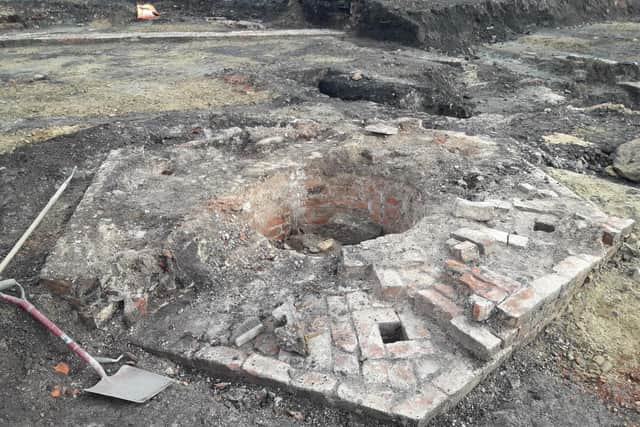
Archaeologists were surprised to discover that the station had been built on two levels, with the train tracks on a high podium above Leeds and an entrance for passengers at ground level off Marsh Lane.
They also found the remains of a U-shaped workshop which would have stored, serviced and carried out everyday repairs on the railway’s vintage locomotives. A 15-metre deep well was also dug to supply the railway with water.
In the 1860s, the original station was demolished to make way for a grain warehouse, before a revamped station was constructed in its place. That station remained in place until its closure in 1958, and the only visible trace of the early station to survive today are a boundary wall and gate piers on Marsh Lane.
It is now hoped the recovered pieces of the station can go on display at Leeds Industrial Museum.