
Reuben Owen: Life in the Dales: History of Brough Castle in Cumbria that features prominently on Channel 5 show

Brough Castle in Cumbria has been featured on the Channel 5 series Reuben Owen: Life in the Dales - here is its history.
Brough Castle is a ruined castle in the village of Brough, Cumbria and was built by William Rufus around 1092 within the old Roman fort of Verterae to secure its key route through the Pennine Mountains.
The area is a prominent part of the Channel 5 show as Reuben Owen’s girlfriend, Jessica Ellwood, grew up on the family farm at the estate, which also runs the Brough Castle Ice Cream Parlour and Tearoom.
Reuben moved in with Jess and it is where they do their daily farming duties including machinery maintenance.
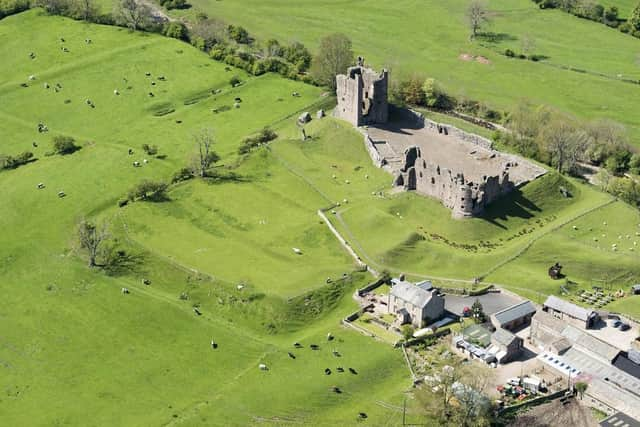

History of Brough Castle in Cumbria
Brough Castle was occupied until the 5th century and it protected the Stainmore Pass and the Roman road linking Carlisle and Ermine Street, which was used as a trading route at the time.
After the Norman Conquest in 1066, William the Conqueror vanquished the north of the country in a chain of harsh campaigns, and the north-west region became a contested border territory between the Normans and the Scottish kings.
William’s son, William Rufus, invaded the north-west in 1091 and built Brough Castle around a year later, positioning it in the north part of the old Roman fort in order to make use of the existing earthworks.
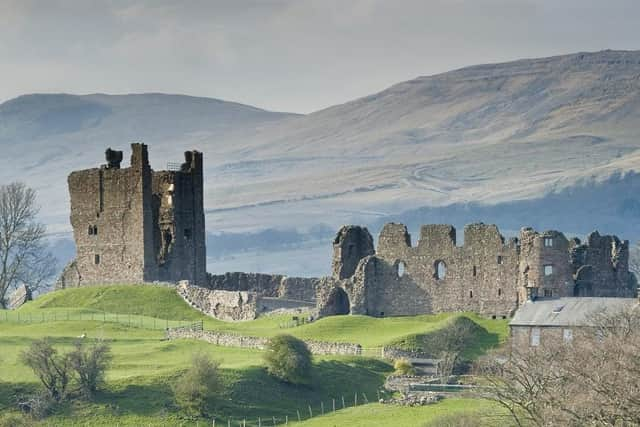
The village of Church Brough was created alongside the castle at around the same time, in the form of a planned settlement which was part of the Norman colonisation of the lowlands in the region.
The kings of England and Scotland continued to fight over the region and in 1173, William the Lion of Scotland invaded as part of the Great Revolt against the monarch of Henry II.
William’s army struck south but failed to take Wark and moved on to attack Carlisle instead, when that failed too, they successfully took Appleby before turning their attention to Brough.
Brough was guarded by six knights and despite the castle putting up a strong resistance, William took the outer defences and then besieged the keep, threatening to execute the garrison if the castle was not surrendered.
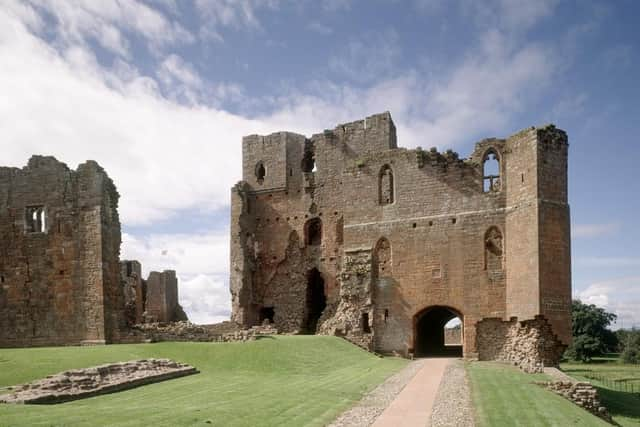
William destroyed the remaining defences of the castle using Flemish mercenary troops and Henry II’s forces defeated William at the battle of Alnwick and Brough Castle was recovered later in the year.
King John granted the lordship of Westmoreland, including Brough, to Robert de Vieuxpont in 1203.
Robert extended the castle in order to exert his authority over the region, where he was competing for control with other members of his extended family.
The castle was passed onto his son, John, after Robert died in 1228 leaving behind debts of £2,000.
John’s lands were divided between his two daughters, Isabel and Idonea, after he died supporting the rebels during the Second Barons’ War.
Isabel married a man called Roger de Clifford and they both acquired the lands and began a long period of Clifford control of the castle.
Fifth baron, Roger, chose to modify the castle in the 1380s partly to improve the defences and conducted work to most of the Clifford castles in the area.
At Brough, he rebuilt the south wall and reconstructed the living accommodation, replacing the existing hall with a more modern first-floor hall.
Henry Clifford used the castle until 1521, when a fire occurred following a luxury Christmas dinner, destroying the inhabitable parts of the castle. Henry died shortly after and the castle remained ruined for many years.
The castle was restored in the 17th century by Lady Anne Clifford, a major landowner in the Clifford family who retired to the north during the years of the Commonwealth following the English Civil War.
The restoration period for Brough lasted between 1659 and 1661 and Anne undertook more work at Brough than anywhere else on her estates, with the goal of restoring it to its pre-1521 condition.
By 1665, the castle had 24 fireplaces and it was restored so that she could live a late 17th century lifestyle.
Brough’s keep was renamed as ‘The Roman Tower’, as Anne believed it had been built by the Romans.
However, another fire broke out in 1666 which left it uninhabitable; the remaining buildings in the bailey were converted for use as a law court, and Anne died in 1676, leaving the castle unrestored.
By 1800, the south-west corner of the keep partially collapsed and in 1920 more of the south-west corner collapsed and the castle’s owner at the time, Lord Hothfield, gave the property to the Office of Works.
After some restoration to stabilise the ruins, it was a listed building and scheduled monument, eventually passed over to the control of English Heritage as a tourist attraction.
Erosion is a consistent threat to the castle’s masonry, and as of 2010 English Heritage considered the castle’s condition to be declining.