
St Leger: The remarkable trophy which has become part of the famous race's modern history

As the Betfred St Leger Stakes celebrates its historic 250th anniversary running this afternoon, the spotlight falls not only on the world’s oldest Classic, but also on the remarkable trophy that has become part of the race's modern history.
For the past two decades, the trophy has represented something more than a traditional sporting prize as each year, a new and individual piece is created by a designer maker, ensuring that the trophy presented to the winner is as distinctive as the achievement it celebrates.
The story began in 2007, when silversmith Chris Knight was approached to design the first perpetual trophy as part of the redevelopment of Doncaster Racecourse's grandstand and brought together a design team to develop the concept for the trophy.
Hand-wrought and weighing approximately ten kilograms, the solid silver trophy is composed of a large rose water dish with a central removable rose bowl.
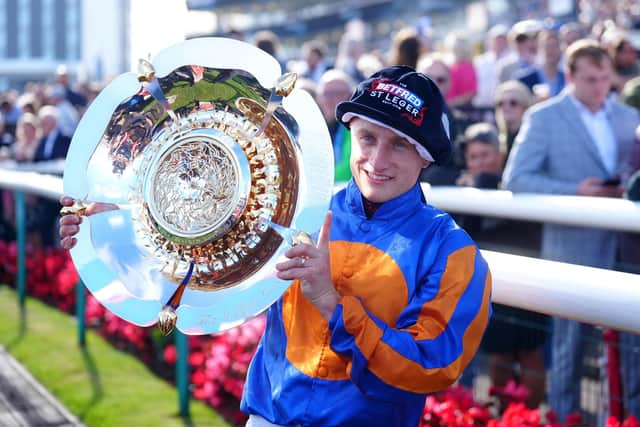

The large dish is the permanent trophy of the St Leger Stakes, comprising a large Yorkshire Rose surrounded by three layers of flames, inspired by an old Yorkshire flag and also providing a nod to the Triple Crown, of which the St Leger is the last leg.
At the heart of the design is a central, removable rose bowl, which is then awarded to the winner of the race.
This year’s central rose bowl was designed by Jen Ricketts, who specialises in hand piercing, using a very fine saw and saw blade to create intricate work.
Jen wanted to celebrate the heritage of the St Leger and Doncaster with a cityscape of the city in the background, and at the forefront of the design is a dramatic finish-line scene, depicting two horses racing neck and neck.
She said: “It was an incredibly prestigious commission, but one that held personal significance too.
"Having always had a great love of horses, creating this piece was something I had aspired to throughout my career as a silversmith.”
Elsewhere, Firbeck Parish Council has officially unveiled a new sculpture in the village near Doncaster to mark the St Leger’s 250th anniversary.
Two steel horses in full stride now stand on a verge near the former entrance to Park Hill, once home to Lieutenant Colonel Anthony St Leger, and after who the race is named.
The horses were the idea of parish council chairman Caroline Jopling.
“I wanted to do something to mark the site and I got the idea from the steel horses mounted on the wall on the entrance to Pontefract,” she said.
“It looks beautiful. Some people in Firbeck don’t know the history and that’s one of the reasons I wanted to do this.
For the 200th anniversary of the St Leger in 1976, there was a whole week of celebrations in the village – people here remember a costume parade and pony rides.”