
Flamborough Head: History of HMT Night Hawk incident at Yorkshire coastal cliffs during WWI with 13 deaths

The HMT Night Hawk incident at Flamborough Head occurred during the First World War and led to 13 deaths - here’s what happened.
Night Hawk was an armed trawler of the Royal Navy that served in the First World War and was built in 1911 as a fishing trawler before it was requisitioned by the Navy at the beginning of the war.
It was built by Cook, Welton and Gemmell at Beverley and had a steel hull, driven by a three-cylinder triple expansion steam engine and a single boiler.
Night Hawk struck a mine and sank on Christmas Day 1914, with the loss of six of the trawler’s crew, while working to clear a minefield laid by the Germans during the raid on Scarborough, Hartlepool and Whitby.
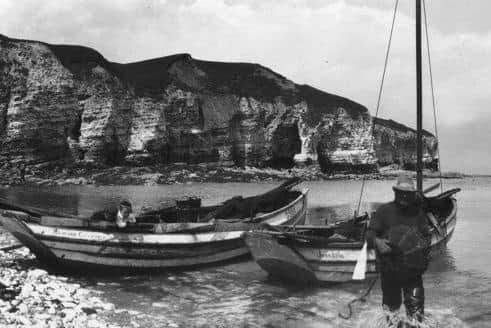

A German force of battlecruisers and an armoured cruiser bombed the English east coast towns on December 16, 1914.
The light cruiser Kolberg had joined this force, carrying 100 mines and while the other vessels bombed the towns Kolberg laid her mines off Flamborough Head, creating the most concentrated minefield seen in naval warfare to the time.
It was thought that the German strategy involved using the bombardment as a distraction for the minelaying, that was intended to damage any elements of the British fleet sent to respond to the German force.
On the day that the mines were laid, three British merchant ships were sunk and resulted in the loss of 31 people. They claimed dozens more ships and hundreds of men killed.
Night Hawk and a group of other mine trawlers were sent to the scene and arrived on December 19. On Christmas Eve, Night Hawk trawled for mines between Whitby and Flamborough Head, before returning to port at Whitby.
They dragged a cable through the sea to retrieve the mines which sometimes exploded and sometimes were brought to the surface where they were detonated by rifle fire.
The trawler was travelling 3.5 to four nautical miles off Scarborough when she struck a mine and the bottom of the ship broke away from the rest of the vessel and she sank within seconds.
All five men below deck - an engineman, two trimmers, a deckhand and a cook - drowned. The senior engineman, Alfred Chapple, who was above deck was thrown into the sea along with the other seven crew members.
Sub-Lieutenant William Senior of the Royal Naval Reserve, the vessel’s commander, reached a life raft and pulled the survivors onboard.