
Herb Fed Poultry: 'Why I feed my 10,000 turkeys on herbs from my auntie's farm'
Turkey may be the traditional Christmas dinner but other birds are becoming popular, says co-owner of Herb Fed Poultry, Emma Wilkinson. Catherine Scott caught up with her.

When Edward Wilkinson returned home to Yorkshire from London where he had been working as a chartered surveyor and visited his aunt’s Herb's Unlimited business he was fascinated with the taste of the eggs from chickens fed the leftover herbs.
It gave him an idea. If eggs tasted that good from chicken fed on herbs what would it do for meat chickens and turkeys.
He decided to do a trial run with turkeys, but despite his enthusiasm Edward’s idea was greeted with scepticism by Yorkshire butchers and so he decided to give his turkey meat away as samples and the initially sceptical butchers were converted.
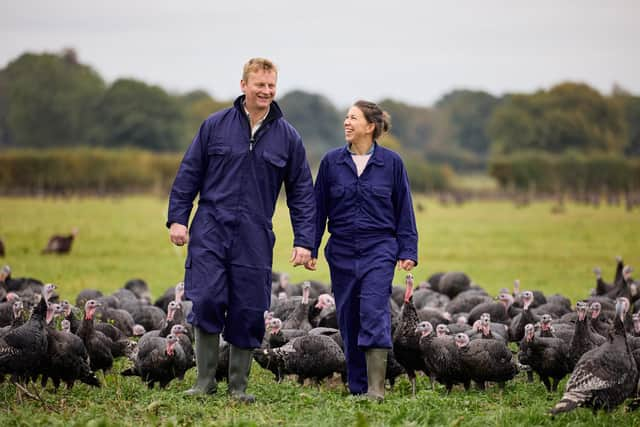

He launched Herb Fed Poultry in Christmas of 2009 and his turkeys sold out in weeks. From that first batch of 200, he now rears 10,000 turkeys for Christmas every year.
Edward added chickens to make the award-winning business year round and now run the it with his wife Emma.
“The chicken came along as turkeys are very seasonal and so he decided to do the same herb fed approach with chickens,” says Emma. “We do about 7,500 chickens a week.”
The chickens are reared on a farm on 50-60 acres and the turkeys are on another farm in Easingwold, North Yorkshire where the Wilkinson’s live with their two daughters.
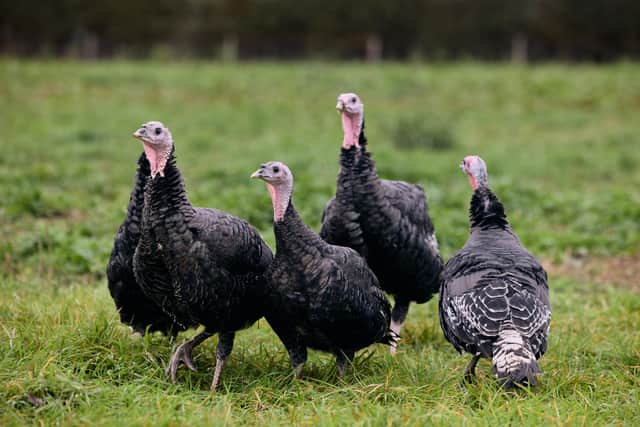
So what is a turkey’s favourite herb.
"They don’t like woody herbs like rosemary,” says Emma. “And for some reason the turkeys don’t like sage. The herb farm also produces salad and chilis and they seem to love those but I think that’s probably the colour more than anything.
“The herbs work two fold. The nutrients from the herbs add to the health of the bird and buy putting the herbs out for them to eat give them extra stimulation and it enhances their environment and makes them healthier which results in a great tasting bird.”
The turkeys are also fed a sustainably sourced cereal-based diet alongside the herbs. After arriving at the farm as day old chicks in July the turkeys are reared in polytunnels and fields until they are ready to be slaughtered.
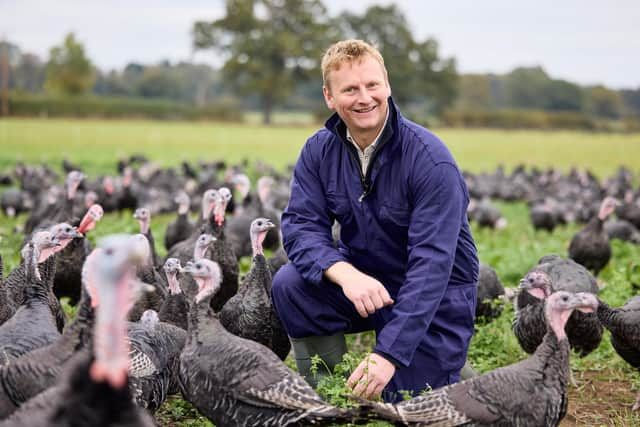
At Herd Fed Poultry all turkeys are dry plucked which is a very manual process and they employ 30 people to do the plucking.
All their birds are sold directly to butchers and independent farm shops up and down the country.
"We aim for the best butchers and farm shops across the country and then we also sell on line direct to the customer’s door,” says Emma, who herself doesn’t come from a farming background.
“I’m what they call ‘fresh blood’,” she says.
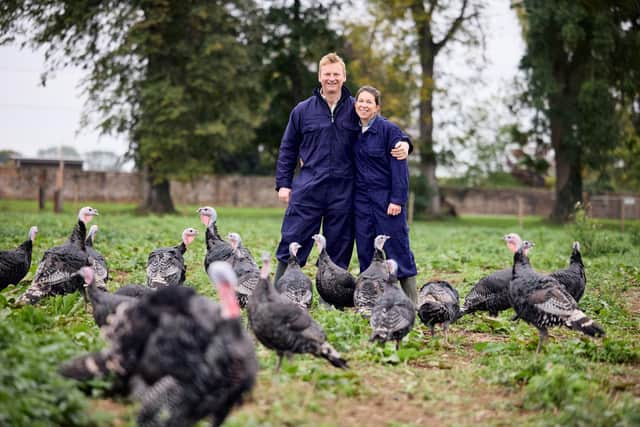
“I was born in Hong Kong and my dad works in a bank and my mum is a nurse so in terms of farming I had nothing more than a pet rabbit – although I did always want to be a vet so I feel I am now living my dream.”
She says while turkey remains popular as the traditional centre-piece of Christmas Dinner, since Covid people have been turning to other, smaller birds.
“During Covid we introduced breast and leg joints for our turkeys when people weren’t allowed to have the big gatherings.
"They are still very popular but we also started doing Christmas roosters which are a male chicken that has been grown to almost 100 days really slowly they are smaller than a turkey, and are becoming popular as an alternative to turkey – people say it is like a really rich intense flavoured chicken.
"The roosters are only available at Christmas, they come individually boxed with the giblets and cooking instructions.
"I do think the trend for whole birds is coming down, possibly because people don’t know what to do or they don’t want to the left overs or make stock out of the bones. Life has got so busy for people that they just don’t have the time,” says Emma.
“I do feel the art of stock from bones needs to revived – people pay through the nose for collagen and yet there is a lot of collagen in turkey and chicken bones.”
While this is the busiest time of year for Herb Fed, Emma says with increases in bird flu cases nationally and a housing order in place, it is a hard time to be a poultry farmer.
"We got it three years ago and lost the whole business and we’ve built it back up. We have to be very careful and have very strict biosecurity. We are still very passionate about what we do but it is a very scary time.”
So what do the Wilkinson’s eat on Christmas Day ?
"We will always have a turkey but Edward is one of four and so Christmas is always a big family gathering so we tend to have a goose and a turkey.”
Emma Wilkinson’s advice on cooking the perfect Christmas turkey
Temper. Remove it from the fridge about one hour before you prep (or 30 minutes for smaller joints) so it comes to room temperature before cooking – that helps it cook more evenly.
If your turkey arrived frozen, thaw it fully in the refrigerator (the “fridge‑thaw” method) – that’s the safest approach. Don’t rinse or wash the turkey – that risks spreading bacteria around your kitchen.
Ensure you have removed the bag of giblets from the neck cavity before cooking – use them later for wonderful gravy.
Preheat, position and roast: Don’t rush the oven. Preheat fully (at least 15 minutes) so that the oven has reach temperature before you put the bird in.
For whole birds – Start the bird in the oven breast side down and about half way through the suggested cooking time turn the bird over on to its back to brown the breast, seasoning both sides.
For crowns – place the bird breast side up for the duration of its cooking time in a roasting time and sprinkle with salt and pepper.
The bird is cooked when the juices from deep in the thigh run clear when skewered. If the juices are pink, return to the oven and check at 10 minute intervals.
Cooking times and checking doneness. Take a look at the Herb Fed Cooking times guide (www.herbfedpoultry.co.uk) If you don’t want to rely solely on timing – use a meat thermometer / temperature probe. The thickest part (thigh–breast junction) should reach at least 75°C.
If the juices run clear (no pink) when you pierce the thigh, that’s another good sign. If the skin begins to darken too quickly, loosely tent foil over the breast to slow browning without trapping steam too tightly.
Emma says there is a growing trend for barbecuing a turkey and details can be found on their website.
Resting, carving and serving. The all‑important rest once your turkey is out of the oven, don’t rush to carve. Rest it under loose foil (and possibly a tea towel) for 30 to 60 minutes.
This allows the juices to redistribute into the meat, resulting in moister slices. Some chefs even rest it longer (up to 90 minutes) without it going cold – especially when wrapped well.
Carving tips. Remove the legs (thigh + drumstick), slicing along the joint. Remove the wings. Slice off each breast from the bone in thick, even slices. Carve the leg meat (dark meat) from the joint side. Take advantage of natural separations and cut close to the bone for minimal waste. Don’t forget: keep your carving knife sharp and warm it slightly (dip in hot water and dry) so it glides cleanly.
Serve slices with gravy, roast potatoes, seasonal veg – and probably a cheeky glass of something festive.