
‘Pie King’ Calum Franklin on making people 'proud of British food again'

‘Pie King’ Calum Franklin is on a mission to bring back Britain’s historical pie recipes to “make people proud of British food again”.
Balti pie
“A pie born out of the Midlands, this is one of my all-time favourites,” says king of pies Calum Franklin.
“Its roots are in Pakistani-Kashmiri cooking and the base of the curry always has to contain tomatoes, onions, peppers and chillies, although variations can be built on those foundations.
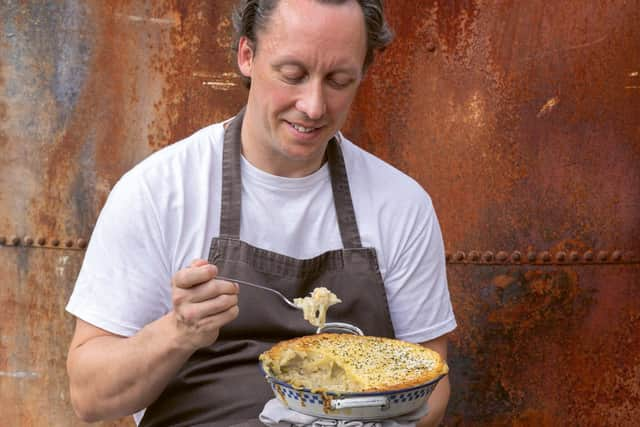

"It’s a wonderful celebration of multicultural Britain. Enjoyed on football terraces across the nation, the first balti pie is thought to have been served at Walsall Football Club in 1977.
"They are now sold at over 60 football grounds throughout the UK.”
Serves 4. Ingredients: 6 chicken thighs on the bone; 1tsp medium curry powder; 1tsp garam masala; ½tsp ground turmeric; ½tsp chilli powder; ½tsp ground cumin; ½tsp ground cinnamon; 70g butter; 1 red onion, finely chopped; 1 green pepper, deseeded and cut into small cubes; 1 garlic clove, peeled and chopped; 2cm piece of ginger, peeled and chopped; 400g tin chopped tomatoes; 1tsp tomato purée; 200ml chicken stock; 1 heaped tbsp cornflour; Zest and juice of 1 lime; 10g fresh coriander, roughly chopped; 16 frozen roti paratha; 1 egg yolk, strained and beaten with 1tsp water, for egg washing; Pinch each of nigella seeds and fennel seeds, for topping; Fine table salt
To serve: Spicy green chutney

Equipment: Non-stick 12-hole muffin tray
Preheat the oven to 190°C fan/210°C/gas mark 6½. Place the chicken thighs in a roasting tray and season with a pinch of salt.
Place the tray in the oven and roast the chicken for 25 minutes and cooked through, then set aside to cool.
Lower the oven temperature to 185°C fan/205°C/gas mark 6. Scatter all the ground spices over a sheet of foil. Place the foil in the oven and toast the spices for 10 minutes. (Turn the oven off.)
Meanwhile, melt 50g of the butter in a wide-based pan. Add the red onion, green pepper, garlic and ginger and cook over a low heat until softened.
Add the toasted spices to the pan with the vegetables and cook for a minute, then add the chopped tomatoes, tomato purée and chicken stock.
Bring everything to a simmer over a medium heat and reduce the sauce by half. Turn off the heat.
When cool enough to handle, strip all the meat off the chicken bones and chop into small nuggets. In a small bowl, mix a tablespoon of cold water into the cornflour to make a slurry, then stir that into the sauce. Stirring continuously, bring the sauce gently back up to a simmer.
Add the chopped chicken, mixing it well, then add the lime zest and juice. Taste to check the seasoning, adding a little salt if needed.
Finally, fold through the chopped coriander. Set aside to cool to room temperature, then chill in the fridge
Grease eight of the holes in the muffin tin with the remaining butter. Take the paratha out of the freezer. Working swiftly as the paratha defrost quickly, roll out eight of the paratha to about 11cm.
Line each hole in the muffin tin with a rolled-out paratha and fill them about three-quarters of the way with the balti mixture.
Lightly brush the exposed paratha with a little water. Use the remaining paratha to close off the pies, gently crimping the edges together but don’t worry about being too neat – I like to give them a rustic look.
Chill the pies in the fridge for 15 minutes.
Preheat the oven to 200°C fan/220°C/gas mark 7. Using a sharp knife, make a small hole in the top of each pie.
Lightly brush the top of each pie with a thin coating of egg wash and scatter the nigella and fennel seeds across the tops of the pies.
Place the muffin tray in the oven and bake the pies for 30 minutes. Serve immediately while hot, with some green chutney for dipping.
Figgy pudding
“Often considered a precursor to the classic Christmas plum pudding, there were recipes for Figgy Pudding in Mrs Beeton’s Book of Household Management, her cookbook of 1861.
"Classically made from preserved figs, suet, spices and brown sugar, and then soaked in rum, it would have been a dense, sleep-inducing affair of a dessert,” says chef Calum Franklin.
“My version here makes use of the magical properties of baking powder to lighten the sponge whilst retaining the robust flavours of the original.
"This was probably the recipe I tested the most times for this book.
"There were many, many failed attempts – some of which I inflicted upon my family (I am so sorry) – before perfecting this pudding, which I think is a joy to eat. Pass the custard, please! ”
Serves 4–6. Ingredients: 15g softened butter, for greasing; 100g self-raising flour; 2tsp baking powder; 80g vegetarian shredded suet; 40g ground almonds; 50g panko breadcrumbs; Zest of 1 unwaxed lemon; 1tsp ground cinnamon; ½tsp fine table salt; 2 eggs; 140g golden caster sugar; 150g whole milk; 30ml Amaretto liqueur; 100g dried figs, stalks removed and cut into small pieces
To serve: Custard; 10g flaked almonds, toasted
Equipment: 20cm savarin ring mould or 6-cup fluted bundt tin
Preheat the oven to 165°C fan/185°C/gas mark 6½ and lightly grease the savarin mould or bundt tin with the butter.
In a large bowl, combine the flour, baking powder, suet, ground almonds, panko breadcrumbs, lemon zest, ground cinnamon and salt.
In a separate bowl, beat the eggs with the sugar until well combined, then whisk in the milk and Amaretto.
Pour the wet ingredients (the egg mixture) into the bowl with the dry ingredients (the flour mixture) and beat together to form a smooth batter.
Fold the chopped figs through the batter so they are evenly distributed.
Carefully scrape the batter into the greased mould or tin; the batter should come no more than three-quarters of the way up the sides.
Cut out a piece of parchment paper that matches the shape of the mould or tin and sit it over the top.
Next, tear off a sheet of foil measuring 50cm square and fold a 2cm pleat in the centre (this allows for the pudding to expand during steaming).
Fit the pleated foil to the top of the mould or tin; it should sit loosely over the surface but fit tightly around the sides.
Take a length of string and tightly tie it around the sides of the mould or tin to secure the foil lid in place.
Place the mould or tin in a deep roasting tray. Fill the tray with boiling water so it reaches halfway up the sides of the mould or tin.
Tear off another large sheet of foil and use it to seal the roasting tray. Place the tray in the preheated oven and steam the pudding for 2½ hours.
Once cooked, remove the tray from the oven and the pudding from the tray, and rest the pudding for 15 minutes before discarding the foil and parchment paper.
Check the pudding is loose around the sides of the mould or tin. If necessary, gently prise the pudding away from the sides with a small knife. Turn out the pudding into a wide, shallow bowl.
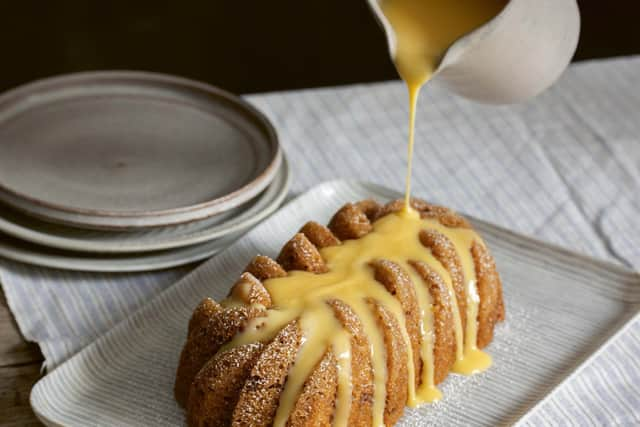
To serve, pour the custard over the pudding. If you have used a savarin ring mould, fill the cavity at the centre of the pudding and allow a little custard to drizzle down the sides.
If you have used a fluted bundt tin, pour the custard over the top of the pudding and allow it to cascade down the grooves. Finish with a scattering of toasted almonds before serving.