
Salt Brewery: 'How I launched a successful brewery in the heart of Saltaire'
One of Yorkshire’s youngest breweries has just been named as one of the country’s most successful small beerhouses. Catherine Scott met the men behind the success story. Pictures by Jonathan Gawthorpe.

When the Beer Orders of 1989 called time on Britain’s Big Six breweries, few mourned. For decades, the oligarchical makers of beer had tight control over its distribution, via tied pubs, restricting competition and preventing innovation.
By forcing them to sell, the government hoped that market forces would give a better deal to consumers, and in large part that’s what happened.
It’s strange then, that one of the UK’s most successful small breweries, and the only one to make it only Retail Index 2025, should have built its success through vertical integration.
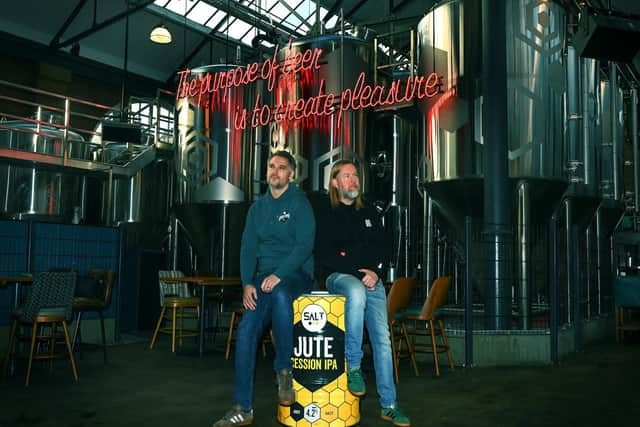

The Salt Group’s £13.9 million sales last year were split 55:45 between its 32 pubs and bars, and its beer production, which includes the cask ales of Ossett Brewery and the keg-dispensed craft brews of Salt Beer Factory.
“People think brewing and pubs are the same business, but that couldn’t be further from the truth. Brewing is manufacturing, which attracts a certain type of person, and pubs are retail, which attract a different kind of person,” says Jamie Lawson, Salt’s CEO and founder.
There are advantages to having a foot on both sides, however, particularly in light of rising costs in the hospitality industry from National Insurance and minimum wage hikes, and from energy and raw material price inflation.
“We’re no different from anyone else. We’ve got the same challenges, but our business has very firm roots. I’ve been building our pub seat for two decades now, and it gives a very strong anchor for sales on a Monday morning before we pick up the phone,” Lawson says.

Around 20 per cent of the beer the company brews is sold across that estate, with the rest going to national and regional distribution, both in the on and off trade.
The advantage goes both ways though.
“Craft beer is a sensitive beast. If it’s not looked after properly, it deteriorates very rapidly. Having your own estate allows you to do the internal training to ensure the quality of the beer. It’s always something that was on my mind when I started my pub journey, to integrate the brewery and pub together,” Lawson says.
That journey began for him in 2002, when he returned to his native Yorkshire from a six-year stint as a venture capitalist in Tokyo, and bought the Black Bull in Leversedge, West Yorkshire.
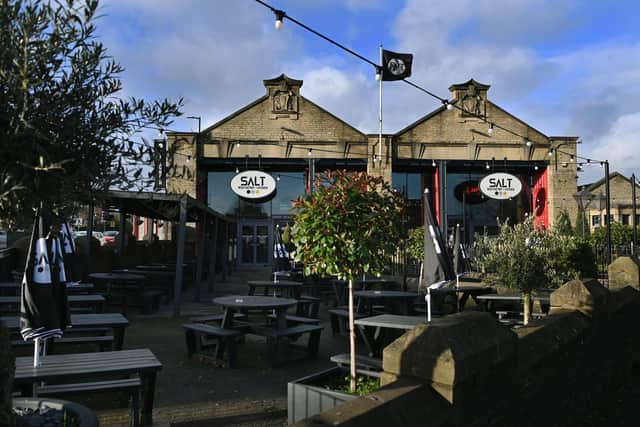
His father Bob Lawson had started Ossett Brewery four years previously, as part of the wave of independent real ale producers that followed in the wake of the Beer Orders.
For the time being, the two businesses were distinct, with Jamie living and working as a publican for the next two years.
“They were some of the best years of my life. At the time I didn’t have any greater aspirations than running this great pub, which was a very profitable business,” Lawson says.
Taking private investment from within his network, he then started buying more.

Today, much of the predominantly Yorkshire-based estate comprises old pubs—some of them from the 17th Century—restored to their former glory, as the architects intended.
The tie-up between the father’s business and the son’s happened in 2016.
The group then added a third element in 2018 – and a third investor, in silent partner Mark Hunter – when Jamie Lawson launched Salt Beer Factory.
Lawson is on a mission to unify heritage and modern brewing. Named after the pioneering industrialist Titus Salt who built the UNESCO village at the brewery’s home in Saltaire.
It was this that enabled the rapid growth that the wider company has experienced—revenues rose at a compound annual rate of 197.4% between 2022 and 2024—over the past two years.
Salt utilises their brewing history and knowledge, and continues to revolutionise the industry with progressive brewing styles, forward-thinking recipes and only the freshest ingredients around.

Despite its relative youth, Salt is taking the craft beer world by storm and has now become an award-winning brewery and renowned household name across the UK.
Brewed year around and available in keg and can, Salt’s core lineup includes the iconic Jute 4.2% Session IPA, Huckaback 5.5% NEIPA and SIBA award-winner IKAT 8% DDH DIPA. Whilst the monthly special beer releases include the sours, lagers and stouts, and limited-edition collaboration brews include the latest SALT x Hooch Lemon Sour Beer.
Molson Coors approached Lawson in 2022 because they were looking for an independent craft beer partner.
After a short regional trial, they rolled out Salt Beer brews such as Jute nationally, as well as producing a new beer in collaboration with the multinational, Alpacalypse.
Despite this unexpected uptick, Lawson is keen to emphasise that he’s not interested in growth for its own sake.
“I’ve seen VC backed companies with periods of success that look spectacular on social media. Is it sustainable? Does it have longevity?
“We’ve been going over two decades. The growth has been incremental. We invest in public houses for the long term, to create legacy venues that will be there for lifetimes to come. We’re doing it the proper way, it’s not a get rich quick scheme,” Lawson says.
His key advice for anyone thinking of following his footsteps into the beer trade?
“Get yourself a good finance person. If that’s you, and you have an understanding of financial instruments, P&Ls and balance sheets, brilliant. If it’s not you, find somebody quickly, because a lot of entrepreneurs like myself are creative types who want to do the next big thing, but as you scale up quickly you need someone competent looking after the financial base.
“I didn’t have that for a while. I got lucky. Now I’m surrounded by people who help me with that side of things.”