
“I haven’t paid a single penny on energy bills for over a year”: Homeowners turn to solar and heat pumps as prices rise
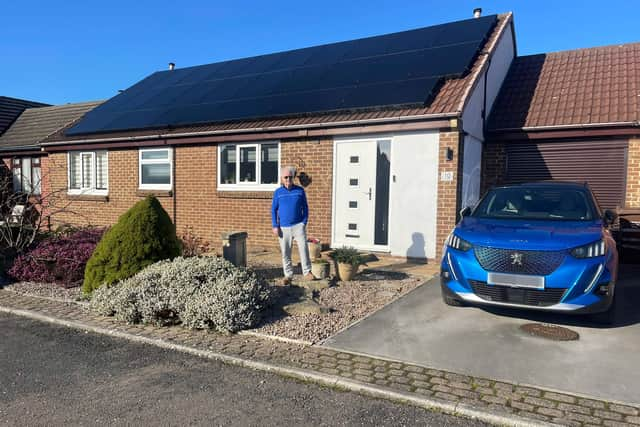
Craig Howie wasn’t expecting to eliminate his energy bills altogether when he began looking into alternatives to his ageing gas boiler at his three-bedroom bungalow.

Like many homeowners, the 70-year-old retired finance director from Silsden, West Yorkshire, just wanted a more efficient system that would protect him and his wife, Susan, from rising costs. But within months of installing a new setup, they found themselves living in a home that produces its own power, heats itself and even earns money back from the grid.
“I certainly wasn’t expecting it to be no bills at all,” he says. “Since we installed the new system in February, 2025 we haven’t paid anything for electricity and we have no gas.”
Craig’s experience comes at a time when millions of households are bracing for further energy price rises. Energy UK has warned that bills could increase by as much as £250 a year as conflict in the Middle East continues to push up wholesale gas prices.

The uncertainty has triggered a surge in demand for alternatives. Octopus Energy reports a 27 per cent rise in solar installation enquiries since the conflict began.
According to the Department for Energy Security and Net Zero, homeowners could save around £500 a year by installing solar panels.
After extensive research, Craig settled on a Cosy 9 air source heat pump from Octopus Energy along with 26 solar panels and battery storage from P4 Solar.
Installed in early 2025, the system cost around £14,000 in total, with a Government grant significantly reducing the cost of the heat pump.
The savings have been immediate and striking. “We are actually saving £3,500 per year based on payback and our usage,” he says.
Previously, the household was spending close to £2,900 a year on gas, electricity and charging an electric vehicle. Now, not only are those costs gone, but the system generates excess power. “We’re now exporting about 40 kilowatts back to the grid,” he says. “We’re actually making money from it.”
Beyond the financial savings, the change has altered day-to-day living. “The whole house is more balanced now,” he says. “And we’re certainly not anxious about electricity bills and gas bills and the price going up.”
While Craig’s retrofit shows what is possible for existing homes, new build developers are increasingly designing out gas altogether in preparation for the government’s Future Homes Standard.

Under the policy, published last Tuesday, homes built from 2028 will produce 75 per cent less greenhouse gas emissions than those built according to existing 2013 standards.
Developers will be required to install solar panels and heat pumps in new homes in England. Plug-in panels that homeowners can self-install on balconies are also expected to be available in supermarkets in the coming months.
At Swinnow Park in Wetherby, Taylor Wimpey is already building 762 homes powered by a communal heating system, where a single large air source heat pump provides heat and hot water to every property via individual heat interface units. The approach – the housebuilder’s first for the region - eliminates the need for gas boilers entirely.
It means, as part of their heat bill, homeowners are provided with an all-inclusive service that covers the maintenance and HIU replacement, so there are no surprising bills.
Sam Evans, sales and marketing director at Taylor Wimpey Yorkshire, says: “As housebuilders, it’s important for us to embrace other forms of heating as part of the UK Government’s commitment to reducing carbon emissions to net zero by 2050.”
Elsewhere, the idea of bill-free living is being tested by housebuilder Barratt Redrow, which has been part of a huge project to understand the most efficient ways to heat homes without gas.
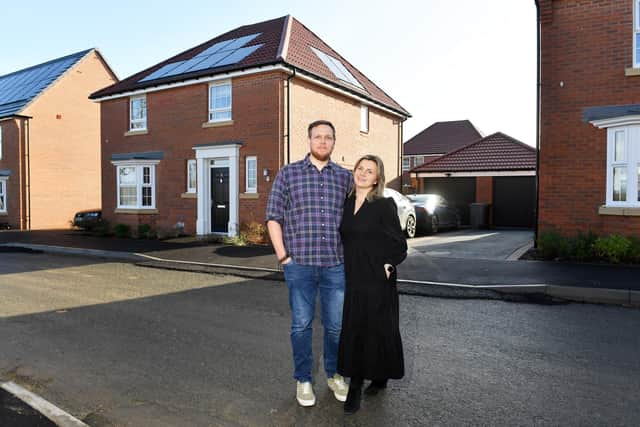
In Lincolnshire, Ivan and Alicja Lawson have become the first homeowners to move into one of its properties at Pastures Place as part of a trial offering zero energy bills for two years. The project, in partnership with British Gas, combines solar panels, battery storage, heat pumps and smart energy systems designed to optimise how and when power is used.
In exchange for sharing data on their energy use, the couple pay nothing for heating, hot water or electricity during the trial. “So far, we haven’t had to change our behaviour at all,” Ivan says. “The air source heat pump means that we have the heating at a constant temperature of about 21 degrees, and we have noticed that the house is always comfortable.”
Their home includes 16 solar panels, a battery and smart technology that manages energy use throughout the day. During the two-year trial, households are expected to save around £1,258 annually compared with a typical new-build home. After that, many are predicted to continue seeing minimal costs.
Back in Silsden, Craig has already become something of an ambassador for the technology, welcoming visitors curious about making the switch. “Every property is different but so far, four or five have gone on to get the heat pump and 10 or 11 have got the solar set up,” he says.