
Inside the small, practical tweaks making Yorkshire families' home warmer and more energy efficient
Retrofitting older homes is increasingly seen as essential to cutting carbon emissions - housing accounts for around 14 per cent of the UK’s total - but the path to making draughty Victorian terraces and 1930s semis more efficient is rarely straightforward.

The advice can be technical, the costs hard to predict, and the risk of getting it wrong high. Homeowners want to improve warm-up times and lower bills, but most don’t know where to begin.
That challenge is familiar to David Clayton and his partner Rachel who live in a three bedroom Edwardian terrace in Meanwood, Leeds, with their two teenage daughters. Their house was cold without the heating on and they were keen to reduce their carbon footprint.
They discovered Wrapt, a Leeds-based firm that helps owners make their homes warmer and more energy efficient.
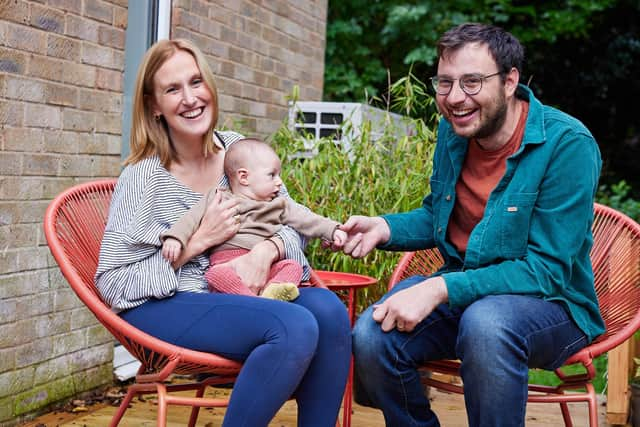

“ They initially did a survey we made a plan,” says David. “We started with the bathroom, stripping everything out and insulating the back external wall."
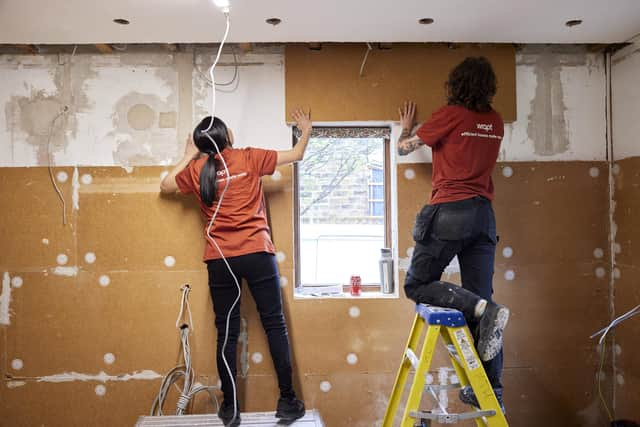
Wool insulation combined with the specialist plaster board and lime paint allows the external wall to absorb moisture and they also installed a new efficient vent.
"It’s really warm and comfortable now and there’s no damp,” says David. “We’ve since done two bedrooms and it’s made a big difference upstairs. We have further plans to replace the windows and insulate downstairs too.”
Wrapt was founded by Leeds architect Jamie Keats, who previously worked for sustainable developer Citu, and his business partner, Colin Munro, in 2023. “We were very aware of the issues in retrofit,” he says. “It’s just so complicated to solve, and it’s very difficult to get the right advice, to get the design, to get the construction done correctly as well.”
Their idea was to bring guidance, design and the actual building work under one roof. “Because most of the work is hidden, you need to trust people to be doing the job correctly,” says Jamie.
Their first project was Jamie’s own home in Gledhow, Leeds, which he shares with his wife Rebecca and their son, Ezra.
“We refurbished the full home, taking it off gas, installing insulation to the walls, floors and roof, ventilation systems and an air source heat pump,” says Jamie. “We wanted to demonstrate what is possible to achieve, learn how to do all the details and show to future clients.”
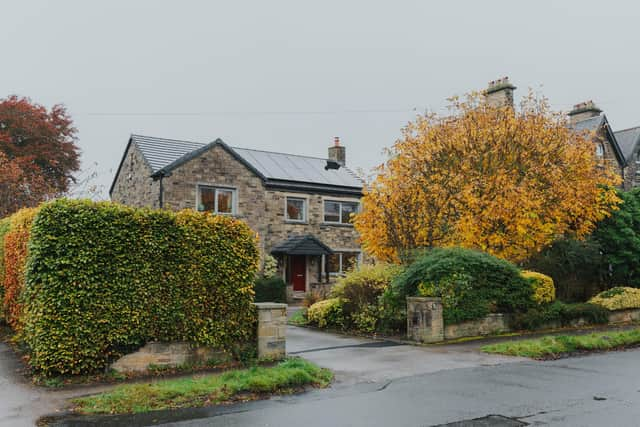
In 2024, Wrapt took on an ambitious project to transform a 1980s stone property in Ikley, inset, into a high-performance home with next to no heating bills. The client had high sustainability aspirations and together, they were able to design and create a low energy home fit for the future.
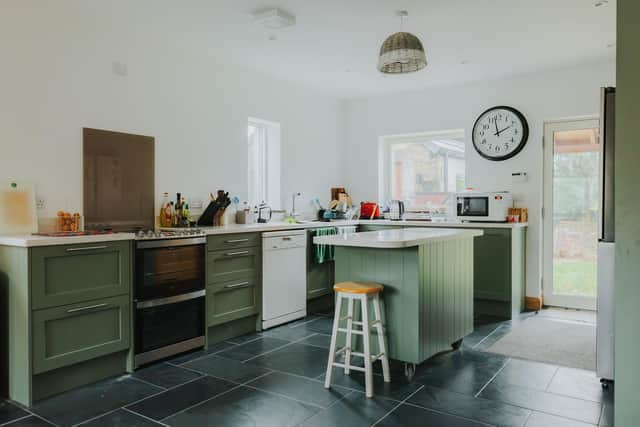
However, that level of investment is not something most people can afford. Instead, Wrapt focuses on helping people understand what’s practical right now and what might wait until they next redecorate. “If you’ve just installed a new kitchen and a new floor you’re really proud of, maybe that’s not the place to start,” says Jamie.
The first step in most homes is very basic, he says. The biggest difference you can make on the smallest budget is stopping cold air coming in and warm air leaking out.
Wrapt offers a draft-proofing visit using a blower door and thermal imaging to track where heat is escaping and to fix the worst gaps on the spot. “It’s actually the easiest thing you can do to reduce energy bills in your home,” says Jamie. “It’s a one-day thing to get your house improved.”
Improving one room at a time, like David and Rachel, can reduce cost and disruption, especially if combined with changes already planned. “If you’re repainting that room, you can say, ‘Oh, let’s get some insulation in behind the paint,’” says Jamie.
He also warns against chasing a perfect performance target. “The first inch of insulation does the most work. The costs start to really ramp up the further you go,” he says. “We generally talk people down - you don’t have to aim as high as you think.” Reducing heat loss even modestly can make rooms feel significantly more comfortable.”
One area where Jamie believes more care is needed is the insulation of older solid-walled homes - properties common across the region.
Materials such as wood fibre or hemp allow moisture to pass through, avoiding the damp issues sometimes seen when impermeable boards are fitted internally. “Breathable materials basically de-risk it all, because the wall can continue to dry out once the insulation’s on,” says Jamie.
Wrapt is also developing new methods of its own. One innovation is a quicker internal wall insulation system using digital scanning and off-site cutting, which can be installed in a day. “We’ve done three pilots and we see it as hopefully a big area we can grow into in the future,” Jamie says. “In an ideal world, in six months’ time, we’d be ready to roll it out.”
Ultimately, he believes that retrofit should not feel daunting or niche. “It doesn’t need to be this giant, expensive thing,” he says. “Integrate it into your life - it’s maybe a 15-year journey.” And the reward, he adds, isn’t just a lower carbon footprint: “You’re making your house warmer, healthier and a better place to live.”