
Yorkshire's rental market cools ahead of Renters' Rights Bill
After years of rent increases and intense competition, Yorkshire’s rental market is showing signs of easing, giving tenants more choice and a slight break in prices.

A rise in supply and a drop in demand are rebalancing the market across the region.
Zoopla’s latest Rental Market Report reveals the UK rental market is at its weakest since 2020, with rents rising just 2.4 per cent in the last year -the slowest rate in four years.
In Yorkshire and the Humber, rents on new lets are now falling, down 0.5 per cent year-on-year to £947, according to the Hamptons Lettings Index.
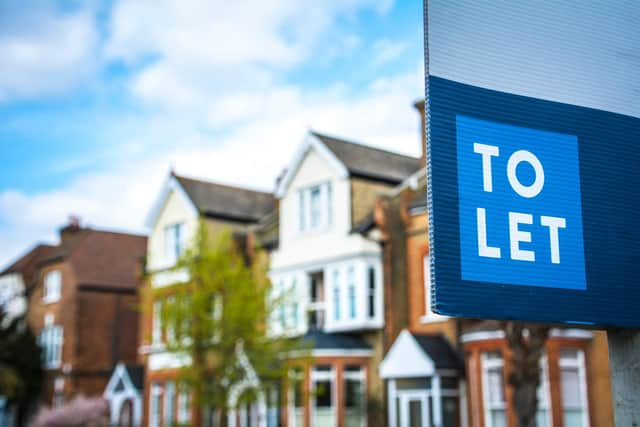

This marks the first annual decline in new rents in the region since November 2019. Meanwhile, renewed rental contracts in Yorkshire still saw prices rise by three per cent to £896 a month, but the overall picture shows a market shifting back in favour of tenants.
The biggest driver of change is supply. The number of homes available to rent in Yorkshire and the Humber is up by 26 per cent on last year, as more landlords re-enter the market and former sellers list homes to let. Zoopla reports the average letting agent now has 19 homes available, compared to just 14 in 2022.
“Rental market conditions are starting to normalise which will be very welcome news to renters,” says Richard Donnell, executive director at Zoopla.
“Lower migration and better mortgage availability for first-time buyers are easing the scale of the competition for rented homes. There is also more choice for renters with more homes for rent as landlords start to buy homes once again and some owners who can’t find a buyer listing their homes for rent.”
A major factor in falling demand is the return of first-time buyers. New rules introduced in early 2025 gave first-time buyers a 20 per cent boost to borrowing power, leading to a 30 per cent rise in first-time buyer mortgages.
This not only lowers demand for rental homes but adds more to the market as people leave rented accommodation behind.
While tenants have more options, affordability remains a challenge. Zoopla notes that average rents across the UK have risen by £80 per week since 2020, adding £4,100 a year in costs. With incomes lagging and housing benefit failing to keep pace, many renters remain under financial pressure.
“Over the longer term, rents have consistently outpaced inflation, which means tenants today are paying more than they would have if rents had simply tracked CPI,” says Aneisha Beveridge, head of research at Hamptons. “But this recent slowdown suggests the market is recalibrating. With affordability stretched and demand softening, landlords are having to adjust to attract tenants.”
Nationally, Hamptons data shows rents fell 0.4 per cent year-on-year in August -equivalent to £6 per month – the sharpest post-Covid decline since its lettings index began in 2011. Rents in four of the 11 UK regions, including Yorkshire and the Humber, are now falling.
However, the cost of renewing a tenancy remains higher, rising by 4.3 per cent over the past year. That still leaves renewals around £90 per month cheaper than moving into a new property, a smaller gap than the £170 peak in October 2023, but far above pre-Covid norms.
Looking ahead, further pressure on landlords may reintroduce volatility.
Earlier this month, the Government rejected the majority of amendments for the Renters’ Rights Bill put forward by the House of Lords and the wording of the new legislation is now in its final stages.
The Bill, which aims to give tenants more security to stay in their homes and more freedom to leave substandard properties, is headed for Royal Assent and is expected to become take effect between October 2025 and January 2026.
Meanwhile, Chancellor Rachel Reeves is considering a range of new property taxes for the autumn budget, including expanding national insurance to include rental income.
Looking ahead, Knight Frank’s Tom Bill predicts some pressure may return: “Upwards pressure on rents will increase modestly next year,” he says.
He adds: “The small upwards revision reflects a possible period of disruption after the Renters’ Rights Bill is introduced later this year and the backdrop of renewed tax uncertainty. Unfortunately, ‘tax uncertainty’ is a phrase likely to be repeated.”
Despite the potential for future challenges, Yorkshire tenants are, for now, seeing the effects of a more balanced market. Zoopla expects rents to rise by just three per cent over 2025. “The affordability of renting remains a key constraint,” Richard says, “and we expect rents to be three per cent higher by the end of the year at an average of £1,320 a month.”