
'I gave up working in childcare to become a full time small holder and here's how I did it.'
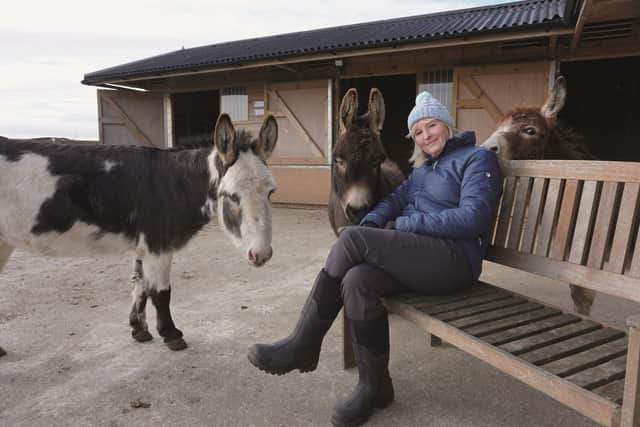
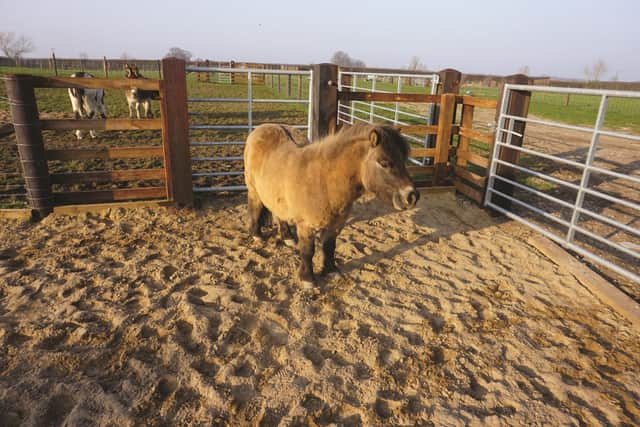
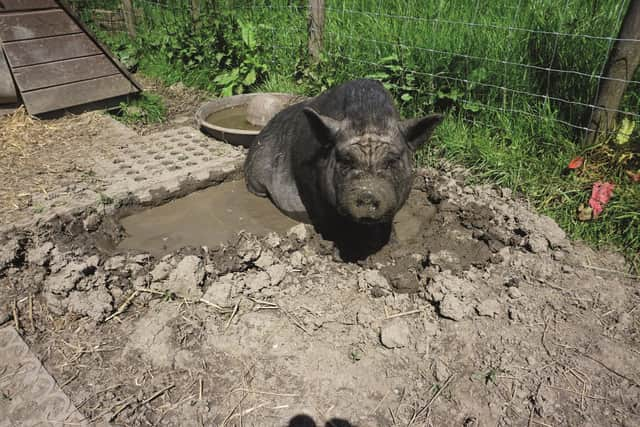
Allison Lee has always loved animals, but recently, she has taken that to a whole new level. The five-acre smallholding she has with husband Mark houses three mini Mediterranean donkeys, two mini Shetland ponies, 11 sheep, five pygmy goats, three pot-bellied pigs, three chickens and four dogs.
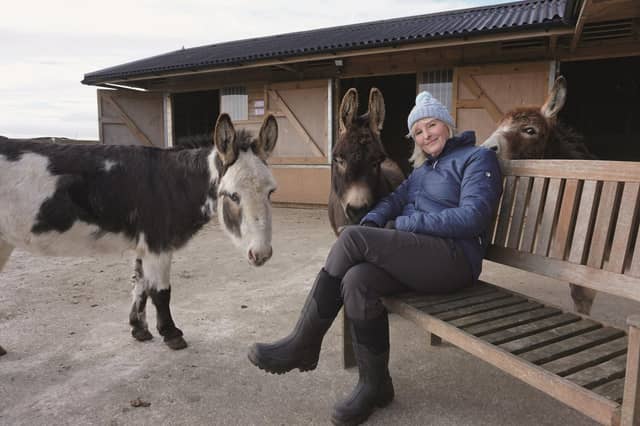


“Running a smallholding is something that quite simply crept up on me. The unplanned transition has always interested me due to my love of animals; however, the reality of caring for animals every day is much more challenging than the dream,” says Allison, whose career had always been in childcare, owning and running a chain of day nurseries and a training company she ran with her son until last year when she retired.
Even while working, she and her husband, Mark, started to pursue their dream of having their own smallholding in 2019.
“It’s something my husband and I have always wanted to do,” says Allison. “It was very hard work, as we had to do everything with the animals before we went to work and when we got back, and so that would mean getting up at 5.30am to feed and muck them out – often resulting in 15 to 17-hour days.”
They bought a barn and some land, hoping to convert the barn into a house, and after a battle with the planners, they finally got planning permission, but after lockdown, they realised it wasn’t exactly where they wanted to be.
“We moved to another house and took the animals with us, which is a nightmare in itself.” At that point they had goats, pigs, donkeys, ponies, chickens and dogs.
“We had a very good friend who was a farmer who helped us move all the animals.” They stayed there for five years.
“It was brutal. It was very high up in Holmfirth, and it was really hard work. I loved it, but my husband didn’t, and so last year, a month after we retired, we decided to move lock, stock and barrel to North Yorkshire on the outskirts of the Dales – away from family and friends, although they do come and visit. But it was something we wanted to do; we were ready for a new adventure – but I won’t be moving again.”
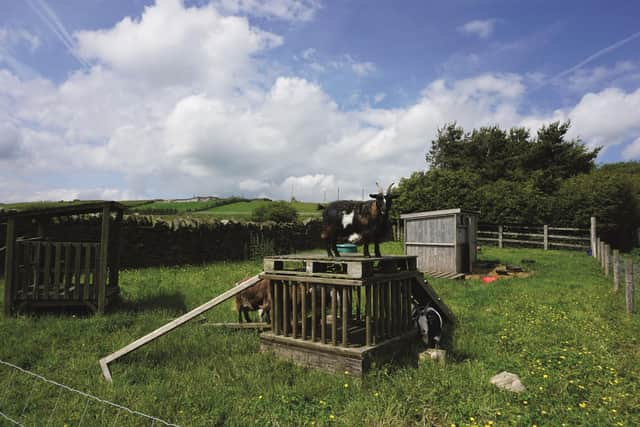
The Lee’s moved to North Yorkshire in November last year to a five-acre paddock that had stables but no fences or shelter for all their animals.
“It was a manic rush to get everything up for the winter,” she recalls. “We’ve done it, and we are really enjoying it now.”
There is no actual definition of what a smallholding actually is.
“We don’t make a living out of our smallholding. We do grow vegetables that feed us and the animals, but at the end of the day it is a hobby. We don’t breed animals to sell – we have bred sheep, but we kept them. They’ve all got names and think they are dogs – it’s just a wonderful way of life.”
Allison, who wrote a number of books on childcare when she was in that business, decided she wanted to write a book about how to set up and run a successful smallholding.
“I’ve written at least ten books on childcare over the years, and I have always wanted to write a novel, but it wasn’t until I got near retirement age and went part-time that I thought I’d give it a try. After publishing my first two psychological thrillers with a hybrid publisher, Blossom Spring, my third thriller was accepted for publication by indie publishers, Bad Press Ink. My Husband’s Child was published in September. Because I love what I do on the smallholding, I really wanted to share that. Yes, it’s hard work, and we get up early, but the animals give me so much more back than I give them. There are a lot of people out there that I think even if they don’t aspire to having what we’ve got, they enjoy reading about it.
“There are a lot of TV programmes about vets and farms at the moment that people really enjoy; even if they are sat by the fire and have no intention of going out in a gale, they still like to read about it. I wanted to write a guide for people who, if they did want to start a smallholding – something we would have found useful when we were starting out – then this is how you go about it.” she says.
In her book, Allison provides hints and advice on growing fruit and vegetables, raising various animals, and encouraging wildlife. Drawing on her own experience, she focuses on topics from choosing the right field shelters, fencing and equipment to caring for donkeys, ponies, sheep, goats, pigs and chickens. Covering a year in the life of a smallholder, Free-Range and Flourishing: The Smallholder’s Year encourages readers to be mindful of the seasons and enables them to understand the essential jobs that must be done all year round to keep livestock safe and healthy and the land productive. Only then can the smallholder enjoy a pleasurable and innovative lifestyle. “It’s a guide rather than a journey. I would like to write the journey, but that’s another book.”
So what are Allison’s top tips for someone thinking of starting their own smallholding?
“Listen to your head, not your heart – that’s the number one priority,” she says. “We have made mistakes along the way, and we have learnt from them. We are on our third attempt at smallholding. We thought we were going to convert the barn, then we moved to a bigger house with more land, and then we moved here, which is actually our smallest smallholding. We’ve gone from 13 acres to seven acres to five acres. Also think carefully about the animals that you want – start with one or two and build on it and do a whole year. They are expensive; you have to house them and feed them. You have a farrier every six weeks, vet bills, dentistry – it is an expensive hobby.
“Whilst summers can be enjoyable with the long days and warm nights spent in the paddocks grooming and getting to know the animals, the winter months are the complete opposite when it is a race against time to get them housed, fed and watered before the sun goes down, often battling the elements, and this is when the absolute determination comes in,“ says Allison. “But it is worth every minute.”
Free-Range and Flourishing: The Smallholder's Year by Allison Lee is published by Quiller and priced at £20