
How willows grown on a Yorkshire estate will soon be in the hands of the world's top cricketers
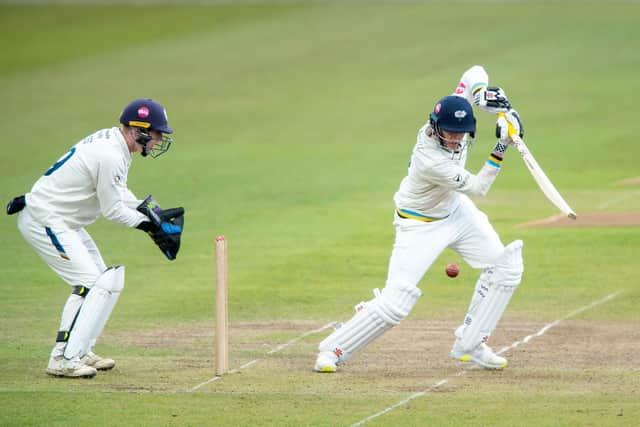
Many of the world’s greatest cricketers, including Yorkshire and England’s Harry Brook, could soon be playing with bats made from willow grown at the Newburgh Priory Estate in North Yorkshire.

The estate, near Coxwold, has been growing cricket bat willows for the iconic bat manufacturers Gray-Nicolls for the past 15 years - the length of time it takes for the willows to be suitable to be turned into bats.
Current cricketers who use Gray-Nicolls bats include England and Yorkshire’s Harry Brook and Tammy Beaumont, New Zealand’s Kane Williamson and Pakistan’s Mohammad Rizwan, while the former legends Sir Alistair Cook, Brian Lara, Clive Lloyd and Ian and Greg Chappell loved their Gray-Nicolls bats.
Typically, it takes 15 years for the willows, full name Salix alba Caerulea, to be ready to be used in First Class and Test matches, as well as the Indian Premier League (IPL).


They have recently hit the headlines as Jeremy Clarkson has just planted a number at his farm in his popular Prime television series Clarkson’s Farm.
Neil Gray, managing director of Gray-Nicolls explained: “Gray-Nicolls are very proud of our partnership with Newburgh and we have had a close working relationship for maybe 15 years.
“The estate’s plantation is more about cricket bats for the future as this year was the first opportunity to process a few willow trees. With our seasoning process it is unlikely that any Newburgh willow is being used by the current players. But very soon, possibly even next season, it will be.”
“These are tremendously exciting times for us,” says Wilf Standeven of Newburgh Priory Estate.
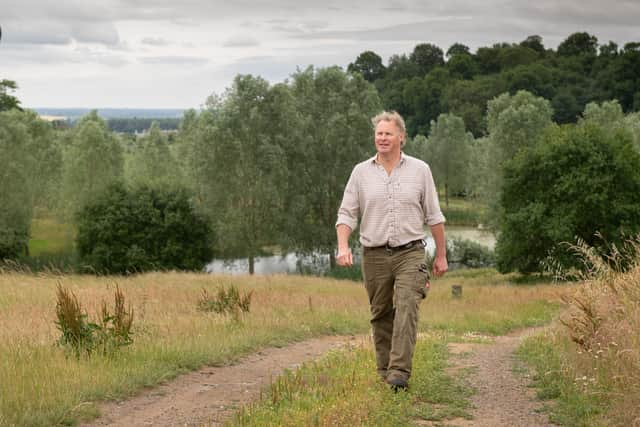
"The idea of our willow being used by batting superstars like England’s Harry Brook is simply magnificent. These last 15 years have been a labour of love – and now we are seeing the tangible results.
“There are currently 1,500 cricket bat willows growing on the estate and they now form part of a steady supply stream to Gray-Nicolls. Going forward, our willows, each of which can provide 35 bats, will be transformed into bats for the very best cricketers in the world. That’s quite a thought,” says Standeven.
“We are lucky that some of our land at Newburgh is perfect for growing these special willows and we aim to plant around 100 a year and ideally will harvest 80 per cent of those for crickets bats.” He added that the willows also had a benefit for the Newburgh Priory Estate.
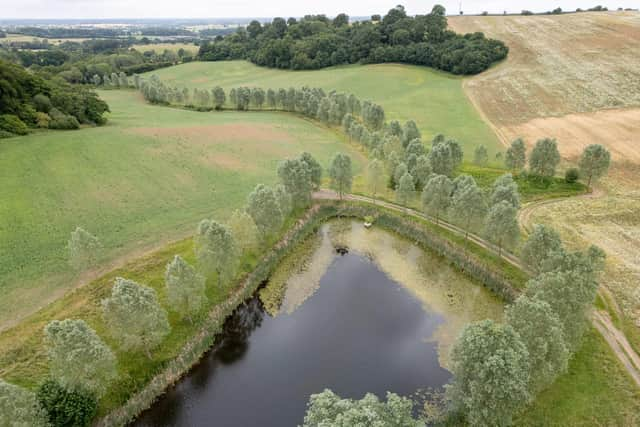
“They thrive in damp soil and will typically grow around bodies of water. Their extensive root systems and large capacity for water retention mean that they can help manage floodplains by stabilising surrounding soils and preserving nutrient rich topsoil.
“Their growth rate is considerable and they mature from 15 years onwards. The planting of cuttings and subsequent felling of the species is a highly sustainable practice, especially as they capture and store carbon.
“This benefits the environment, landowners, and cricket bat manufactures alike. What’s more, the speed with which the willows grow make them a wonderful 'chop-and-drop' material as they can be coppiced on a regular two-three-year cycle.”
But ensuring the willow is the correct quality of a bat is a labour of love as they have to be pruned regularly to ensure there a no knots which could effect the wood. Standeven, who grows willows at other sites cross North Yorkshire, admits he isn’t the biggest cricket fan himself, although his three daughters all play the sport.
It is thought that cricket bats’ willows were first introduced to Yorkshire by Sir Guy Graham Baronet of Norton Conyers, near Ripon, after the First World War. Sir Guy saw bat willows growing in East Anglia when he was shooting down there.
“People said it would be far too cold in North Yorkshire to grow them successfully, but he proved them wrong,” says his grandson Richy Graham.
"Gradually the word spread and over the years many neighbours, including Newburgh Priory, also started growing them for Gray-Nicolls across the county. And it has proved a tremendous success story.”
According to the ICC (International Cricket Council) the blade of all cricket bats must be made of willow.
There are two main types of willow used for cricket bats: English Willow – known for its lightweight nature and excellent grain structure, English willow is favored for professional-level cricket bats and Kashmir Willow – though heavier and less durable than English willow, Kashmir willow is used for lower-end bats, particularly for amateur players.
The handle of the bat can be made from other materials such as cane or rubber, but the blade must adhere to the wood specification as per the cricket bat rules.
The Newburgh estate is owned by the Wombwell family and as well as the house and gardens, includes farmland and a number of properties and as well as growing willow they grow Christmas Trees (www.newburghchristmastrees.co.uk).
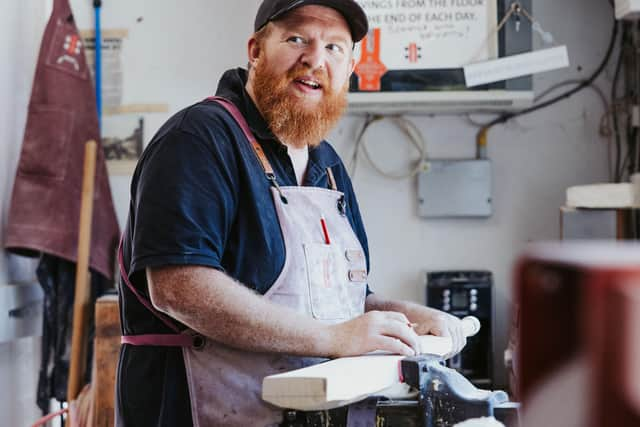
Standeven and Stephen Wombwell started the business in 2012 , with a shared passion for the countryside and love of forestry, decided to go into the large scale growing and selling of Christmas trees.
But for the moment all eyes are on the willow in the hope they will bring luck to future generations of Yorkshire and England cricketers.