
Calderdale Energy Park: Warning that wind farm scheme could set an ‘alarming precedent’ for integral wildlife and peatland
On a Yorkshire hillside, near the home of one of the region’s most famous families, the clash between the UK’s renewable energy ambitions and need to protect natural spaces is coming to a head.

Up amongst the heather-drenched moorland hills, deep inside Bronte Country, Europe’s smallest falcon hangs in the oncoming breeze, looking for its prey. Weighing around 200 grams, roughly the weight of a deck of cards, and not much bigger than a blackbird, the merlin is known to hunt its fellow moorland dwellers, with a particular taste for meadow pipits.
But while the merlin may pose the most immediate threat to a meadow pipit, campaigners and nature experts believe an even bigger threat potentially lies around the corner for the entire eco-system of Walshaw Moor.
First introduced in 2023, the Calderdale Energy Park scheme could see the construction of 34 wind turbines reaching heights of up to 200m.
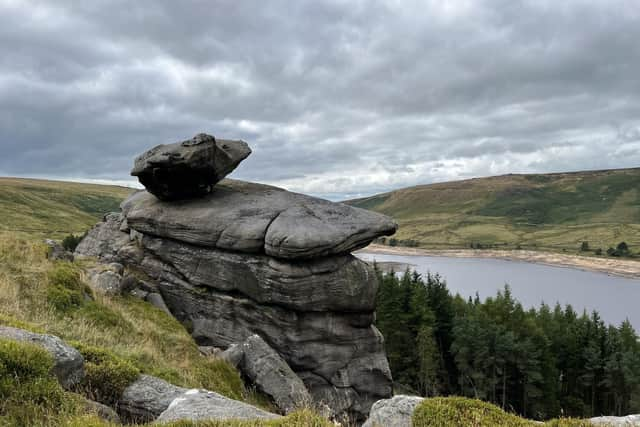

Located between Hebden Bridge and Haworth, in West Yorkshire, the proposed site is based in an area listed as a Special Protection Area, Special Area of Conservation and Site of Special Scientific Interest.
With opposition from MPs, campaign groups and nature experts, the proposed scheme has become one of the most controversial in Yorkshire’s recent history, bringing to a head debates seen across the county around the need for clean energy and a desire to preserve natural spaces.
Speaking to The Yorkshire Post as plans for the project rumble on, experts in the region’s peatland and wildlife have outlined their opposition to the scheme, and explained how they believe the plans could impact the local area.
It comes as those behind the scheme argue that recent extreme weather events prove that clean energy needs to be adopted at pace. The Calderdale Energy Park team has also stated that they believe this can be achieved in a way which takes into account the complex ecological needs and importance of Walshaw moor.
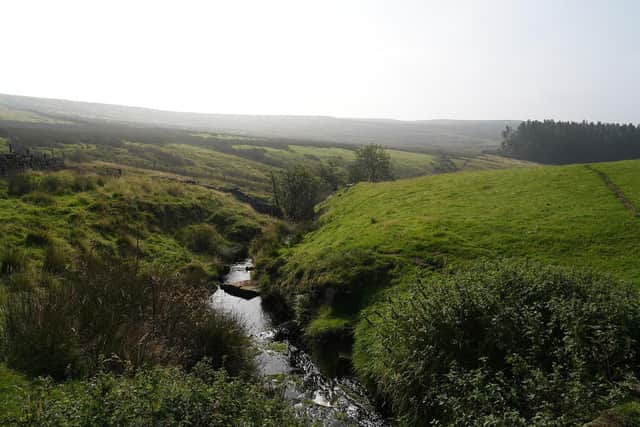
One of the major arguments against the Walshaw Moor scheme is the potential damage to the peatland on the site.
Formed over thousands of years, peatlands are one of the country’s most vital stores of carbon, while also playing a major role in helping to mitigate flooding at times of heavy rainfall.
Experts believe that the potential disruption on the peat caused by the wind farm could have significant implications for the area.
“From the point of view of an organization that works in peat and restoration, this is problematic,” said Lyndon Marquis of Yorkshire Peat Partnership.
“We are very worried that this is simply going to lead to more erosion of what I understand is already quite a degraded site.
“The broader risks are that when you put a load of infrastructure onto a peatland like this, you are compartmentalizing the hydrology of that site, so there isn’t a movement of water within and under the peat. That means you’ll have areas that are drying out, and when they dry out, they become more susceptible to erosion, they become more susceptible to fire, they cease to support bulk vegetation, they’ll cease to support insects.
“A lot of the ornithology at the site either feeds directly on the insects or feeds on other things that feed on insects. Once the bog vegetation is dying off on the surface, the peat itself becomes more vulnerable to erosion, which leads to large areas of bare peat, and increased flood risk, increased fire risk.
“When the peat is dried out and exposed to the atmosphere, there is also a risk that the carbon in the peat is going to oxidize.”
Calderdale Energy Park has said that its current modelling shows that around 560,000 square feet of peat may be disturbed during construction.
The group said its modelling also shows a “balanced peat mass”, meaning all excavated peat can be reused on site.
The company added: “Peat would be carefully stored and then used for restoration and reinstatement, with temporary works areas reinstated and borrow pits and compounds restored with up to 2 metres of peat to support long-term recovery.”
Mr Marquis also argued that the construction of Calderdale Energy Park’s plans regarding peat are suggestive of a “lack of experience” in peatland restoration techniques.
He said the company’s plans seem “impracticable”, adding: “The more you work, peat, in terms of digging it out, shifting it, putting it in storage, bringing it back, the more its structure breaks down, and the less use it is for restoration.”
Calderdale Energy Park said a full Peat Management Strategy will set out how peat is excavated, stored, reused and restored on its site, adding that this will be submitted as part of its Environmental Statement.
Plans for the Calderdale Energy Park scheme were first introduced in 2023 with a proposed 65 wind turbines. Developers then reduced the number of proposed turbines down to 51 in 2025 and later to a “maximum of” 34 following consultations.
Developers have said the scheme would generate enough power for 198,000 homes, creating local employment and lowering future energy costs.
They claim the project would add around £55m per year to the Calderdale economy once operational, creating “hundreds of jobs” in the construction phase.
The project has been deemed a development of national significance, meaning its go ahead will ultimately be decided upon by the secretary of state for energy security and net zero, currently Ed Miliband. A decision on the scheme is expected in Spring of 2028 if the project proceeds along its current timeline.
Those opposed to the scheme also claim that it would have a major impact on the local wildlife.
“I think something that’s really important to recognise around the wildlife here, including the merlin, is that the key threats to them are the loss of these upland habitats,” said Sharne McMillan, director of nature recovery at Yorkshire Wildlife Trust.
“Eleven of the 12 species listed in the special protection area citation were found to be breeding within the survey boundary. That’s a significant number.
“Yorkshire Wildlife Trust supports the government targets for reaching net zero. Climate change not only threatens biodiversity, but brings environmental, social, and economic risks Therefore we understand that we need to transition to renewable energy. It’s a critical part of the move towards cleaner energy regeneration.
“However, that transition cannot be at the expense of nature, and it can’t result in avoidable severe or long-term impacts on nature, and therefore we need to assess these individual, renewable energy projects on a case by case basis.”
Dr McMillan also warned that any development on protected sites and deep peat sites that is approved sets an “alarming precedent”, adding: “It’s not just this site, it is the greater implications for other important areas like this.”
A spokesperson for Calderdale Energy Park said the company was developing a habitat mitigation and compensation package so the development could be delivered alongside measures to protect local wildlife.
They added: “We recognise the ecological importance of Walshaw Moorland and the wildlife it supports. That is why we are taking a careful approach to the design of Calderdale Energy Park that responds to the advice we receive from relevant statutory bodies.
“The design will continue to evolve in line with the outcomes of our ongoing assessment work, so that the project has as limited an impact as possible on the environment.”
For Mr Marquis, however, one of the most exciting birds to see amongst the heather remains the Merlin.
“It’s thrilling to see them go skimming across the heather and the moorland,” he says.
“When they scare up a bird, like a meadow pipit or something, they loop back and drop onto it, it’s an amazing thing to see.”