
Corinne Bailey Rae on advocating for Leeds, remembering The Duchess of York and 20 years of debut album
Leeds-based Corinne Bailey Rae is celebrating 20 years of her hit-making debut album. She talks to Andrew Hutchinson about the city that is still home.
Corinne Bailey Rae sometimes feels like she is practically on the tourist board of the city she still calls home two decades into a lauded solo career.
“One of my biggest roles is I feel like a real representative for Leeds around the world because I feel like lots of people don't know the city,” says the singer-songwriter.
“I'm often advocating for the city and saying, ‘It has these amazing dance schools. It has these amazing colleges. It's got these brilliant universities. It's got the amazing diverse community which is quite sort of integrated and it's near the countryside. It's got this industrial past. It's got a great creative scene’. So I feel like I'm always on the Leeds tourist board kind of thing.”
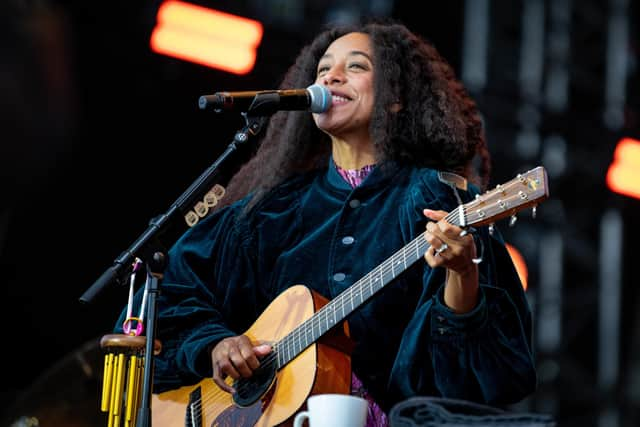

It is a place where, despite her fame, she feels able to be herself.
"I feel like it's not a place where loads of people come running up to me on a night out or that sort of thing. I feel like people turn around and be like, ‘yeah, there's Corinne again.’ I'm always here. Or someone's always got ‘my cousin went to Brownies’. There's always a link. So, I think I feel very protected here. I feel like it's a place that I can be myself and relax and, sit in a restaurant, go out dancing, any of that stuff.”
She champions the city’s multi-culturalism as well as its rich history and heritage. But she also seems acutely aware of a two speed city made up of haves and have nots.
“If I was showing someone around, I would start at the city centre, and I would start with the architecture. It’s like, looking at the Town Hall and how beautiful that is and going in and seeing that massive organ and seeing all the statements wound around the ceiling there and how it has this industrial past, but it's got these kind of aspirations to be this fair city. And then look at the different charities, the ones that work with women who've experienced sexual violence or the ones that work with children and, look at the tower blocks and look at somewhere like Alwoodley or a Far Headingley and sort of see that there is a decent amount of inequality in our city.
“I would take them to Chapeltown and show them the history. It’s like, look at this former synagogue which is now a contemporary dance school which is started by a teacher who used to look after all these amazing Caribbean boys who went on to found their own dance company and now brings kids from all over the world,” says Corinne, 46. “There's these layers of heritage. You kind of have to look at the buildings and the people and the culture. Chapeltown is where my dad and his family came when they came from St. Kitts.”
Corinne is keen to reflect on the city’s live music venues and it is clear she has a nostalgic affection the Duchess of York, a legendary venue on Vicar Lane which once hosted the likes of Nirvana and Oasis but closed in 2000.
“It's so sad to me that Leeds hasn't held on to that historic venue of the Duchess of York. It's just a chain fashion store now. And I feel like that with so many things. It was such a vibrant scene the 1990s and the Town and Country Club with the Underground underneath where I used to work. That was such a classic venue for jazz and had international artists.”
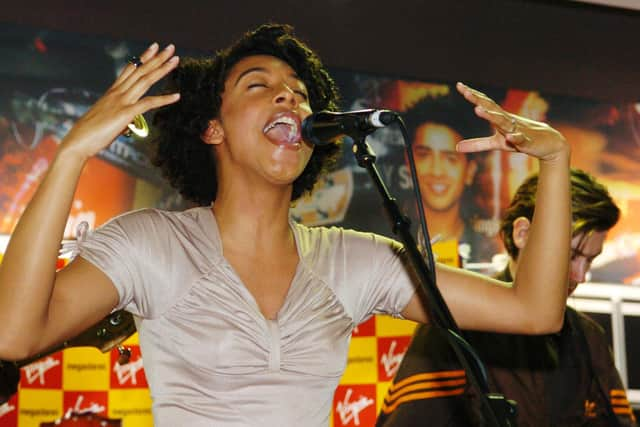
Corinne performed at the Duchess with Helen, the indie band she had formed at the time, on the day it closed forever in March 2000 with Chumbawamba bringing decades of music history to an end.
The lessons of playing there stay with her. She says: “If you don't enjoy playing to 80 people in a pub, you're not going to enjoy playing to 20,000 people at a festival because it's the same feeling of bearing your soul or vulnerability. If you don't get the thrill from 80 people in a room, then don't expect it to kick in, once it gets to Glastonbury or whatever. It's the same feeling. So, I remember the highs of playing at the Duchess were the same as playing in a massive festival because you're really doing it. You made it up in your bedroom. They're hearing it. They think it's a real song. They're singing along. They've paid the £3. It meant that it was real and I think for me that The Duchess was a start.”
Helen broke up a after deal with Roadrunner Records fell through when the band “casually announced that their bass player was having a baby” and it was time for Corinne to forge a path as a solo artist and was invited down to London to write songs.
“I managed to get a publishing deal, which meant I could stop my jobs. I was working at Harvey Nichols in Leeds,” she said. “I could stop working there and I could just concentrate on music and it was quite a small amount of money but I could live off it for a year and so I just started writing songs with all these different producers and those songs became my first record.
“And then when we had it, I got a production deal with Gary Davies at Good Groove. And then they sort of walked me into a label deal with Universal.”
This year marks 20 years since Corinne’s self-titled debut album – which spawned timeless global hits like ‘Put Your Records On’ and ‘Like A Star’ – went to number one in the UK.
She became the fourth female British act in history to have her first album debut at number one and it has sold more than four million copies.
In celebration of the anniversary, Corinne will be performing the album in full at the Royal Albert Hall in London on Tuesday, October 27, 2026.
What are the standout ‘I’ve made it’ moments? She has them all the time, she says, and now, it’s all about writing great songs and the thrill of live performance.
“I love the connection with the audience. It's always special. It's always transcendent. But yeah, I've had many moments (standout) like that. I just was on stage with Stevie (Wonder) this summer playing and that's my third or fourth invitation. I just think it's great to be thought of, that there has to be a point where you say, ‘This is very, very special’.”