
Atlantic bluefin tuna: Why the first sightings along the Yorkshire coast since 1960s are a 'conservation success story' according to marine experts
The first appearance of the Atlantic bluefin tuna in the North Sea for more than 50 years has been heralded as a “conservation success story” by experts.

The tuna - also known by its scientific name thunnus thynnus - are often found travelling between the Mediterranean Sea and the Gulf of Mexico from July to December.
Historically, bluefin tuna were spotted around most of the UK, including the northern coastal waters of Scarborough.
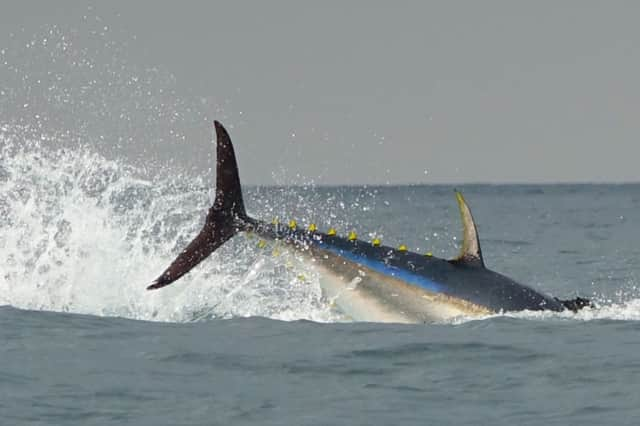

However, due to overfishing across the Atlantic, the species declined in numbers and became non-existent. As such they haven’t been sighted since the 1960s until this year.
This marks a ‘conservation success story’ according to marine programme manager at Yorkshire Wildlife Trust, Andy van der Schatte Olivier.
He said: “The return of Atlantic bluefin tuna to the Yorkshire coast after decades of absence is a real conservation success story.
“It shows what our seas can do when fishing is properly managed. But it also brings a responsibility: we need to make sure this recovery lasts, and that fishing pressure doesn’t undo the progress that has been made.”
Atlantic bluefin tuna can be identified by their distinctive metallic blue pigmentation on the top of its body with a white underbelly.
The fish is shaped like a torpedo, meaning it is very streamlined in the water and has two dorsal back fins, one of which is substantially larger than the other.
Some updated research from the Yorkshire Wildlife Trust shows that the bluefin tuna came back after an international recovery plan that began in 2007, following heavy overfishing.
A spokesperson said: “That success applies to the wider eastern Atlantic population. It doesn’t by itself mean fishing can safely increase in every area, including off Yorkshire.
“We still know relatively little about how bluefin use the North Sea. How many come each year? How long do they stay? How does fishing affect them locally?

“Much of the UK research so far was carried out in south-west England. We welcome newer work, such as the tagging off Whitby reported this year. We’d like to see that evidence brought together, with more monitoring off our coast.
“The UK’s bluefin quota has increased substantially for 2026–2028. We believe the full quota shouldn’t automatically be treated as a target that must be caught.
“Decisions should be cautious, open about the evidence behind them, and reviewed as new information comes in.”