
Fears pearl mussel could be killed off in Yorkshire over sewage spills, MP says
The pearl mussel and Atlantic salmon could be driven out of Yorkshire rivers by sewage pollution, an MP has warned.

Scarborough and Whitby MP Alison Hume was highlighting the environmental crisis facing the River Esk at a Westminster Hall debate in Parliament.
Sewage spills have contributed to a situation in which no single river in Yorkshire is considered to be in good overall health, with activists finding 10 times the normal levels of E.coli at Knaresborough Lido.
This comes after mass shellfish die-offs hit the Whitby coast in 2021.
Ms Hume raised her concerns about the future of important ecological and commercial species in the River Esk.
“Its coastal waters are home to the European lobster and brown crab, while the tidal river is home to the freshwater pearl mussel, Atlantic salmon, sea trout and European eel,” the Labour MP explained.
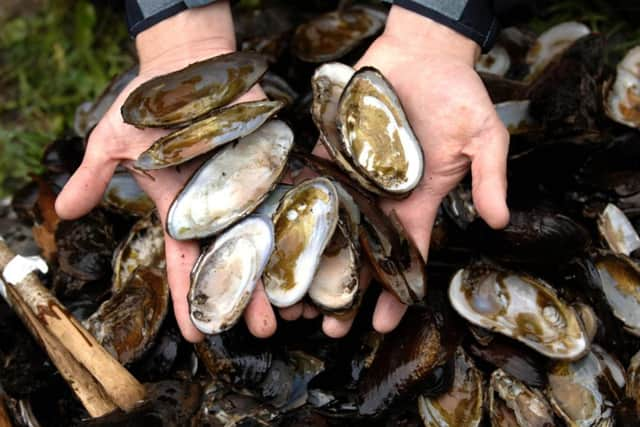

“The pearl mussel is critically endangered, and the last population in Yorkshire is to be found in the River Esk.
“It is dependent on the salmon and trout populations in the river during its lifecycle.
“The Esk once teemed with Atlantic salmon, whose numbers were a key indicator for clean water—but sadly no longer.”
MPs heard that the pearl mussel breeding project receives funding from Yorkshire Water, yet one of the key threats to it and to the salmon in the Esk comes from sewage discharges.

“Eighteen storm overflows discharge into the Esk,” Ms Hume explained.
“In 2023, there were 637 sewage spills from those overflows, with a combined duration of 2,757 hours.”
Last year, Ofwat announced a £47 million fine for Yorkshire Water for a “catalogue of failures”.
Ms Hume said she visited one of the company’s treatment plants at Egton Bridge, where the bank is subsiding into the river and “nearby manhole covers explode due to the water pressure when there is heavy rainfall”.
A Yorkshire Water spokesperson said: “We currently have projects underway at three overflows along the River Esk, as part of our £180 million commitment to reducing discharges across the region by April this year.
“We will be investing a further £1.5 billion into storm overflows over the next five years, including £165m earmarked for coastal investment.
They added: “On top of our storm overflow investment, we are planning investment into Egton Bridge wastewater treatment works, and will be introducing additional water quality monitoring in the Esk catchment.
“We will be continuing our work with the Freshwater Biological Association and the North Yorks Moors National Park Authority, to help release young freshwater pearl mussels to the River Esk, and we will also continue to be an active member of the Esk & Coastal Streams Catchment Partnership as we work towards the good health of the waterway.”