
Yorkshire and Humber Climate Action Plan offers updated guide for all in region to rapidly reduce emissions
The updated Yorkshire and Humber Climate Action plan is out.

It has been years in the making with the input of nearly 100 experts and has the backing of the region’s 15 local authorities.
Now, an updated Yorkshire and Humber Climate Action Plan has been published, aiming to rapidly reduce emissions, adapt to the environmental crisis, protect and restore nature – while ensuring the action is fair and involves communities.
The 96-page plan provides a framework for strategic action so that Yorkshire and the Humber to go “further and faster” with climate action.

It is designed as “a plan for everybody in the region” say authors at the Yorkshire and Humber Climate Commission, which brings together leaders from different sectors, and it is not just about net zero but provides a “holistic perspective” for the whole of society.
“Our updated Climate Action Plan is the culmination of a huge volume of work that we have undertaken during our first few years. It has very much been designed by the region, for the region,” said Rosa Foster, Director of Yorkshire and Humber Climate Commission.
“We have aimed to be transparent through all our work, hearing from 96 experts from a wide range of backgrounds and sectors to explore a programme of 22 topics ranging from skills to nature’s recovery, from emergency planning to transport. We have shared the recordings of these technical briefings online and summarised the findings into a series of draft reports which we’ve shared for comment on our public engagement platform. This updated Climate Action Plan is a synthesis of those sessions and the wider work that the Commission has facilitated and enabled during its first three years.”
The Commission says the region faces “unique” climate-related challenges – it is particularly exposed to flooding, while decarbonising heavy industry is a major issue and its housing stock has the worst energy efficiency ratings in England and Wales – which therefore “can only be tackled through region-wide collaboration”.
The updated plan – the first was launched at the first Yorkshire Post Climate Summit in autumn 2021 – is designed to be accessible and relatable, with 60 actions covering businesses, public sector organisations, charities and community interest companies, volunteer groups and individuals.
Seven overriding objectives are included in the report: making good decisions earlier; activating the power of businesses and organisations; enabling fair and inclusive climate action; protecting people and nature; redesigning places for long-term wellbeing; managing land and water; and transforming our energy system.
It includes 14 case studies from across Yorkshire and the Humber to provide inspiring examples of climate action that’s already happening across the region. These include Doncaster Council implementing a new sustainability unit in September 2021, and Calderdale’s Suma Wholefoods volunteeringwith local tree planting organisations to help prevent flooding in the local area, or its purchasing trucks fuelled by biogas.
Experts from academia, businesses, organisations and groups have put in the equivalent to more than 1,000 hours and the 22 topics range from from skills to nature’s recovery, and from emergency planning to transport.

It has been written with the knowledge and feedback of 194 commissioners and Commission members, and nearly 1,500 contributions from Yorkshire and the Humber citizens through surveys.
Ms Foster added: “A top-down, one-size-fits-all approach won’t solve the challenges unique to different parts of the UK, particularly in such a large and varied region as Yorkshire and the Humber. We have a clear plan for our region, and we are doing what we can with what we have got. Whilst we will continue to do this, we will only get so far without the support of national government to help our institutions to go further, faster.
“We are grateful that the University of Leeds is one of the major regional anchor institutions already showing the way, by committing to supporting our team to 2030 as part of the Net Zero City element of its own Climate Plan."
The regional target is to reach net zero – when greenhouse gases going into the atmosphere are balanced by removal out of the atmosphere – by 2038 and generate billions of pounds in benefits for people, nature and the economy.
It led to action in the social housing sector, was used to secure funding for multiple projects and has been a guide for organisations and local authorities when building their own strategies.
“There are huge opportunities for our region in this transition,” said Yorkshire Leaders Board co-chair Coun Susan Hinchcliffe, of Bradford Council, in a statement of support for the action plan.
“We can address the climate crisis in ways that create new jobs and economic opportunities and improve the health and wellbeing of our communities. We can become climate ready and create places in which everyone can thrive across our great region.”
Regional mayors also backed the report. David Skaith, Mayor of York and North Yorkshire, said his area was in a “prime position to support national and global efforts to combat climate change, even going beyond net zero and becoming England’s first carbon negative region.”
Tracy Brabin, Mayor of West Yorkshire, said that “to achieve our ambition of net zero by 2038, we need to work across regional boundaries and harness the power of renewables, putting the North of England at the heart of an industrial revolution once again”.
Oliver Coppard, South Yorkshire’s Mayor, said: “The way our climate is changing is not just a challenge but an opportunity.”
Read more on Page 14.
The plan was presented at a meeting of the Commission in Leeds on September 18.
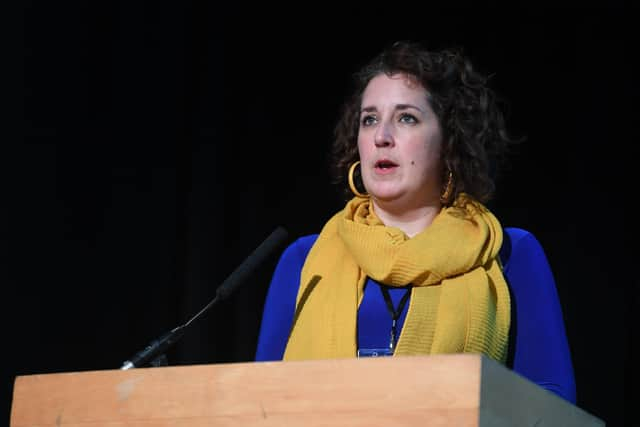
Liz Barber, the outgoing chairwoman of the Commission, said: “Three years on from the start of Yorkshire and Humber Climate Commission and we have learnt a tremendous amount. We know we need to do more, and quickly. This is a living plan that will help you to do just that.”