
Yorkshire community making small steps to avert crisis for toads

An ecological crisis is emerging in parts of Yorkshire, campaigners warn, as migrating toads trying to make their way home are trapped by high kerbs in new housing developments.
It is hardwired into the species' instincts, say wildlife enthusiasts, to return to the ancestral ponds where they were born in order to mate.
Now, after toad patrols were set to help hundreds of the creatures cross the road in areas such as Menston and Otley, there are calls on council planners to step in and help.
A new strategy is needed to resolve this eco-crisis, they say, with dropped curbs or temporary ramps to help the tiny creatures climb up to safety.
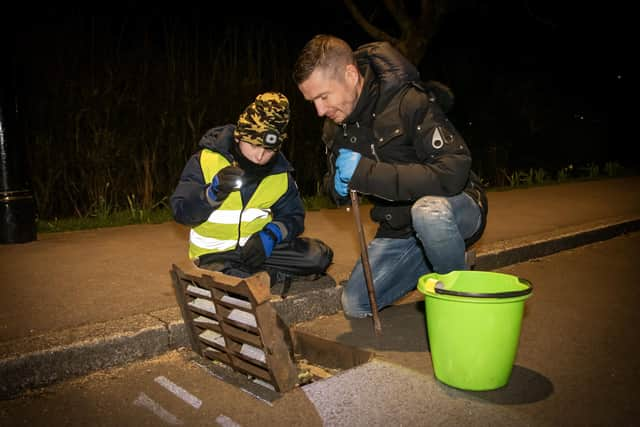

Peter Benefer is a nature enthusiast, a beekeeper from Rodley who has helped to set up nightly patrols between Menston and Guiseley.
"The toads remember where they were born," he said. "It's like an imprint - and wherever they end up going off to, they return to mate.
"New housing developments haven't taken into account the ecology of local areas. That is a problem - we are developing in their spaces.
"They are trying to make their way back to their pond. But they can't climb the curbs," he added. "We really can make a massive difference here."
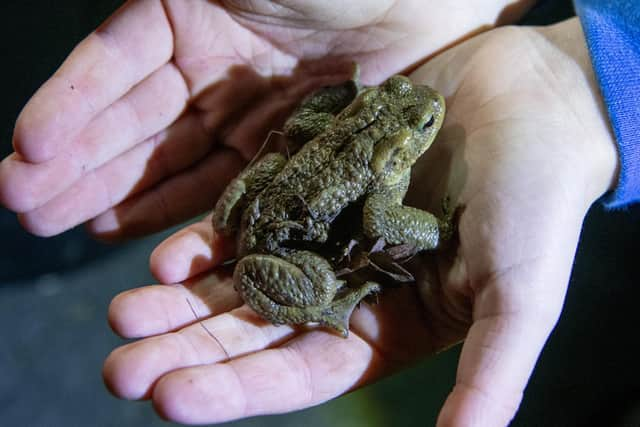
Nightly patrols are underway, with volunteers of all ages helping to lift toads, frogs and newts to safety, prizing up drain covers to rescue the trapped creatures as they fall in.
Mr Benefer, who helped set up patrols with fellow volunteer Catherine Burton on Guiseley Drive near High Royds, said teams here rescued around 500 toads. They have saved as many as 750 in the past. In Otley, along East Busk Lane, nearly 2,000 toads were helped last year.
This is peak migration season, explained Mr Benefer, with the toads on the move on warm, wet spring nights as darkness falls.
Developers Avant is looking into ways it can help, but any changes, such as planning amendments or dropped curbs, would need to be approved by Leeds Council.
It would make a "massive" difference," said Mr Benefer, to have planning policies in place which supported nature such as this.
"Let's do something positive," he said. "If we can get these curbs dropped, even a 15m stretch, it would help. The curbs just need to be angled differently.
"We shouldn't need toad patrols - it should be common ecological sense. This is a solid investment that will make a real difference.
"The population is under threat globally. Having something like this, local to home, shouldn't be happening.
"They are lovely little creatures,” he added. “They have enough problems with predators. We are stealing their habitats, this is the least we can do."
A spokesperson for Leeds Council said: “There is widespread recognition within planning of the importance of protecting and enhancing the natural environment, to retain a balance between the natural systems of the planet, to ensure habitats and biodiversity are protected and fully considered in planning decisions and to improve and extend the network of habitats and green spaces.
"Under the Environment Act (2021) local authorities have a biodiversity duty to not only protect but also to enhance biodiversity.
“While levels of protection vary by species, common toads are designated as a species of principal importance.
"Local planning policy requires new developments to deliver biodiversity gains and incorporate habitat improvements for several priority species—including bats, hedgehogs and common toads—to ensure these species are fully considered as part of new developments.”