
Yorkshire Water not doing enough, committee told
More needs to be done to urgently tackle sewage discharges into the region’s rivers, an East Riding Of Yorkshire Council meeting was told.
In front of an environment committee meeting earlier this month, Yorkshire Water’s approach to sewage and wastewater management was held up to scrutiny.
The meeting heard how Yorkshire Water does not, currently, convert discharge data into volume statistics, meaning it cannot quantify the amount of wastewater discharged across the East Riding. The water company was criticised for basing its targets on the number of discharges and their total time, rather than the volume of waste discharged.
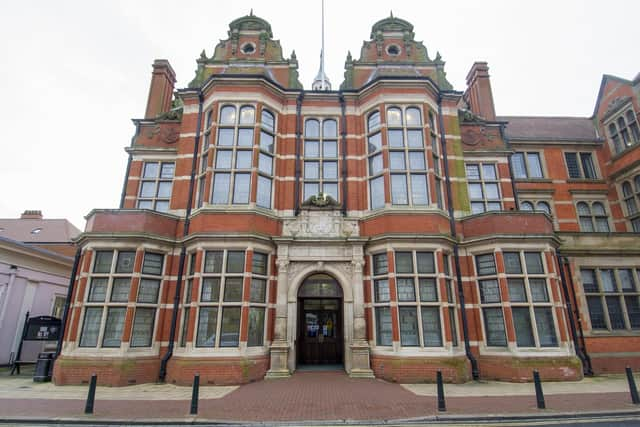
In East Riding Council’s Environment & Regeneration Committee meeting, held at County Hall in Beverley, Yorkshire Water was praised for some improvement in reducing the number of discharges. However, its improvement is not keeping pace with other water companies around England.

Coun Phil Redshaw (Liberal Democrat – Cottingham North) told the meeting that while discharge hours have fallen by over 30% across England, the reduction in East Yorkshire is only 6.4% – despite rainfall being eight per cent lower as compared to the base data year of 2021.
His research has found that just sixteen sites across East Yorkshire account for half of all discharge hours. He has now secured a follow-up meeting with Yorkshire Water to discuss storm overflow reduction activity and the company has agreed to review the sites identified, with further research shaping investment plans into water quality.
Coun Redshaw, who is the Lib Dem group spokesperson on environment and transport, said: “I am also pressing them to establish what options are open to them to calculate or measure the volumetric flow rates across all or even part of the system, since any other measures remain extremely subjective. The key issue is not simply the number of incidents, but the duration of the discharges.”
He added: “I want to know what Yorkshire Water is doing at these worst-performing sites and what reduction in discharge hours we can expect to be delivered in the next four years.”
Adam Ashman, from Yorkshire Water, told the meeting more needed to be done, but explained a volumetric data-gathering system was a clear ambition. He told the meeting that a major challenge in the region is the groundwater-induced storm overflows.
“We’re looking at a number of ways to address those,” Mr Ashman said. “A huge amount of work is going on at individual sites to look at how we deal with this operationally or whichever means we’ve got to improve that.”
Coun Redshaw also raised the issue of longer-term security of water supplies and urged Yorkshire Water to secure a long-term plan for the security and quality of East Yorkshire’s water. He added: “It was welcome that Yorkshire Water has so far avoided widespread hosepipe restrictions, but we couldn’t assume future years would be as favourable.
“Yorkshire Water has several new service reservoirs being built, but there isn’t currently a new large, traditional reservoir under construction in Yorkshire. I want to understand what would trigger the investment for additional strategic water storage, particularly as we face the prospect of more frequent periods of high temperatures and lower rainfall due to climate change. We need to make sure we are planning ahead rather than simply reacting to the next drought.”