
A wealth tax should not be seen as the politics of envy, but of pragmatism - Jayne Dowle
Someone had to say it and perhaps it’s unfortunate that it was former Labour leader Neil Kinnock, a political pinata whom history has not treated kindly. As soon as the man once cruelly nicknamed ‘the Welsh windbag’ opens his mouth, a queue forms to beat him soundly with a stick. But at least he’s had the courage to come out with it; tax the rich.

Kinnock famously failed to lead Labour to victory in the 1980s and early 1990s. However, taking over from ultra left-winger Michael Foot, this coal-miner’s son did root out the Trotskyites, shelved Labour’s support for unilateral nuclear disarmament and slowly turned his party into a more palatable electoral prospect. He’s still bolshie. And bold.
To solve its fiscal woes, the current Labour government should introduce a wealth tax, the 83-year-old argues, levying a charge on assets over £10m. This would raise as much as £11bn for the Treasury, he believes, helping Sir Keir Starmer and his hapless Chancellor, Rachel Reeves, fill the £5bn hole in public finances left by the government’s welfare climbdown.
Rather than squeezing the poorest and those in the middle, taxing the highest earners in the country would be popular with the “great majority of the general public”, Kinnock added. Plus, it would be a big idea, much needed to impress the millions disenchanted with the Starmer government so far.
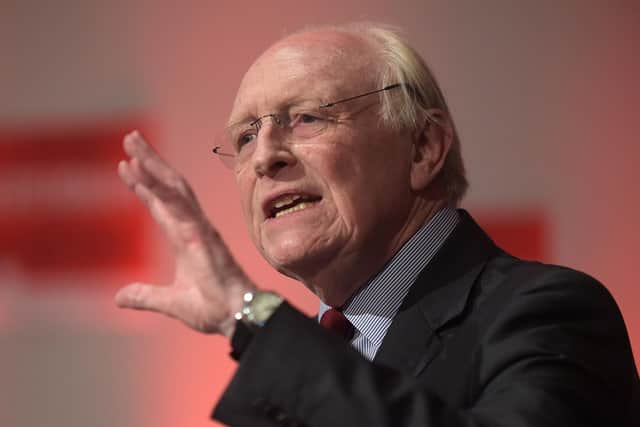

“It’s not a mess, but what has gone wrong is really the lack of a narrative, a story of the objectives of the government and where they’re working towards it and how they’re working towards it,” he said.
Cue immediate uproar. A string of economists took no time to express a hundred and one reasons why ‘taxing the rich’ is also a bad idea.
It’s been tried in other European countries and largely failed to deliver results, they argue; economists say that of 12 developed countries that had wealth taxes in the 1990s, only three (Switzerland, Norway and Spain) are left and only one is making substantial amounts of money. That’s Switzerland, where ‘wealth tax’, which varies at local level, generates about 4.3 per cent of the state’s tax revenues, taxing assets such as bank balances and art collections.
Critics argue that a UK wealth tax would lead to a further flight of the ‘super-rich’ from our shores, following the Chancellor’s crackdown on the non-dom tax status. ‘Non-dom’ allowed wealthy individuals with connections abroad to avoid paying full HMRC tax on their overseas earnings. It’s said that Labour’s harsh stance had led to a recent ‘exodus’ of high-net worth individuals, but it seems to prove impossible to put a figure on it. Some may ask what the elusive ‘super-rich’ ever did for the rest of us.
Not all rich folk are running. Patriotic Millionaires UK, a nonpartisan network of more than 60 British millionaires, from multiple industries and backgrounds, support the rich paying their share. Their research suggests that 80 per cent of millionaires would support a 2 per cent wealth tax on pots over £10m.
What is clear is that over the last decade or so, the assets of the super-wealthy in the UK have increased massively, while the wages of millions of workers have stagnated, suffering under austerity, Covid and the sheer cost of living. This has led to many families relying on benefits to make up the shortfall, just to survive, a fact often lost in the hubris over the huge benefits bill the government is dealing with.
If this tax came to pass it would be a huge marker of course. So given its import, we should listen to all the voices, against and in favour. Louise Haigh, the former transport secretary, has said that the current tax system “punishes earned income but barely touches the sides of the real driver of inequality, wealth”.
Simon Opher, a Labour backbencher (representing Stroud in Gloucestershire) who rebelled over the welfare bill last week, is equally outspoken in calling for the super-rich measure to avoid cuts to benefits.
Several Labour-supporting unions have also backed the idea.
Surely, it is not that outrageous to air all possible solutions to the huge hole in public finances. Is finding a workable approach, to address the imbalance of living standards and set a firmer footing for the future, really beyond the finest economic minds of a generation?
Instead of serious engagement with how such a tax might work, looking at potential rates, thresholds, asset types, enforcement of payment and so on, the noise is all about ‘lefties’ set on course to destroy our country.
This should not be seen as the politics of envy, but of pragmatism.