
Council tax is simply no longer fit for purpose and needs an overhaul - Jayne Dowle
The government obviously knows council tax isn’t working even before last week’s bombshell announcement of hikes being imposed on wealthier areas.

Back in June, Jim McMahon, Minister for Local Government and English Devolution, quietly announced changes to the administration of council tax that he promised would “make life easier” for Labour’s favourited talisman, “working people”.
These changes include allowing for 12 monthly payments of council tax by default, rather than the 10 months over a year imposed by local councils. This might allow people to spread the cost, but comes with higher monthly bills. And it’s frontloaded, benefitting councils rather than residents.
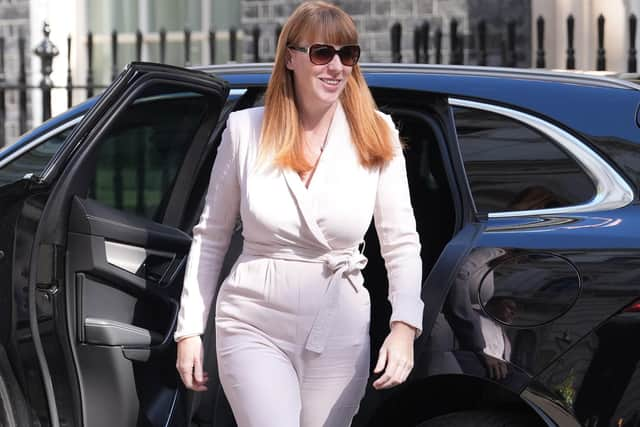
And now we have deputy prime minister Angela Rayner planning to tell wealthier local authorities that they may have no choice but to hike council tax bills in order to funnel more government money to deprived areas.

Why doesn’t this government take the bull by the horns and admit that the present arrangement of raising funds to pay for local services doesn’t work? Council tax is simply no longer fit for purpose. The whole system needs an overhaul, and fast.
For a start, it relies on outdated property values, taken more than three decades ago, in April 1991. The cost of council tax has risen exponentially over the years, so it compromises far more of the expenditure of households than ever; poorer households will still have to foot high bills, this regional ‘levelling-up’ Rayner proposes will not put them into reverse.
Unlike Margaret Thatcher’s dreaded poll tax, which taxed every resident in a certain area at the same sum, council tax is a property-based tax; it’s based on the value of a property, usually payable regardless of whether you are a tenant or a homeowner.
The three lowest-paying boroughs in England, Wales and Scotland for 2025-26, according to Property Data, which compiles property-related information around the UK, are Wandsworth, £998 annually for a two-person household in the average ‘D’ band, Westminster £1,019 and the City of London, £1,274.
There are inequities, yes. Thanks to increasing local authority outlay, it is now often the case that those living in less-than-privileged postcodes find themselves paying far more than others in more favoured areas.
Rayner’s big new idea is simply going to widen resentment and ingrain the north/south divide, but this time it will be poorer people in the south who will suffer. It also overlooks the fact that some areas perceived as ‘wealthy’ can hide yawning differences between rich and poor.
Hammersmith and Fulham, in west London, for example, is in the ‘low’ percentile, according to data firm Property Data, with annual Band D bills of £1,451. But it encompasses the millionaire bankers in fancy townhouses as well as those existing below the breadline in rented flats.
Rayner’s proposal has come about because, according to a report compiled by the Institute for Fiscal Studies (IFS), up to a quarter of councils in England are about to experience a drop in government funding, creating significant “winners and losers”.
So wealthy areas with historically low council tax rates – typically in London and the South East - will have less money to spend on the 800 vital public services council tax is said to pay for, such as rubbish collection and social care. Therefore, the IFS researchers argue, such councils will now be forced to hike council tax rates to address the shortfall, with the reforms set to be rolled out over a three-year period starting in 2026.
“The Government should consider giving highly-affected councils which currently have low council tax rates greater flexibility to bring their council tax bills up to more typical levels to offset funding losses,” says the report’s author, Kate Ogden.
Cue absolute political pandemonium. Inevitably council tax payers in these wealthier areas are incandescent that their ‘local’ taxes could be paying for services hundreds of miles away.
The government's total spending on local authorities will remain the same, but London will receive just an 8 per cent rise in funding over the course of the next three years, with a 13 per cent increase across the South East.
Meanwhile, our region, Yorkshire and the Humber, will be one of the main beneficiaries of the reforms, with a 19 per cent increase in the allocation of central government funds.
This is good, but there are caveats. A spokesman for Angela Rayner described the increases as “taking decisive action to reform the funding system so we can get councils back on their feet and improve public services”.
There are absolutely no guarantees that this will happen. Instead, it will sow even further division in a country already at war with itself.