
Government finds itself in a difficult position over Iran war and the public will have to brace itself for economic shocks

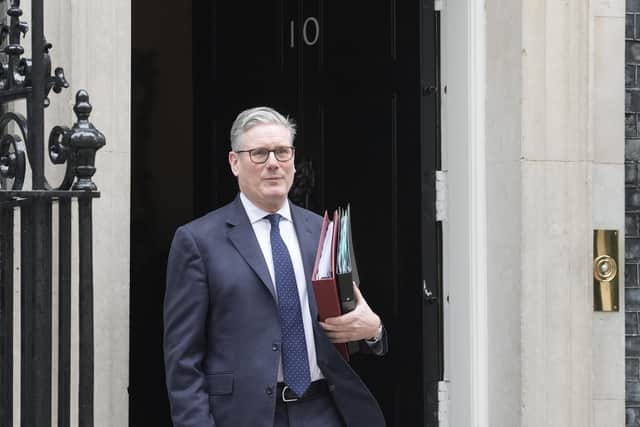
The Government finds itself in a difficult position over the Iran war. On the one side, it is under pressure from long-time ally the US and political opponents at home to do more in the conflict. On the other hand, the Prime Minister understands the dangers of undermining legal frameworks.
It is important to understand what the so-called special relationship is between the US and the UK. US President Donald Trump’s recent actions have run counter to the principles of that relationship. However, Sir Keir Starmer is right that it will endure despite the various swipes Trump has taken at the PM in recent days.
This isn’t a case of siding with the brutal regime in Iran. The Iranian people would welcome the back of it and facilitating regime change is to be supported. But there are major doubts, not least amongst military experts in the US that this can be achieved through the skies. And there is very little appetite to deploy boots on the ground.
The question that Trump’s administration has failed to answer is what the end game is and how it intends to get there. As Spain’s prime minister Pedro Sanchez warns, the Iran war risked “playing Russian roulette” with millions of lives.

Meanwhile, Britain’s focus should be on getting nationals out of what is an expanding warzone with Iran indiscriminately lashing out at neighbouring Arab states.
The war in the Middle East has already sent economic tremors across the globe and Britain is not immune. Household energy bills are forecast to rise by 10 per cent from July following sharp increases in wholesale gas prices driven by the escalating conflict. Some lenders have paused planned mortgage rate cuts because of uncertainty.
Britain is going to have to brace itself for more economic pain.