
Is abolishing stamp duty really going to pave the way to social mobility? - Jayne Dowle
Conservative leader Kemi Badenoch’s latest big idea, to abolish stamp duty on main homes in England and Northern Ireland, has been greeted with general praise.

In a move designed to improve her standing as a potential prime minister with big ideas and lay out her party’s economic credibility with voters, Badenoch says that if the Conservatives form the next government, the hated stamp duty – payable on a sliding scale on house purchases over £125,000, would be scrapped, costing the public purse an estimated £9bn per year.
This move, Badenoch argues, would boost home ownership and social mobility: “We must free up our housing market, because a society where no one can afford to buy or move is a society where social mobility is dead,” she told Conservative party delegates.
The Tories are steadily becoming more obsessed with home ownership as a measure of social mobility. If anything, this shows just how out of touch they are; social mobility is about much more than having your own front door, it’s about education, it’s about tackling child poverty and turning worklessness around.
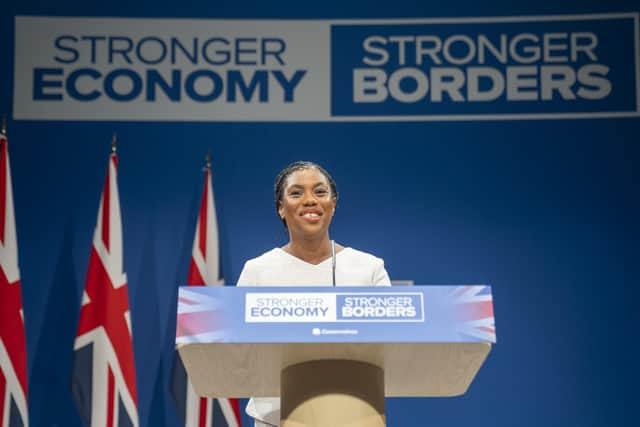

The stamp duty plan would be funded from the £47bn in savings the Tories plan to make, mainly from cuts to welfare, foreign aid and the Civil Service, it’s said.
However, critics argue that this is not only pie-in-the-sky economics, but the stamp duty abolition would mostly benefit homemovers in London and the South East, where house prices are highest.
Rather than improve social mobility, getting rid of stamp duty – Stamp Duty Land Tax - would impact the wealthiest more than anyone else, argues the Social Market Foundation (SMF).
“Stamp duty is a brake on the housing market, stops people moving for work, prevents more downsizing,” says Theo Bertram, director at the SMF. “Scrapping it solves these issues, but the benefit will disproportionately go to homeowners and to those in the south-east and London, who will gain the most.”
About 83 per cent of buyers now pay stamp duty, according to property portal Zoopla. But it’s also worth flagging that if Badenoch is concerned about social mobility, first-time buyers already pay no stamp duty on properties up to £300,000.
For other homebuyers, on a property valued at between £125,001 and £250,000 two per cent of the home's value is payable in stamp duty. From £250,001 to £925,000 it’s five per cent, from £925,001 to £1.5m 10 per cent is payable; above that a 12 per cent rate is charged.
So under the current rules, someone buying a £250,000 home would pay £2,500 (because the first £125,000 doesn’t attract stamp duty), a £450,000 home would cost £12,500, a £800,000 home would be £30,000, and someone buying a £1.5m home pays an eye-watering £93,750.
Between January and August this year, homebuyers paid out a total of £9.3bn in stamp duty, according to Coventry Building Society’s analysis of the latest HMRC statistics, an almost 21 per cent increase on the £7.7bn paid over the same period last year.
This is because in March, Chancellor Rachel Reeves ended a temporary cut on stamp duty put in place in 2022, upping the threshold at which non-first time buyers begin to pay from £125,000 to £250,000.
The average stamp duty bill is now £4,582, Coventry BS says, compared to £1,340 in 2014.
“Home ownership should be a dream that’s open to everyone,” Badenoch told the conference. “Abolishing stamp duty on your home is a key to unlock a fairer and more aspirational society. Scrapping stamp duty will benefit people of all ages, because conservatism must speak to all generations: the young professional buying their first flat, the couple looking for somewhere to bring up their first baby, the growing family hunting for their forever home.”
Stirring stuff. But scrapping stamp duty would do nothing to improve the chances of individuals being accepted for a mortgage to buy a home in the first place. This is particularly pertinent in regions such as Yorkshire and the Humber, where salaries often do not keep pace with even fairly modest house prices. Neither would the notion address the lack of housing supply.
The Labour government has pledged to build 1.5m new homes by 2029, the end of its current term, but progress is slow.
And crucially, the idea does not consider the burning issue of all property taxes. This includes the much-needed reform of the outdated council tax system, a challenge no political party seems to want to touch with a bargepole.