
Politicians need to reconnect with the electorate in a changing world - David Blunkett
Ten days ago, on the morning of New Year's Eve, I took part in the Radio 4 Today programme. Nothing, you might think, unusual about that – except it was not Nick Robinson, Anna Foster or their colleagues doing the interview. It was, in fact, former Conservative Prime Minister, Theresa May.
Theresa had agreed to be guest editor and invited me to join her to talk (amongst other things) about trust in politics, or the lack of it.
Whilst our politics might differ, we share quite a lot in common. She was my shadow when I was Education and Employment Secretary 25 years ago, and subsequently, both of us were Home Secretary. She holds the record in modern times for having been in the job for more than six years – a sentence you wouldn't wish on your worst enemy!
But we have something else in common. We both have our origins in a very different type of politics to that which we are experiencing today. A time when you could respect your opponent even if you profoundly disagreed with them.
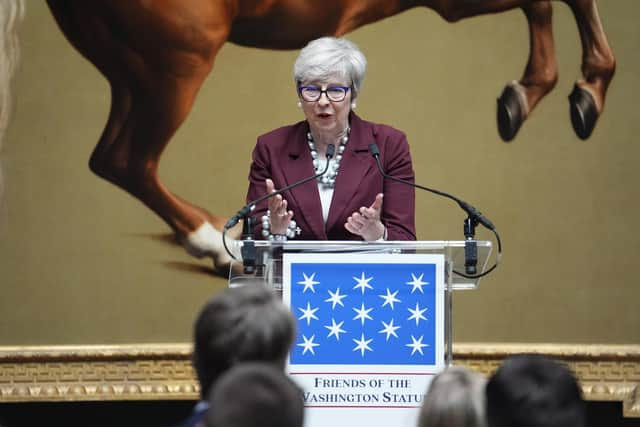

So much so – and much to everyone’s surprise – that I was able to take part in a commemorative programme about another, but more right-wing Conservative, Norman Tebbit. The BBC2 programme went out between Christmas and New Year and was reflecting on the complexity of his life and the fact that all of us have a hinterland which others don't see.
Some of that emerges once we are out of office. As with myself, now able to express a better sense of humour, so with Theresa May. Back in the autumn, the Speaker of the House of Lords, John McFall, asked the former prime minister if she would give the Speaker’s Lecture and would I do the response?
It was an interesting occasion, not least because Theresa May was more relaxed, more easy in her skin than she ever was when in government (never mind Prime Minister) – providing a really thoughtful contribution about the major changes taking place in the world, the challenges for young people and how we might do our politics in a more thoughtful, responsible and mature fashion.
That is what we were trying to address in the BBC interview. How do we restore trust in politics in an era of social media, echo chambers and people tuning in to what accords with their preconceptions and reflects their immediate thinking. How do we challenge people to listen to others, try and ascertain the facts, or think critically without cynicism?
Paradoxically, the more transparent our politics, the less trust people have in politicians. It wasn't until the late 1990s that there was a Register of Interests for Members of Parliament, and whilst the long deceased Sunday newspaper, News of the World, used to have weekly exposés of people's lives, modern technology and surveillance makes their revelations look pretty tame.
Sadly, it also means that being in public life is, more than ever, a trial of strength and resilience. If, on a daily basis, you’re a punchbag, it's bound, in the end, to take its toll – not just on you, but on your family and your closest friends. I'm not on the front line anymore, so I have less to fear about being overheard, recorded or filmed when I'm in a restaurant or café, or with friends in a pub. But when even your texts can be retrieved from years before and used in evidence against you, the world really has changed. Speed of communication has also made it difficult to reflect and think through how you're going to respond when things go wrong; or, for that matter, to reach the kind of audiences I was able to touch all those years ago.
You only have to go back to the early part of this century – to a time when the numbers watching one of the television news broadcasts in the evening exceeded 10 million – and to reflect, now, that that number is likely to be down to one-fifth of those historic days.
Last year, I took part in a citizenship class for 15 and 16-year-olds. One of the things that I believe is absolutely essential if 16 and 17-year-olds are to have the vote, is that we educate young people about how our democracy works, where power lies and how historic institutions really do matter in terms of holding our society together.
I asked the youngsters how many of them watched television news with their family. Out of the 28 present, five said they did so regularly. None of them read a daily newspaper, but half of them had been touched by the pernicious social media influencer, Andrew Tate.
Developing an understanding of – never mind trust – in politics and politicians is clearly an enormous challenge.
Yet if we are incapable of delivering improvement in the lives of voters and overcoming the cynical ‘they are all the same’ and ‘it won’t make any difference, whoever is in’, then we really are in trouble.
We must find a way of reconnecting with those people that elected politicians seek to serve in this pluralistic and diverse landscape.
David Blunkett is a Labour Party politician, and served as the MP for Sheffield Brightside and Hillsborough.