
Pubs find themselves between a rock a hard place as exorbitant prices put patrons off - Jayne Dowle
The news that 200 UK pubs closed their doors for good in the first six months of this year comes as yet another hammer blow to the British way of life.

If this pace of pub closures continues, where on earth will Reform UK leader Nigel Farage conduct his press conferences, his full ‘man of the people’ credentials on show with a pint of ye olde real ale in hand?
In our region alone, according to exclusive research by The Yorkshire Post in October last year, nearly 500 pubs had closed over the past five years, at a rate of one pub disappearing every three days.
The big question is, should the Chancellor consider pubs to be a special case? Should she look at their pivotal role, often at the heart of a community, and make allowances? Or let so many pubs gradually wither and die, regarded as an unsustainable relic of the past, viewed through a fug of nostalgia?
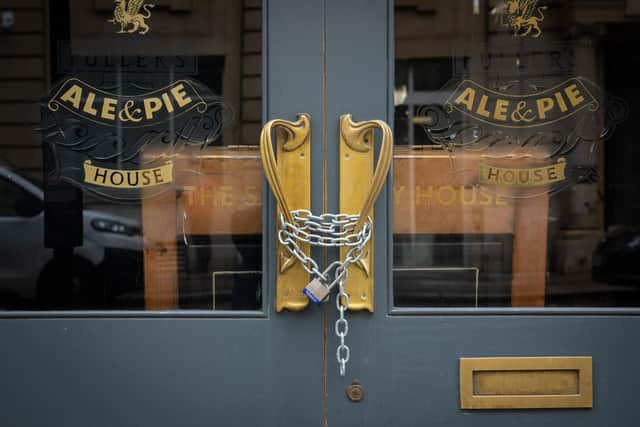

I ask because sadly, it’s become plain that pubs as we know and love them are struggling. Many were already on their uppers before the Covid pandemic lockdowns of 2020 and 2021 kept everyone indoors.
Increases in energy costs have hit hard too, as have changing lifestyles. Whilst in some areas – both urban and rural - the pub is still the beating heart of local social life, and may even be community-owned, in others it’s become irrelevant, overtaken by the lure of staying home with a box set and social media. Or shunned by those who prefer the gym and parkrun for meeting like-minded folk.
And now, thanks to a raft of fiscal measures introduced by the Labour government, including increases to the national minimum wage and employer national insurance contributions, plus damaging changes to business rates, pubs are finding it increasingly difficult to balance the books.
All this financial pressure on operating costs is impacting customers as pubs try to make ends meet. The average price of a pint of beer in the UK has now risen to more than a fiver, approximately £5.17, according to a survey published in May by pub trade publication The Morning Advertiser.
A couple of years ago, it was reported that Stonegate group, the UK’s biggest pub chain, owner of the Slug and Lettuce and Yates bars, was rolling out ‘dynamic pricing’ across 800 of its 4,000 pubs, meaning prices would go up at busier times such as weekends, averaging out at an extra 20p per pint.
Inevitably, customers, under their own pressure from the ongoing cost of living crisis, vote with their feet. My 23-year-old son amongst them.
He is still reeling from the shock bar bill he was presented with last weekend. He and his girlfriend called into a modest rural pub after a walk around Langsett reservoir in South Yorkshire and ordered two pints of Diet Coke and two bowls of chips. The bill? £19.60. For two soft drinks and two bowls of chips – but one did come with gravy and one with chilli salt, he pointed out, still incredulous.
“I won’t be doing that again in a hurry,” he said. And he’s not alone. In Edinburgh a few weeks ago, my daughter and I had lunch in a traditional pub away from the main tourist drag. Pie, mash and veg added up to about £25 each, with the broccoli costing £3.75 a portion. For four sticks of broccoli?
You can see what I mean, I’m sure. And it’s a difficult one to balance, because everyone has to make a living somehow.
I’ve worked in pubs and have several friends who are publicans or are associated with the licensed trade. It’s obvious that for them, the current financial climate is absolutely brutal.
However, customers who are stung with eye-watering tabs for modest drinks and food will think twice before returning, or only eat and drink out on very special occasions.
And this approach is no good for pubs, which need to rely on a steady stream of customers to keep in business. As the management team of the 17th century Staveley Arms, in North Stainley near Ripon, which closed in January this year, said in a statement on Facebook, “Despite our best efforts and major financial investment we have been unsuccessful in overcoming the challenges in the current environment to create a business capable of delivering the experience we want for customers balanced with a sustainable financial position.”
Emma McClarkin, chief executive of the British Beer and Pub Association, wants the Government to act quickly to save pubs across the country.
Unfortunately, once a pub closes, that’s often it – for good. They end up demolished, turned into housing (even churches, I’ve observed), or left to rot, a chilling reminder that whilst times and public tastes inevitably evolve, successive Governments are taking our precious pubs for granted.