
SMEs happy to escape punitive measures in Budget - Mark Casci
The cost of doing business remains sky high, with labour costs, taxation and inflationary pressures at a generational high, the West and North Yorkshire Chamber of Commerce says.

It is perhaps a sign of the times that, rather than celebrating a raft of pro-business measures in this year’s Budget, small and medium-sized enterprises (SMEs) were instead quietly pleased that there was no further putative measures imposed upon them.
This is with good reason. The cost stack imposed on British businesses in the last 10 years as a direct result of Government policy decisions has risen by 70 per cent. Of this increase, 40 per cent has come since the 2024 Budget. And this is before you factor in geopolitical impacts resulting from wars in the Middle East, Ukraine and President Donald Trump’s erratic tariff policies.
So, for the 99 per cent of firms in the region classed as SMEs, it was very much a ‘no news is good news’ Budget in terms of no additional taxation. This is something West & North Yorkshire Chamber of Commerce had been adamant that the Chancellor should keep in mind ahead of his speech and we successfully landed this message.
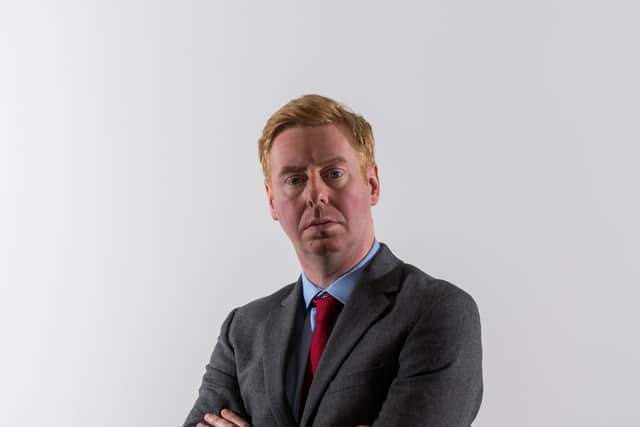

However, the problem is still the problem. The cost of doing business remains sky high, with labour costs, taxation and inflationary pressures at a generational high.
Now, there were some positives from the Chancellor’s speech. The retail and hospitality sector, which has been on its knees since the onset of Covid, were told the threshold at which they start paying business rates will be increased to £18,000. This will provide some short-term relief and will be particularly of benefit in North Yorkshire which is heavily reliant on hospitality owing to its strong visitor economy.
However, as our considered members at the Bradford Business Improvement District point out, there is more to be done, with real need for a reduction in VAT and an imperative to see real business rates reform.
Many of us punched the air when it was announced that £15m will be made available to Leeds College of Building. The college bosses purchased a large building close to its North Street campus recently and this funding will allow them to kit it out to train the next generation of construction workers, something the region as a whole faces crisis levels of new entrants. If we are to upgrade our creaking infrastructure in Yorkshire, as well as build the homes for its residents to live in, we need people to actually build things, and this money will go some way to achieve this.
There is also cash to upgrade Leeds’s railway station and monies to invest in the possibility of a North of England Olympic Games bid. Given our track record of delivery on events such as the Tour de France Grand Depart, this is something in which Yorkshire can play a leading role.
However, this was a Budget that whispered from the shadows rather than shouted from the rooftops. We were told to expect a ‘steady as she goes’ Budget and, in the end, that is what we got.
Economic growth does not come from the corridors of Whitehall. It comes from the powerful beating heart of a strong and innovative private sector and the fact remains that these hard grafting men and women currently have one hand tied behind their back when it comes to creating jobs, innovating new products and services and selling them to the world.
Until these pressures are eased, business is constrained in terms of delivering the growth the UK so desperately needs to fund its future.
The Chancellor may well have got away with a quiet debut Budget. His real test will come in the Spring with the Spending Review where he faces a fundamental question; does he want business to grow or stand still?
If we are to fund our obligations around health and social care, debt reduction and defense, he has only one credible option.
Mark Casci is head of policy and representation at the West and North Yorkshire Chamber of Commerce