
The Government cannot afford to dither on issue of RAAC hospitals such as Airedale

At the very least, patients and medical professionals alike deserve to be cared for and work in a safe environment. That is clearly undermined by the presence of reinforced autoclaved aerated concrete (RAAC) in certain hospitals.
The Public Accounts Committee (PAC) in its report on the New Hospital Programme (NHP) has called for an annual report to Parliament on the progress of replacing RAAC hospitals.
The dangers of RAAC are now widely known and while buildings can’t be replaced overnight, time is running out. As Sir Geoffrey Clifton-Brown, chair of the Public Accounts Committee, says: “Every year that sees delays to the replacement of RAAC hospitals is a year of borrowed time.”
Not only does it put staff and patient safety potentially at risk but could also mean more cost to the taxpayer as a result of the need for mitigation and maintenance. The Government has already spent £500m on maintenance and mitigations to ensure patient and staff safety for RAAC hospitals and trusts with RAAC hospitals are to receive a further £440m.
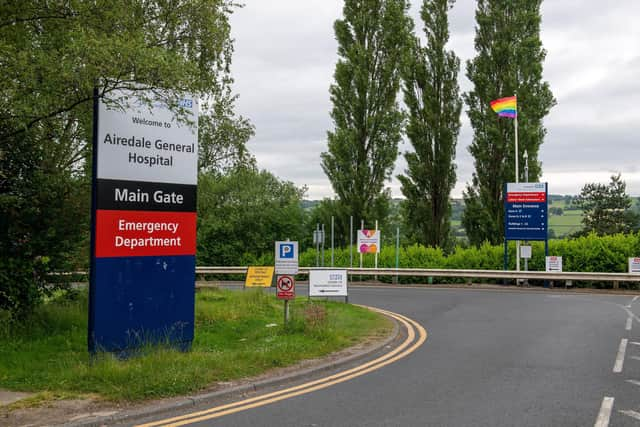

An independent report in 2022 recommended that RAAC hospitals should be replaced by 2030 at the latest, but a report last year concluded that they could stay operational past 2030 but with significant risk and cost. Airedale General Hospital is one of seven hospitals at risk of serious deterioration from crumbling concrete. Its refurbishment is expected to be completed by 2033.
What this report and countless others have shown is that the Government cannot afford to dither on this issue. At best it will only cost taxpayers more in mitigation and maintenance. It also needs to be transparent on cost increases, potential delays and the risk to staff and patients from timetable slippages.