
The person in charge of the grooming gang inquiry must be made of stern stuff and Baroness Anne Longfield meets the criteria - Jayne Dowle
There has been outrage, but all things considered there is surely no-one in public life better placed to lead the national inquiry into grooming gangs than Baroness Anne Longfield.

Not least has indignation come from some of the victims - now survivors - who suffered systemic and ongoing abuse from the vile predators who ruined their childhoods.
Fiona Goddard, abused by a gang in Bradford as a child, is questioning how the inquiry will be independent of the government when it is chaired by an individual who was recently – earlier this year – made a Labour peer for her peerless work on children’s rights.
“This is not an independent inquiry,” Goddard told reporters. “The Government clearly wants to control the narrative. There is no other explanation. I'm completely disheartened.”
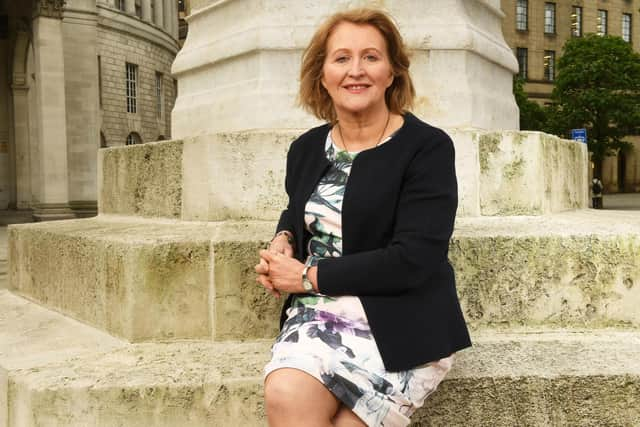

Political commentators are also grumbling that Baroness Longfield’s appointment is an abject example of cronyism. Interestingly, Reform UK are still to make political capital out of her position, but perhaps that is only a matter of time.
Surely, critics need to take time and context into account. Given that the inquiry will be looking into past crimes, there is a historic factor here which pre-dates the current government. For too long, successive Cabinets have refused to hold a national inquiry, and getting to this one was fraught and divisive. That Sir Keir Starmer, as Prime Minister, has put a national inquiry into motion should surely be recognised.
Cynics may say that he's only done this to gain points with a public disenchanted with immigration - many of the grooming gangs were dominated by men of Pakistani heritage – but he didn’t have to do it.
Baroness Longfield may be a Labour peer, but she is not overtly politically active and will step down from the party as she carries out her remit. Also, there will be a rigorous system of scrutiny which will follow the process and cast a strong ruler over the findings and recommendations.
If it had been a Conservative or Lib Dem peer, there would have been complaints about political interference from the other side of the fence.
And honestly, who else would have been capable of the job? If it had been a person lacking experience or seemingly picked only to tick a certain box, protests would have been forthcoming.
It’s been well-publicised that the Home Office really has struggled long and hard to find someone qualified and willing to take on the onerous – but extremely important - task. Baroness Longfield should be applauded for her courage in agreeing to go ahead; few would envy her.
Putting the inquiry into motion has already been difficult. In October, the final two candidates for chairperson dropped out. Annie Hudson withdrew first, after intense media coverage and survivor criticism regarding her past role as a director of children's services at Lambeth, south London.
Then Jim Gamble, a former police chief and head of the Child Exploitation and Online Protection (CEOP) command, said no. In his withdrawal letter, he cited a “lack of confidence” from some survivors due to his policing background and criticised the “highly charged and toxic environment” and “political point-scoring” surrounding the appointment process.
Also, before the inquiry’s work even began, five grooming gang survivors walked away from the liaison panel overseeing the process of setting terms. This was over the Home Office considering widening the scope of the inquiry to other forms of sexual exploitation.
The inquiry will take three years and have a budget of £65m. Inevitably, like the ongoing inquiry into how the government of the time handled the Covid pandemic, it will run into delays and controversy.
The person in charge must be made of stern stuff. Born on a farm near Otley, 65-year-old Baroness Longfield, served as children’s commissioner from 2015 to 2021 and last year founded the Centre for Young Lives think tank aimed at improving the lives of children and families.
Before that her life experience – all invested in children and young people – including being alongside Harriet Harman to set up New Labour’s Sure Start centres, and working for Kids Clubs Network and Save the Children.
And key point; because her roots and life are outside London, Baroness Longfield is certainly not blinded by Westminster.
At the heart of the grooming gangs scandal is the role ethnicity, religion and other cultural factors may have played in the abuse. Baroness Longfield promises to “not shy away from difficult or uncomfortable truths wherever we find them”.
Whether by an early General Election or procrastinated process, the inquiry may even end after the term of this government is finished. By then the argument over whether its chairperson was a Labour peer or not may be even more irrelevant.