
Time for critics of Doncaster Sheffield Airport to accept it needs a helping hand to take off again - Jayne Dowle
Having recently experienced the hell that is Manchester airport, I’m more than ever convinced that South Yorkshire needs its own. Too big, too labyrinthian, and too far over the Pennines, especially if you’re travelling in winter weather, or when the A628 Woodhead Pass or M62 decide to have one of their regular anxiety-inducing traffic snarl-ups.

I know I’m biased because I live in Barnsley, but I’m massively in favour of the re-opening of Doncaster Sheffield Airport (DSA), because it’s an easy trip from my house straight down the A1. And if the A1 was to fail, there are easy alternative routes to take.
Air travellers have quite simple needs really; good choice of international flights, get to the airport without drama, park without fuss or exorbitant fees, feel welcome at security and check-in and comfortable as you await take-off.
All of this can be easily forgotten in the row over the £160m of taxpayer funds allocated to the re-opening of DSA, after attempts to secure a private investor failed.
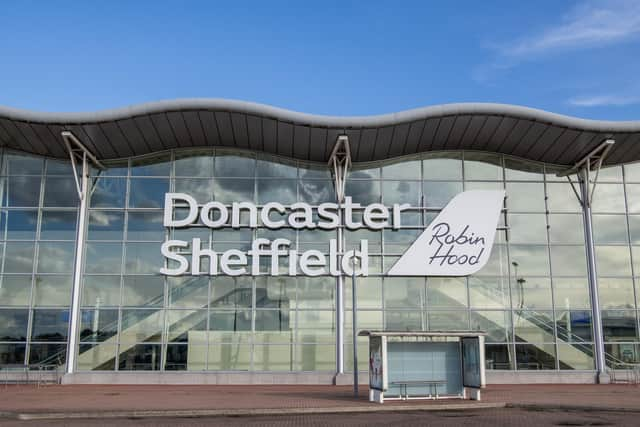

At a recent public meeting at the mothballed airport, led by South Yorkshire mayor Oliver Coppard, all four Labour council leaders from Barnsley, Doncaster, Sheffield and Rotherham, voted in favour of the plan, which is backed wholeheartedly by Transport Secretary Heidi Alexander.
The plan, which will also involve no payment of rent on the site for 10 years, will see devolution funding controlled by Mr Coppard’s office released to City of Doncaster Council so it can reopen the airport through a council-owned company, Fly Doncaster. The site was closed under the private ownership of Peel in 2022 after years of running at a loss.
Writing in The Yorkshire Post, Alexander called the decision to use public funds “a victory for common sense”. There is no denying this airport’s crucial role in boosting regional growth, she argued, citing council figures which predict it could support 5,000 jobs and provide a £5bn boost to the local economy. She also pointed out that “aviation’s benefits ripple far and wide”, as the re-opening of the airport will also help support the development of an advanced manufacturing hub at nearby Gateway East.
What’s not to like, you might ask? Well, if you happen to be Vincent Hodder, chief executive of Leeds-Bradford Airport (LBA), you believe that, as outlined in a recent statement to this newspaper, such public subsidy is “distortive” and will create “unfair competition in our market”.
Whilst Hodder’s concerns, that taxpayers’ money is spent wisely and that “sufficient safeguards are in place as to how these public funds are used”, are valid, his cautionary tone seems churlish at best.
His own airport is breaking records, with at least three million passengers travelling through this year already, and more than 530,000 expected to travel through the airport by the end of August, marking the busiest single month in LBA’s history.
Alongside this, LBA is investing £100m in refurbishing and modernising its own site, including a terminal extension, with 83 per cent more seating, uninterrupted runway views, and a streamlined arrivals experience with faster baggage reclaim and enhanced passport control.
The regeneration project is designed to “futureproof the airport for continued growth”, according to a proud statement on LBA’s website.
LBA was privatised in 2007, but with what’s known as a “special share” from the five West Yorkshire councils of Leeds, Bradford, Wakefield, Calderdale and Kirklees, to protect its name and operation as an air transport gateway for the Yorkshire region.
LBA is clearly flying high, proving that with sensible and strategic leadership a privately-owned regional airport can thrive. However, in today’s challenging climate, this is clearly not the only model.
As Alexander reminds us, DSA was once “a thriving airport”, often rated as the best in the UK, serving satisfied passengers for 17 years. Before the pandemic, it welcomed 1.4 million people a year on their way to holidays, family reunions and business trips. It served a massive purpose, not just to the people of South Yorkshire, but to a wider diaspora, including Derbyshire, Nottinghamshire and across the East Midlands.
We should pull together to celebrate, but the row threatens to overshadow what should be an exciting time for South Yorkshire, with the reopened airport providing jobs and a much-needed boost to the local economy, as well as convenient flights of course. Perhaps the nay-sayers should accept it needs a helping hand to take off again.