
Tumultuous Budget has left no one feeling better off and the Government in disarray - Jayne Dowle
Sir Keir Starmer is casting forward with desperation when he says his big ideas to transform Britain should only be judged at the end of this parliament.

That takes us to 2029. Many are questioning, in the wake of a tumultuous Budget which has left his Chancellor, Rachel Reeves, facing accusations of lying over the true state of public finances, whether he and his Cabinet will still be here.
It’s not just a matter of public opinion, although that is bad enough. It’s also restive backbenchers, especially those incandescent because the PM inexplicably chose a moment in the already febrile Westminster atmosphere to row back on workers’ rights – slashing the proposal to allow protection from unfair dismissal from one day in a new job to six months.
However, what happens in Westminster is one thing; there will always be infighting and unhappy factions.

How the public feel about Sir Keir Starmer and Rachel Reeves is arguably much more important to the post-Budget national mood. It has to be said, this is particularly gloomy as we approach what should be a festive season.
Only 15 per cent of British people think the government is handling the economy well, according to a new YouGov poll, with just 11 per cent believing that Rachel Reeves is doing a good job as Chancellor.
What’s more, 67 per cent of us think that the economy will get even worse over the next 12 months, and just a miniscule three per cent of voters consider the economy to be in “a good state”.
Most people see the Budget as unfair (48 per cent) rather than fair (21 per cent), and unaffordable rather than affordable. This fairness ratio is the second worst YouGov has recorded since 2010, second only to the 2022 mini-Budget.
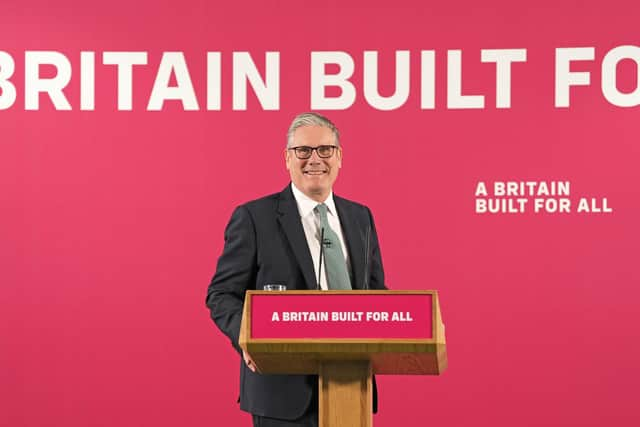
Still, Starmer soldiers on. Making a speech at the carefully-chosen Coin Street Neighbourhood Centre in south London on Monday, he told us that his government has “a plan for a Britain that is built for all”.
By now we’re used to the word soup that too often passes for a Starmer speech; what exactly does it all mean? Built for all? Could he go so far as to define ‘all’?
The hospitality owners and creators of jobs for local communities and young people, who are now facing real-time business rates rises, would certainly argue it wasn’t for them.
The parents in full-time working families, who will be hit hard by the freezing of the income tax thresholds, would agree; not for them either.
Yet again, a senior Labour politician trots out the “two thousand free breakfast clubs” as a badge of honour.
Whilst breakfast clubs are welcome for many children, they are not the answer to the ever-rising costs families must bear to keep afloat, nor do they challenge the expense of wrap-around school care that enables parents to work.
Taking £150 off energy bills? Just once in a year? What about tackling the energy companies and getting them to offer lower prices all year round, by abolishing extortionate standing charges, for example, and cutting shareholder profits. Surely the least we might expect from a Labour government that says it’s gunning for big business – until push comes to shove and it backs out.
Attempting to rally the nation was clearly a ploy to draw a line under the fiasco of the Budget and the position of Rachel Reeves. It was a very personal speech for Starmer, and making it so was a way for him to distance himself from his Chancellor, who he appeared to support last week in the Commons when Conservative leader Kemi Badenoch savagely laid into her.
However, refocusing public attention on the government’s wider economic plan will not make the immediate pain go away. Nor will it do Reeves any good; she faces accusations that she lied by failing to disclose to voters that public finances had significantly improved in the run-up to her budget.
Remember that extraordinary press conference, when she interrupted breakfast television to warn us that she would be breaking the manifesto promise not to raise income tax – before reversing in panic?
But it’s not so much what Reeves did say, but what she didn’t; that public finances had actually improved because of higher tax receipts, offsetting the productivity downgrade.
Many questions are being asked. But the biggest is, ‘how can we carry on like this?’. At the very least, we need to be able to trust the fiscal probity of the Chancellor of the Exchequer.