
Urgent action is needed to reclaim our rain and strengthen water security: Anne McIntosh
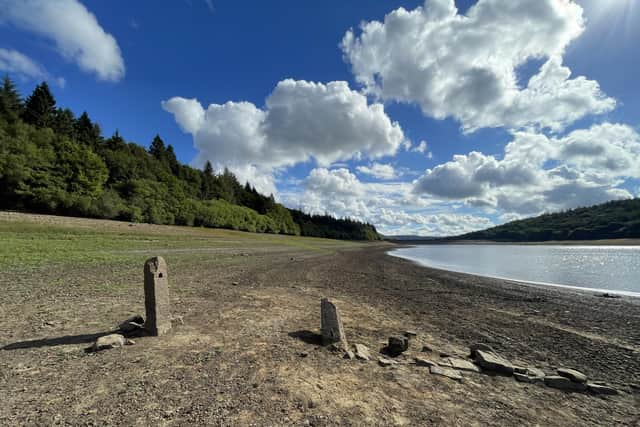
In summer 2025, Yorkshire suffered one of its worst droughts. A hosepipe ban was imposed for months and wildfires took hold on the North York Moors threatening lives, livelihoods and livestock. Given the challenges the region and the country face, I was delighted that the Committee on Environment and Climate Change on which I sit undertook an inquiry into drought.
In our conclusions, we warn that England’s water supply is under growing strain due to a combination of climate change, population growth, public water supply leakage and water intensive industries. Without action, the risk of drought in England threatens the very systems on which people and nature depend.
Given the housebuilding programme, data usage and clean energy plans, water stress will deepen.
In our report Surviving drought: reclaim the rain published last week, the cross-party House of Lords Environment and Climate Change Committee also says the UK is not short of rain but we must store, manage and reuse it much better to help prevent both drought and flooding.

To strengthen England’s water security, the Committee is therefore urging the Government to take a number of actions.
We need to understand the problem through better impact data and drought monitoring and by conducting a full environmental and economic assessment of drought to weigh the cost of inaction against the value of resilience and achieve a better balance between supply and demand through driving a whole of society approach to drought, including through awareness raising campaigns, improving water efficiency standards in homes and promoting water reuse and rainwater harvesting.
Drought resilience could be improved for those sectors reliant on abstraction by prioritising regulatory changes to make the construction of local resource reservoirs easier for farms, golf courses and other appropriate places, and increasing the flexibility of abstraction licensing to support catchment-based water resource projects.
Drought planning and response should be strengthened to make it fit for the future by publishing a prioritisation plan for an emergency drought by no later than autumn 2026 and rolling out nature-based solutions more widely in urban and rural settings.
There is a positive role for farmers to play in preventing drought arising from climate change and in managing water resources. Across Yorkshire, many farmers are members of the internal drainage boards, responsible for drainage in low lying areas. The Committee strongly recommended that the remit be extended to more general water resource management.
Farmers also can save communities from flooding as with natural solutions projects, such as the Pickering Slow the Flow scheme. The Government must support them in these endeavours through environmental land management schemes, allowing farmers to reclaim the costs of temporarily storing water on their land.
The Committee noted that climate change is increasing the risk of drought through a combination of hotter summers and heavier winter rains, making the capture and storage of rainwater increasingly important.
The experience of the 2025 drought sent a warning signal about the water and drought management system. We have already had a dry start to this spring, so it is critical that action is taken now to prepare for serious drought conditions, particularly as we enter a reported El Niño year.
During our inquiry, we took evidence that if action is not taken now, public water demand could exceed supply by five billion litres every day (equivalent to 2,000 Olympic swimming pools) by 2055.
As a result, serious thought, planning and investment must go into managing the environmental and economic threats that drought poses to England.
Water companies have a role to play, making water resources management a priority. Yorkshire Water has experienced floods in one part of the region and water stress in another. They have made a sizable investment, creating a regional grid, to resolve these issues and secure a stable water supply for the whole region.
A balance has to be reached between housing developments, data centres and the development of hydrogen as a fuel and the impact these have on water supply. Water companies should be statutory consultees on all major planning applications to ensure they can precisely forecast future water needs and their ability to supply water for all future uses. The report provides a wake up call for future water use and failure by Government to act.
Consumers must be mindful of our water use and strive to be more water efficient. Rain water harvesting and reuse should be deployed, though easier to achieve in new build than retrofitting.
Considering the high standard of our drinking water, it seems exremely wasteful that we use it to clean our cars and water our gardens.
Our report provides the Government with practical recommendations which, if implemented, would accelerate England’s path towards drought resilience.
Water is the font of life itself. The Government must act now to secure England’s most vital resource for the future and work with the public to ensure the taps don’t run dry.
Baroness Anne McIntosh of Pickering is a Conservative peer