
What Britain’s sanctions on illegal Israeli settlements tell us about the shifting world order

A lot has been said about Britain’s place in a world that is rapidly changing. There has been a marked shift since the start of Donald Trump’s second term as President of the United States.
While the special relationship between the US and UK will outlast the current incumbents of the White House and 10 Downing Street, it is clear that Britain will have to forge its own path on certain issues. It simply cannot afford to align itself with a capricious President on every issue.
The Government’s ban on trade with illegal Israeli settlements in the West Bank is one of a growing number of instances where Britain has diverged from the US.
While there are some who will disagree with this decision, not least the current US administration, it is a wider pattern of the Government finding its own path on foreign policy in a changing, volatile world.
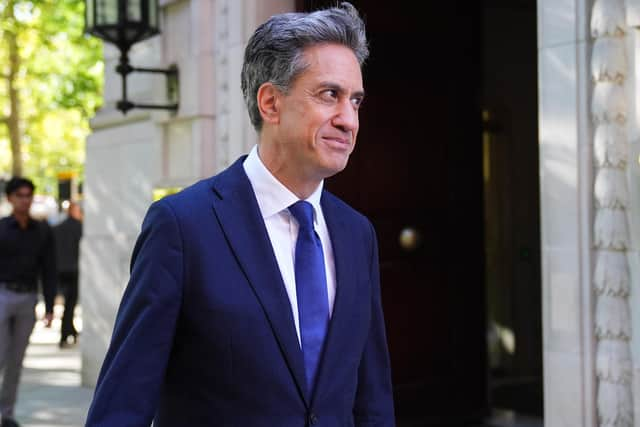

If Britain had announced these sanctions on its own then they could be dismissed as ill-judged, puerile even.
However, the fact that they were co-ordinated with allies such as Canada and France, who have also banned goods, shows leadership on the part of Britain.
The sanctions against illegal Israeli settlements must not become a licence for anti-semitism in Britain and beyond. Concerns of the Jewish community cannot be dismissed. As they mark the High Holidays, starting with Rosh Hashana on Friday, authorities need to ensure their safety.
And everyone has a part to play in tackling the scourge of anti-semitism. Events in the Middle East must not be allowed to divide communities here.