
Why would-be Reform voters should be careful what they wish for - Jayne Dowle
Would-be Reform UK voters, be careful what you wish for, because electioneering promises have a way of turning out to be as empty as local government coffers.

It’s reported that all Reform UK-led councils are planning to raise council taxes this coming year. This is despite the party’s campaign being littered with promises to ‘freeze council tax’, ‘reduce the rates’ and ‘reverse tax hikes’ during 2025’s local elections, which saw a raft of councils come under this party’s control and several others, including Doncaster, make significant Reform UK gains.
Reform UK also won its first mayoral contests in the newly-created combined authorities of Hull and East Yorkshire, where former Olympic boxer Luke Campbell triumphed with 36 per cent of the vote, and Greater Lincolnshire.
Reform UK has stated that it never promised to freeze or reduce council tax during the election campaign and any pledges to reduce taxes were in relation to national policy. But the public’s recollections may differ.
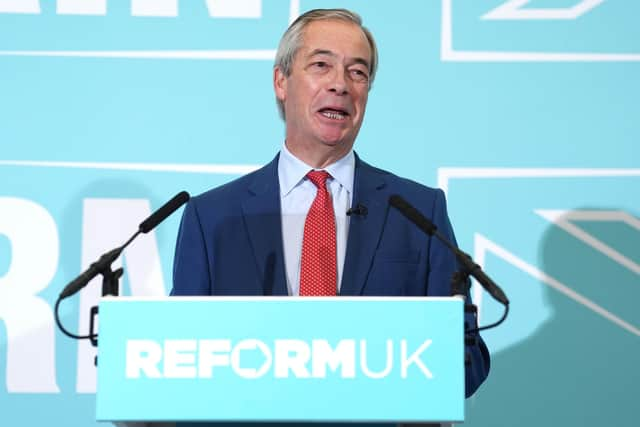

As local government spending continues to climb, it’s true that anyone who believes a politician of any party who promises not to raise council tax is deluding themselves. But still, voters fell for it. And now, they may be regretting their decision.
This has consequences for political leadership. The once-bullish Farage star appears to be waning of late, a perception backed by a new YouGov poll out this week which shows that now, less than a third (29 per cent) of British people think he would make a better Prime Minister than Sir Keir Starmer, who despite his own travails, was backed by 36 per cent of those surveyed.
Also, Farage is losing out to a resurgent Kemi Badenoch. If it came to a straight choice between the two right-wingers, the Conservative leader was favoured to be PM by 31 per cent to 21 per cent of those surveyed by YouGov.
Six months ago, Badenoch and Farage had been divided by 21 per cent to 23 per cent, respectively. It’s not just the rumblings of council tax rises denting Reform UK’s reputation, obviously, but these reports won’t be doing Farage’s standing any good.
In fairness, there is no getting away from the fact that victorious Reform UK councillors inherited local government budgets that have been stretched for more than a decade and a half, starting with the austerity measures brought in by the Cameron-led government in 2010.
Pitch this against rising spending demands and it’s no wonder the books won’t balance. Analysis by the Politics Home website in June 2025 found that councils won by Reform UK were already dedicating up to 78 per cent of their service spending on social care and homelessness in 2024.
But surely Reform UK should have anticipated the realities of running council budgets, and not over-promised and under-delivered?
There must be many Reform UK voters in Kent, the party’s flagship local authority, often viewed by it as a template for what a Reform-led government might look like, proposing an increase of 3.99 per cent, wondering just what they voted for. Especially as this particular county council led the way with Reform UK’s US-inspired DOGE (Department of Government Efficiency) programme to slash so-called waste in local government, reducing regulations and bureaucracy and streamlining technology.
The Liberal Democrat group on the council are accusing Reform UK of financial mismanagement and a “total betrayal” of election promises.
Similarly, the people who backed Reform UK in Derbyshire, North Northamptonshire, West Northamptonshire and Leicestershire, where council tax rises of 5 per cent, the maximum permitted without further interventions, are on the table, may now be regretting the faith they placed in Farage.
Derbyshire county council earlier this week confirmed the rise after predicting a £38m gap in its budget, with overspends in children’s social care and adult social care.
It blames inflation, rising demand and the government’s new local government funding formula as contributory factors to budgetary pressures.
Meanwhile, councillors on the Reform UK-controlled Lincolnshire county council have been told that a 4.99 per cent increase was being considered. A public consultation would also examine alternative options, including a rise of 3.99 per cent – although that increase would create a deficit of £4.1m.
As Tony Travers, a visiting professor in the London School of Economics’ department of government, puts it, “given that most of them [Reform UK-led councils] are coming out with the maximum allowed increase it will be evidence, lest we need it, that there is no efficient ‘Reform way’ of filling a pothole.” Or filling all those empty promises.