
Wrongheaded reformers of GCSE English should not smash the words of our authors - Jayne Dowle
English is considered an absolute building block of education and should remain the case, whatever the next reform to befall it. If a teenager leaves school without a pass in English language, they are obliged to re-sit until they achieve that all-important Grade 4 (equivalent to O Level ‘C’).

I know this because my 22-year-old son, who can talk to anyone about pretty much anything, struggled massively with literacy at school and in Year Seven, was diagnosed with dysgraphia – a learning disability which makes it difficult for a person to express their thoughts through writing.
Despite lots of support at school and college, he kept failing English language and eventually passed, at about the fourth or fifth attempt, online during the Covid lockdown.
Ask him if GCSE English is not fit for purpose, as Pearson, a leading exam board is arguing, and he’ll groan. To scrape that lockdown pass, he had to sit three sets of papers and the board awarded an average grade; his highlight of the entire experience was writing a creative story about a giraffe.
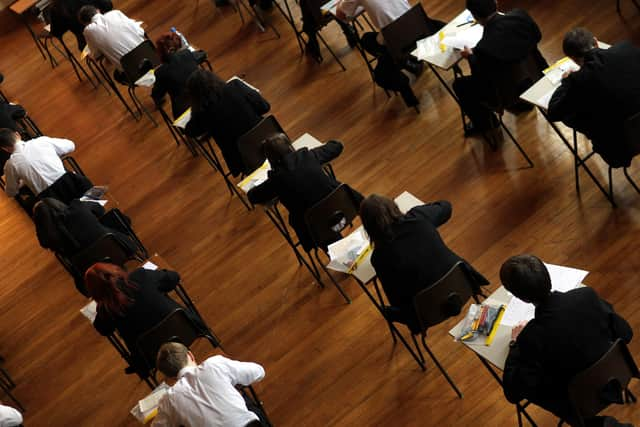

Would his experience of studying English have been different if, as Pearson calls for, in its submission to the government’s curriculum and assessment review, he could have studied “a broader range of texts, including modern digital, written and spoken formats”?
Actually, my son, and his sister, who took GCSEs in 2022, both completed a spoken element, but exam boards can differ in what they set. My daughter went on to do A Level English language, a useful analytic base for her degree in law.
Much argument about English teaching and learning seems to presume both language and literature are studied together as one subject, not always the case.
Despite English language often being considered an ‘easy’ subject, something is clearly going badly wrong. In 2024, more than a third (38.4 per cent) of students did not achieve a ‘4’ pass grade. The pass rate for re-take students aged 17 or above was a lamentable 20.9 per cent, down from 25.9 per cent in 2023.
Similar figures exist for maths; the government is right to launch an overhaul of what should be basic qualifications, but I’m worried.
Pearson, one of the three largest exam boards, warns that urgent reform of both GCSE English language and literature is required because the curriculum at present fails to adequately prepare pupils for either further education or the workplace.
“Right now, students leave GCSE English language without any real structured learning and practice in spoken English, failing them when it comes to both further studies or their careers,” says Sharon Hague, managing director of Pearson. “There’s also little to no inclusion of media formats that students might encounter in real life or the workplace such as digital media.”
English literature, Hague adds, is too reliant on white male authors, making it harder for teachers to keep students engaged. Less ‘male, pale and stale’ more vibrant, diverse and exciting texts would help youngsters learn to love language, she argues.
I’m with her, to a point, failing to understand, for instance, why John Steinbeck’s 1937 turgid Depression-era Of Mice and Men is still on the curriculum. However, also there are books you might actually choose to read yourself and enjoy.
The blame for boredom is often laid at the feet of former Education Secretary Michael Gove, who conducted the last major curriculum re-think and brought in around 15 English poems as part of GCSE English Literature, from Alfred Lord Tennyson’s The Charge of the Light Brigade to Carol Ann Duffy’s War Photographer.
Gove was lambasted by teachers for his didacticism and loathed by pupils forced to learn reams by heart, but as a state school boy turned Oxford English Lit and Lang graduate, I could see exactly what he was trying to do; lengthen and broaden the experience of both language and literature through poetry.
Not enough of this joy and adventure comes through in the classroom. If books are considered stuffy by young people, it’s because teachers treat them that way; texts should be living things that connect to other subjects and bring unknown worlds alive.
Hague’s concerns add to fears that if both English language and literature fail to keep pace with the times, its future at degree level could become untenable.
As an English language and literature graduate, who writes for a living and reads for work and pleasure, I find this immeasurably sad, as will many others who love words.
I don’t want to live in the country of Shakespeare, the Brontes, Jane Austen, George Orwell, former Children’s Laureate Michael Morpugo, current Poet Laureate Simon Armitage and Kate Atkinson to name just a few superlative ancient and moderns we can be proud of, and watch wrongheaded reformers and the government smash their words to pieces in the name of progress.