
David Blunkett wrong to say cost-of-living should take priority over Europe: Yorkshire Post Letters

Peter Packham, Chair, Leeds for Europe, Roundhay, Leeds.
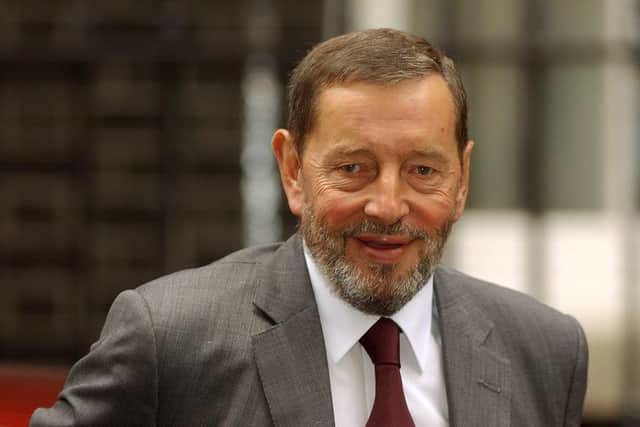
Lord Blunkett tells Andy Burnham that domestic challenges – including the cost of living and 951,000 young people not in education, employment or training – must take priority over Europe (The Yorkshire Post , November 14).
They are not competing priorities; progress can be made in tandem. Lord Blunkett recalls Labour’s 1997 utility “windfall levy” funded jobs and training for 250,000 youngsters, but no equivalent cash was raised in October’s Budget.
Yet he then acknowledges Brexit surrendered four per cent of GDP growth – “income that could be used… to tackle that economic inactivity”.

Europe isn’t a distraction from the Prime Minister’s “top priority” of the cost of living. Rebuilding EU trade is the “windfall” Britain needs to generate better domestic job prospects and tax revenues to support our youth. Restoring freedoms to work and study across Europe would also be a powerful motivator.
Lord Blunkett claims pro-Europeans “exaggerate opinion polls” – a line I will dismiss as him falling for Brexit propaganda until he explains it. He says voters just want to “make sense of the aftermath” of Brexit. In reality, the public – including many Leave voters – are ahead of him and the rest of Westminster. They’ve already concluded damaging trade barriers with our largest market make no sense and there have been few, if any, “Brexit benefits” to compensate.
Indeed, a Queen’s University Belfast poll you report on six pages later (Half of Irish voters say Britain should join EU) shows 52 per cent of Northern Ireland voters back rejoining (38 per cent against). Furthermore, 63 per cent find Brexit more disruptive than anticipated and 77 per cent want “serious dialogue” on EU ties. Your reporting, not my exaggeration.
That’s remarkable given Northern Ireland already enjoys Windsor Framework mitigations – which only 44 per cent now think adequate – and many NI citizens qualify for an Irish EU passport. But even in Northern Ireland, the public won't settle for second-best mitigations.
Finally, Lord Blunkett draws a baffling analogy with the US mid-term elections, arguing domestic concerns must trump “important but distant, grandiose dreams”. It is unclear what comparison he intends, as our EU status directly impacts domestic costs, jobs, and opportunities.
Nor is EU membership a “distant, grandiose dream”: 27 countries already manage it, and we are simply talking about recovering benefits we enjoyed just seven years ago.