
'I thought I wouldn't survive huge toll of Post Office scandal' - Yorkshire victims speak of impact amid inquiry
Jack Houldsworth speaks to Yorkshire victims of “the greatest miscarriage of justice of our time” ahead of the final report from the Post Office Horizon IT Inquiry.
With countless lives irreparably damaged, the Post Office scandal remains the largest collection of wrongful convictions in the country's history. The numbers are stark, but the reality for the individuals was often worse.
As the years rolled into decades, more communities were left fractured. Baseless convictions with devastating consequences shattered a once-noble British institution. The victims saw their lives ripped apart – and they still don’t know whether this was a case of inadvertent negligence, or an organisation built on a fragile foundation of lies and deceit.
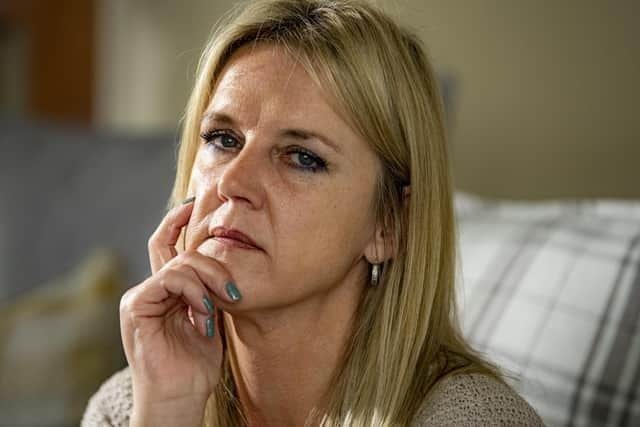
“I got nine months in prison,” says Janet Skinner. “I lost my house because I couldn’t afford to pay the mortgage.” Janet had worked for the Post Office in many different departments since joining in 1994, eventually becoming sub-postmistress for her branch in Bransholme, Hull.

Yet thanks to the now well-known flaws in the Horizon computer accounting software, she was soon being held responsible for an alleged shortfall of £59,000. Janet tells of the severe consequences on her health: “Only ten days after I had been arrested, I wasn’t feeling right, but I thought I’d just pulled a muscle in my arm. But the feeling moved up to my shoulder, and then it was as if the pain was shooting down my arm.”
Within 24 hours, she was paralysed from the neck down. Remarkably, Janet made a near full recovery but has been left with the physical and emotional scars of the ongoing battle with the Post Office. “It took me two and a half years to walk again properly. I am left with a lot of mobility issues, a lot of physical weaknesses, and my body is a little bit broken.” Nearly 20 years on from her initial conviction, Janet still awaits fair and proper compensation for the devastating impacts of the fate she endured.
Professor Christopher Hodges is the Chair of the Horizon Compensation Advisory Board. He believes the inquiry will eventually lead to “criminal prosecutions for Post Office people”, adding that, “some people may have told lies”. Delays in compensation and a lack of accountability seem to loom heavily over the prolonged inquiry.
Hodges pointed to “complexities in individual compensation cases” causing a delay in payments to victims. “The perception of delay by the government is difficult to overcome. The wheels are always turning, thousands have already been compensated, but there’s still a lot more to do.”
In his witness statement to the inquiry, Sir Ed Davey, Minister for Postal Affairs between 2010 and 2012, labelled the Post Office Horizon scandal “the greatest miscarriage of justice of our time”. He continued in his introductory remarks to exclaim his “shock at the scale of the lies told by the Post Office and Fujitsu — to the sub-postmasters, to the courts, to ministers of all parties, including myself, to Parliament, to journalists and to the public". The inquiry is yet to reveal whether government officials can exonerate themselves from any wrongdoing.
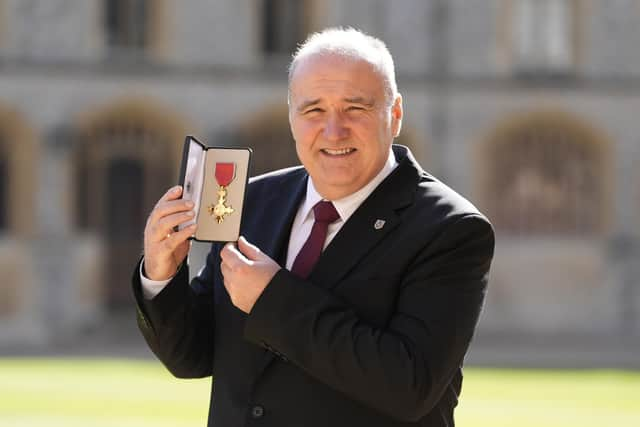
Sub-postmasters and mistresses had their lives torn apart by the accusations levelled against them. Ostracised by society, these hardworking men and women did their best to shield their families from the aftermath. Lee Castleton was wrongly convicted of stealing £25,000 from the Bridlington branch of the Post Office, where he was the sub-postmaster back in 2007. He recently received his OBE from the King.
He knows all too well that the years fighting for justice have been felt most acutely by those closest to him. Lee says: “The toll on the family was huge. It was just horrendous, abhorrent really. There have been many times when I have thought I wouldn’t survive to the end of this, I still don’t know where the end is. It’s the biggest, most emotional aspect to deal with is the emotional toll on the family. We were all labelled as thieves.”
Lee acknowledged the trauma has left its mark. “We deal with the knock-on effects as a family every day. My son would just walk out of the room if he heard me even mention the Post Office. My wife no longer has fits, thankfully, but we went through 10 years of my wife having terrible epileptic fits, having never had epilepsy before. That was purely down to the stress.”
Justice for normal families, people like Janet and Lee, should be the bare minimum requirement for a public inquiry. But Janet remains sceptical. “What the UK seems to lack is accountability. You only need to look at all the inquiries that are ongoing, like Hillsborough, Grenfell and the rest. When you look at those scandals, how many people have ever been prosecuted? Nobody. None.”
She continues: “We need to see justice and accountability for what has happened and for the number of people whose lives have been literally torn apart.”
Professor Hodges believes the Post Office scandal has highlighted that “systemic changes are required” to modernise and protect from this happening again. With the public hearings phase of the inquiry finally complete, Sir Wynn Williams, the Inquiry’s Chair, released this statement before the turn of the year: “I will now analyse this evidence, draft my final report, and will have to give anyone who is subject to criticism a reasonable opportunity to respond, as is their legal right.”
The cold truth is that hundreds of innocent men and women must now live with the scars of this dark chapter – and few of the Post Office’s victims were impacted quite as deeply as Janet Skinner. She remains hopeful that the right people will finally be held to account. “I spent 15 years ashamed to say who I was. I was embarrassed, but now it’s on them. There are a lot of people who are responsible, and I hope and pray that they don’t walk away free.”