
Knaresborough history: The House in the Rock and Chapel of Our Lady of the Crag and the role of the Town Crier in Yorkshire

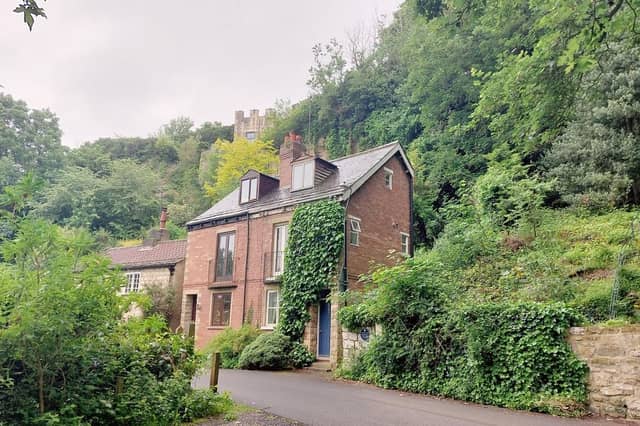

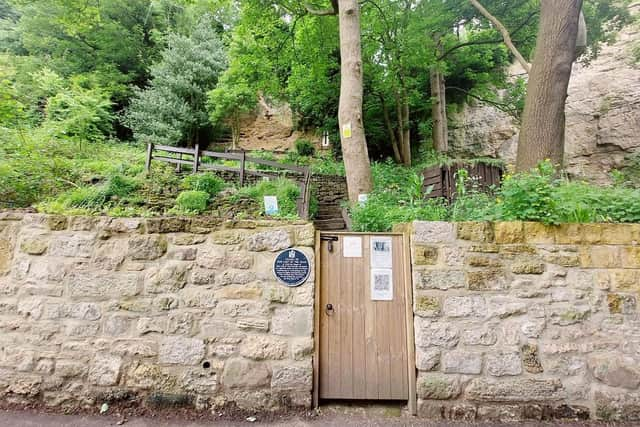
The House in the Rock and Chapel of Our Lady of the Crag are located on Abbey Road in Knaresborough and they date back to the 15th and 18th centuries respectively.
The House in the Rock was originally called Fort Montague, it was built by Thomas Hill and was open to the public until the year 2000 and has since been a private residence.
His descendants lived there until 1996, more recently Nancy Buckle.
Historian Paul Chrystal, 69, from Edinburgh, who has written various books on areas in Yorkshire described Hill as ‘eccentric’.

“There were a lot of eccentric people around in those days and he was one of them,” he said.
“He built it between 1770 and 1790, he made a tea garden there, built some battlements and named it Fort Montague.
“His son had 16 children, he called himself Sir Thomas Hill for no [particular] reason. Every day he used to fire a two-pound cannon gun salute.
“He printed 100,000 of his own bank notes, which had been in circulation by 1812, but they were only worth five and a half old pennies.
“In those days there was no Bank of England and anyone could issue bank notes whenever they wanted, so he had his own currency. I don’t think it caught on very well.
“It got its name The House in the Rock in the 1930s. There’s a woman who I met called Nancy Buckle who basically kept it going.”
Nancy Buckle worked as a Town Crier until 2000 and there are currently around 150 in the UK. The tradition can be traced back to medieval times.
Mr Chrystal explained why people take on this job to this day.
“Apart from Knaresborough, the town crier in Ripon still comes out every evening,” he said.
“You get dressed up and all sorts and you have a trumpet-style instrument that you blow, it’s got its attractions.
“They love history and they love the places they live in. They feel part of it and they are part of it. It’s fighting against the odds.
“Everything is changing, becoming less historical and more frivolous and this is their way of getting their own back. That's the way I see it. It brings tourists in.”
The Chapel of Our Lady of the Crag is considered to be the third oldest wayside shrine in Britain and has been recognised by the Vatican.
“It’s a very important piece of religious history. There is a lot of confusion around it,” Mr Chrystal said.
“The Chapel of Our Lady of the Crag, or St Robert’s Chapel, is the correct name for what was for many years mistakenly called St Robert’s Chapel.
“Perhaps because it was confused with St Robert’s Cave, also in the rock face but further down the river.
“The Chapel of Our Lady was excavated by a guy called John the Mason in 1408 and is said to be the third oldest wayside shrine in Britain, that is important for that itself.
“It was a hollowed out solid rock, the roof and altar were originally beautifully adorned with gothic and religious ornaments.
“The entrance is guarded by the figure of the knight which is seen holding the sword. It looks eroded, but it’s always been eroded apparently.
“It’s been recognised as a chapel by the Vatican. You couldn’t have a service there, they have had services outside rather than in the cave itself [as it is very small].”