
Peak District moors: Documentary reveals one year of recovery since huge blaze broke out
A new documentary commemorates one year since a wildfire “the size of 325 football pitches” in the Peak District.
From April 30 to May 1 2025, a moorland fire raged in the Goyt Valley, near Buxton in Derbyshire.
Over the two days it burned over 1.7 square kilometres of moorland near Errwood Reservoir, close to an area known locally as Cat and Fiddle.
The fire was described by firefighters as "the size of 325 football pitches" and burned through moorland vegetation and trees.
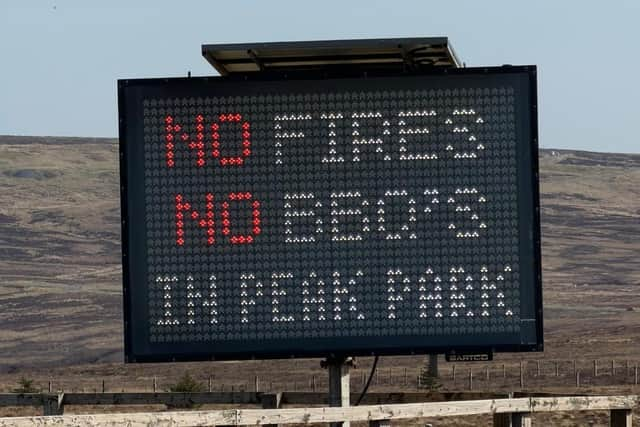

This was an area Moors for the Future Partnership had spent time restoring, which it said was “hugely disappointing” for wildlife and the community.
Tom Harrisson, Delivery Manager at Moors for the Future said: “We spent a lot of money, time and effort restoring the moorland to a better quality. That can all be lost in the space of an afternoon if people start a fire.”
The cause of the Goyt Valley fire remains unknown, but Moors for the Future said wildfires are always caused by humans.
Mr Harrisson said: “No matter how dry or hot it gets, in the UK, moorland doesn't spontaneously burst into flames, there's always a human cause.
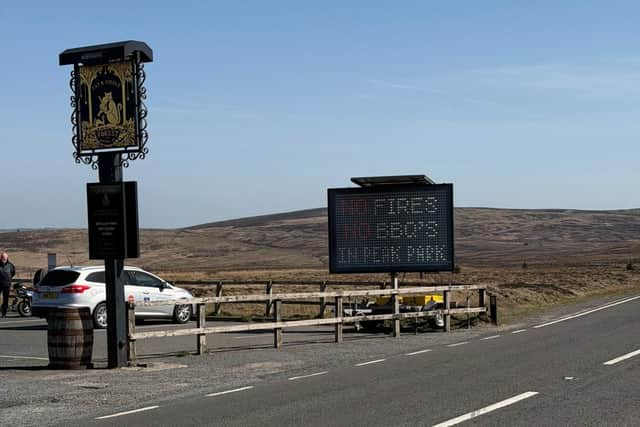
“Whether that's cigarette ends, barbecues, campfires, or litter like glass bottles magnifying the sun's rays. Sadly also arson can be a reason for these fires.
“Moorland in the UK is more susceptible to fire when it is in degraded condition, and the peat is quite dry. When it's in a better condition it is really wet, so it's much harder for fires to start.”
Multiple regional fire services and other agencies were required to tackle the Goyt Valley fire, along with specialist firefighting equipment and a helicopter to drop water.
The fire also took place at the height of the breeding season for rare birds and moorland wildlife, many of which were destroyed by the flames.
In the aftermath, local businesses including Forest Distillery, and Moors for the Future volunteers rallied to help restore the burned area of moorland.
Efforts focussed on planting sphagnum moss, a key species in building healthy blanket bogs.
Sphagnum moss can hold up to twenty times its own weight in water, so its ability to keep rainwater on the moor creates a wetter environment which will not be as susceptible to wildfire.
Other works include blocking peat ‘gullies’ (eroded channels) with stone and
timber, to form mini dams which hold pools of water on the moor, improving its ecological condition and again helping it to be resilient to wildfire.
Interestingly the restored areas proved to be more resilient in the recovery from the fire.
Mr Harrisson said: “When it comes to moorland, wetter is better.”
“It's such an important habitat in this country because of the water supply it provides, benefits in terms of reducing flood risk downstream, all the carbon it stores, the benefits to wildlife.
“All of our techniques focus on rewetting the landscape. Dry peat is highly flammable and can burn for days. A wet and boggy peatland means the damage caused by wildfires may be reduced.”
The documentary, commissioned by Moors for the Future Partnership, features local people and organisations and will showcase the voices of communities affected by the fire, and those involved in its restoration.
These include the efforts of volunteers, businesses and other organisations to help the moor's wildlife recover.
Emma Shaw, Communications Programme Manager for Moors for the Future, said: "The documentary is an expression of hope and appreciation for this well-loved area of moorland, where new life has returned after the fire.
“The Goyt Valley moors are home to specialist wildlife and provide people with amazing places to explore; we're delighted to tell the story of how the moor is starting to heal with the help of people who love and care for this place."
Melanie Selstrom from Forest Distillery, said: "The wildfire last year had a profound impact on us all: seeing the smoke and the extent of the damage so close to home at the Cat and Fiddle was truly shocking.
“Supporting the sphagnum moss planting project was our way of helping the moor begin to recover, with the hope of seeing it return to a rich and thriving habitat for wildlife. Being able to help share that story and highlight the importance of protecting the moor means a great deal to us."
The documentary is due to be released on YouTube on April 30.