
Budget long read: John Healey facing fire over 'jam tomorrow' defence investment plans
Often the most important parts of the Budget is what is missing, writes Westminster Correspondent Ralph Blackburn.

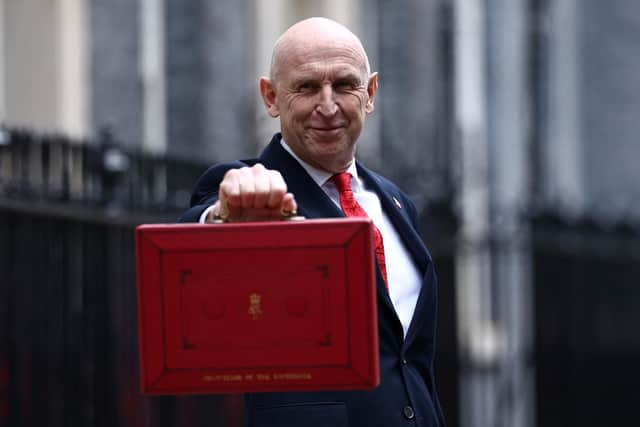
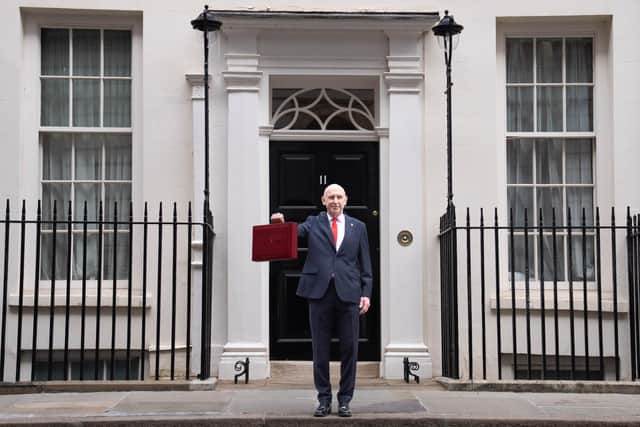
A few hours after delivering his first Budget as Chancellor, John Healey stood behind the bar at the famous Two Chairmen pub and quickly downed a pint.
It was a slight change of mood from the previous years, when Rachel Reeves sipped a glass of red wine on the pavement outside.
Mr Healey held the empty pint glass upside down above head to prove he had successfully finished the drink, before allowing grateful staffers to tuck into his special “Chancellor’s Choice” ale.
But as the assessments of Mr Healey’s first Budget start to flood in, more and more appear to be glass half empty as opposed to glass half full.
The most striking thing about the Chancellor’s statement on Wednesday, was not what was in it, but what was missing.
The headline announcement was the £100 off energy bills to certain bands of council tax, however already this is struggling to stand up to scrutiny.
Think tanks say it is badly targeted and Yorkshire Post research shows this disproportionately impacts northern households.
Overall there were almost 100 measures in the Budget document, however the value of these is the lowest on record.
Of the significant gaps, none was bigger than that of defence.
In the House of Commons, Shadow Defence Secretary James Cartlidge had to be warned by the Deputy Speaker for heckling.
Nus Ghani lightheartedly told MPs: “I think you have spoken more words than the Chancellor during this statement.”
Mr Cartlidge was of course berating Mr Healey about defence, and it took him more than 40 minutes to get onto the topic.

First of all he recounted a moving story about his son, an army reservist, who came back from training in 2022 to complain that they had no kit or ammunition.
Mr Healey said: “This year, our defence budget is £14bn higher than it was in the Conservatives’ last year of government.
“At the spending review next year, I confirm that I will set out the details of how we will meet our Nato commitment to spend 3.5 per cent of GDP on defence by 2035, with a target date for 3 per cent in 2030.
“Today, I am getting work under way to get there in a fiscally sustainable way.
“That will include looking hard at public spending, as I have done today to fund the defence investment plan (Dip), but I am also determined to use more innovative financing, alongside the private sector and our international allies.”
The Dip, if that may sound familiar, was the policy introduced by Sir Keir Starmer that caused Mr Healey to resign.
He said the then prime minister had been “unwilling to commit the resources that the nation needs to defend the country at this time of rising threats”.
However, on Wednesday, Mr Healey stood up and put forward the same plan as the bedrock of protecting the country.
Tory leader Kemi Badenoch said: “He is the man who is making our country less safe. He has failed his own test. This is on him, and no one will ever forget.”
Officials told The Yorkshire Post that the difference between then and now was that the current version is fully funded.
Mr Healey has asked all departments to cut 1 per cent of their capital budgets to fill the Dip’s £4.7bn black hole.
And the pathway to 3 per cent of GDP by 2030 has been “lamentably delayed” to next year.
Those are the words of the Labour chair of the Defence Committee who said: “We had hoped to see the Chancellor set out a precise pathway to spending 3 per cent – and eventually 3.5 per cent – of GDP on defence.
“Instead, some of the key decisions on defence spending have lamentably been delayed until next year’s spending review.
“There is a cost to inaction.
“Investment in our nation’s defence and security cannot be kicked into the long grass.
“Our adversaries are not bound by fiscal years and spending cycles.”
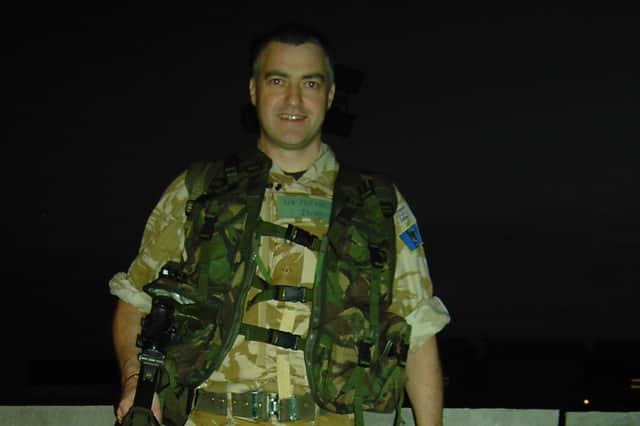
Former Catterick Colonel Philip Ingram was equally scathing: “John Healey has done nothing for defence - a politician’s promise is meaningless.
“Defence has got less funding to spend on day-to-day matters, such as ammunition, training, the sorts of things that are needed to keep a military at the cutting edge.
“It’s a Budget full of promises of jam tomorrow.
“Our allies can see through the political soundbites that are aimed at the British electorate, and they know that we are not properly investing in defence.
“The other people that can see through that are Vladimir Putin, Xi Jinping, the Iranians and the North Koreans.”
The second major hole in Mr Healey’s Budget is welfare, which in the last financial year cost the Government £334bn or 10 per cent of GDP.
Around half of this goes on the state pension, which Andy Burnham has committed to reforming after the next election, with the next highest proportion made up of Universal Credit.
By 2031-32, the overall cost is set to increase by an additional £98bn.
In his conference speech, Mr Healey talked about the “moral mission” to get young people off benefits and back into work, but there was precious little in his Budget this week.
In interviews afterwards, he appeared to say that the welfare bill would fall by the next election.
He told the BBC: “There will be a reduction in the benefits bill, we’ll do that in a Labour way and we’ll do that because it is simply not good for Britain or progressive to have a bigger and bigger benefits bill.”
However, Treasury officials pushed back against these interpretations of the Chancellor’s answers.
They said Mr Healey was waiting for two reports, one by former Cabinet minister Alan Milburn into the crisis of young people not in work, education or training and another by minister Sir Stephen Timms into personal independence payments (Pip), before taking action.
Later, Mr Healey rowed back on these comments, telling Channel 4: “It's not correct to say that we're going to bring this welfare bill down in this Parliament because we've not set a timetable for that.”
Either way, this is something Mr Healey will have to tackle sooner rather than later before the cost becomes simply unsustainable.