
Hull lands £2.6m government fund to revive derelict high street buildings
Hull City Council has been selected as one of 60 local authorities in the UK to receive funding from a new £125m Derelict Buildings Fund.
Following the government’s launch of its Hope on the High Street strategy the city has been given more than £2.5million.
The city council has yet to decide where the money will be spent and warns the scheme is in its very early stages.
But central government strategy suggest the funding should be used to bring derelict buildings back into productive use, creating examples of how high streets can increase footfall outside of retail hours, and building local authority capacity to deliver ambitious regeneration projects.
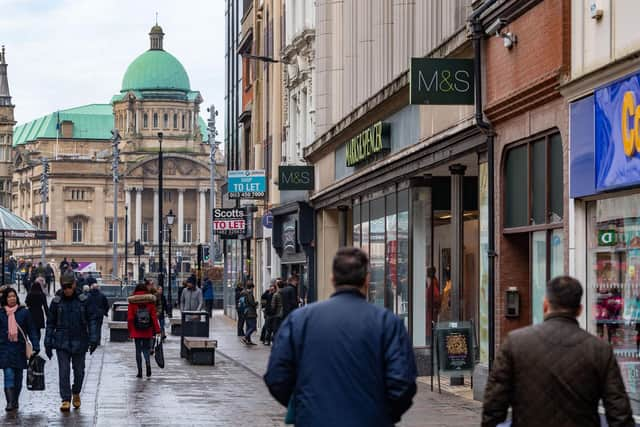

Local councillors have welcomed the new injection of funds and are urging the local authority to listen to local communities and steer clear of box-ticking exercises.
Coun Haroldo Herrera-Richmond, (Labour – St Andrews & Docklands ward) explained the fund could help kickstart regeneration projects on local high streets.
“I really welcome this £2.58m of funding from the Labour government. It will help revive our high streets and improve our built environment in Hull, but it needs to be allocated properly,” he said.
“Hull has an extensive register of ‘at-risk’ buildings that are in a poor state of repair. Rather than councillors directing this money to vanity projects, we need genuine participatory consultation with residents on what their communities need, not just another box-ticking exercise by the council.”
There are many buildings at risk in Hull
Hull City Council maintains a ‘Buildings at Risk’ register for nationally listed buildings located within the City. It looks at criteria such as a building’s condition, examines any unauthorised developments and can take enforcement action. Currently there are eleven entries on the council’s register, which represents 24 individual listed buildings.
Despite the funding for derelict buildings, a Hull City Council spokesperson explained the authority was still tackling a shortfall of funding from central government.
“The council welcomes this funding for derelict buildings. However Government guidance has only recently been published, which we will need to consider before setting out any details on how it will be used,” she said.
“Whilst this funding is good news for Hull, we do still believe the city is not being treated equally when compared to other northern cities in relation to support for our city centre, and will continue to lobby for fairer funding for our city and its residents.”
An opportunity to explore a new sustainable economic model for high streets
The Hope on the High Street strategy is part of the government’s vision for ‘good growth’ in every postcode, addressing head on the practical challenges and the opportunity for a new sustainable economic model for UK high streets.
The 60 councils and local authorities were chosen to receive the support because of unemployment and socio-economic factors. The government determined the amount of funding as part of this scheme based on the size of their population.
East Riding Council did not receive any funding as part of the scheme but nearby North East Lincolnshire Council received just over £1.5million. Councils in Nottingham, Wigan and County Durham all received the maximum £3million.