
Steel tariffs up for debate in Donald Trump's Scotland meeting with Sir Keir Starmer
Sir Keir Starmer is expected to push Donald Trump to finalise the final parts of the US trade deal, including removing steel tariffs, when the pair meet today.
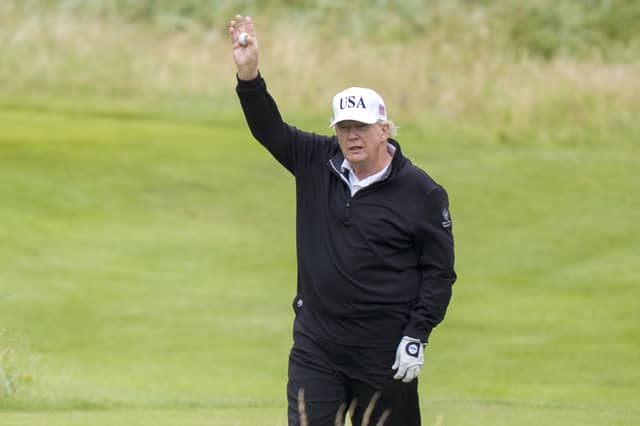


The Prime Minister is travelling to Trump Turnberry, in Girvan, Ayrshire, to meet the President, where he is staying on a private visit.
Ahead of travelling to Scotland, Mr Trump revealed that he and Sir Keir could “approve” the US-UK trade deal when they meet.
Tariff cuts for the car and aerospace sectors have come into force since the leaders signed the agreement in May, however the steel sector is still waiting for the 25 per cent levy to be removed.
The Government has been urgently negotiating with the US President’s trade team, however no agreement has been reached to remove the steel tariffs.

Mr Trump recently signed an executive order which suggested the US wants assurances on the supply chains for UK steel intended for export, as well as on the “nature of ownership” of production facilities.
It is understood that this mainly pertains to Tata Steel, in Port Talbot, as opposed to the virgin steel made at British Steel’s Scunthorpe plant.
Last month, Business Secretary Jonathan Reynolds said the UK would need to get exemptions for steel produced in Port Talbot to meet the US “rules of origin”.
A spokesperson for the UK Government said: “The UK and the US have one of the closest, most productive alliances the world has ever seen, working together to cooperate on defence, intelligence, technology and trade.
“The UK was the first country to agree a deal with the US that lowered tariffs on key sectors and has received one of the lowest reciprocal tariff rates in the world.
“Businesses in aerospace and autos are already benefiting from the strong relationship the UK has with the US and the deal agreed on May 8.
“The Government is working at pace with the US to go further to deliver benefits to working people on both sides of the Atlantic and to give UK industry the security it needs, protect vital jobs, and put more money in people’s pockets through the Plan for Change.”